
At a Glance
- Slab penetrations and wall openings need a GPR or X-ray scan and, on post-tensioned decks, engineer of record sign-off before a blade ever touches the concrete.
- Wall sawing handles openings in load-bearing and shear walls that a flat saw physically can't reach.
- Dust and slurry control has to be built into the schedule under OSHA's silica rule, not handled after another trade complains.
- Cutting crews need a fixed slot in the trade sequence. Too early and there's no structure worth protecting yet. Too late and MEP has already boxed in the penetration.
- Renting operated equipment with a skilled operator can close a scheduling gap without adding a full subcontractor to the GC's trade list.
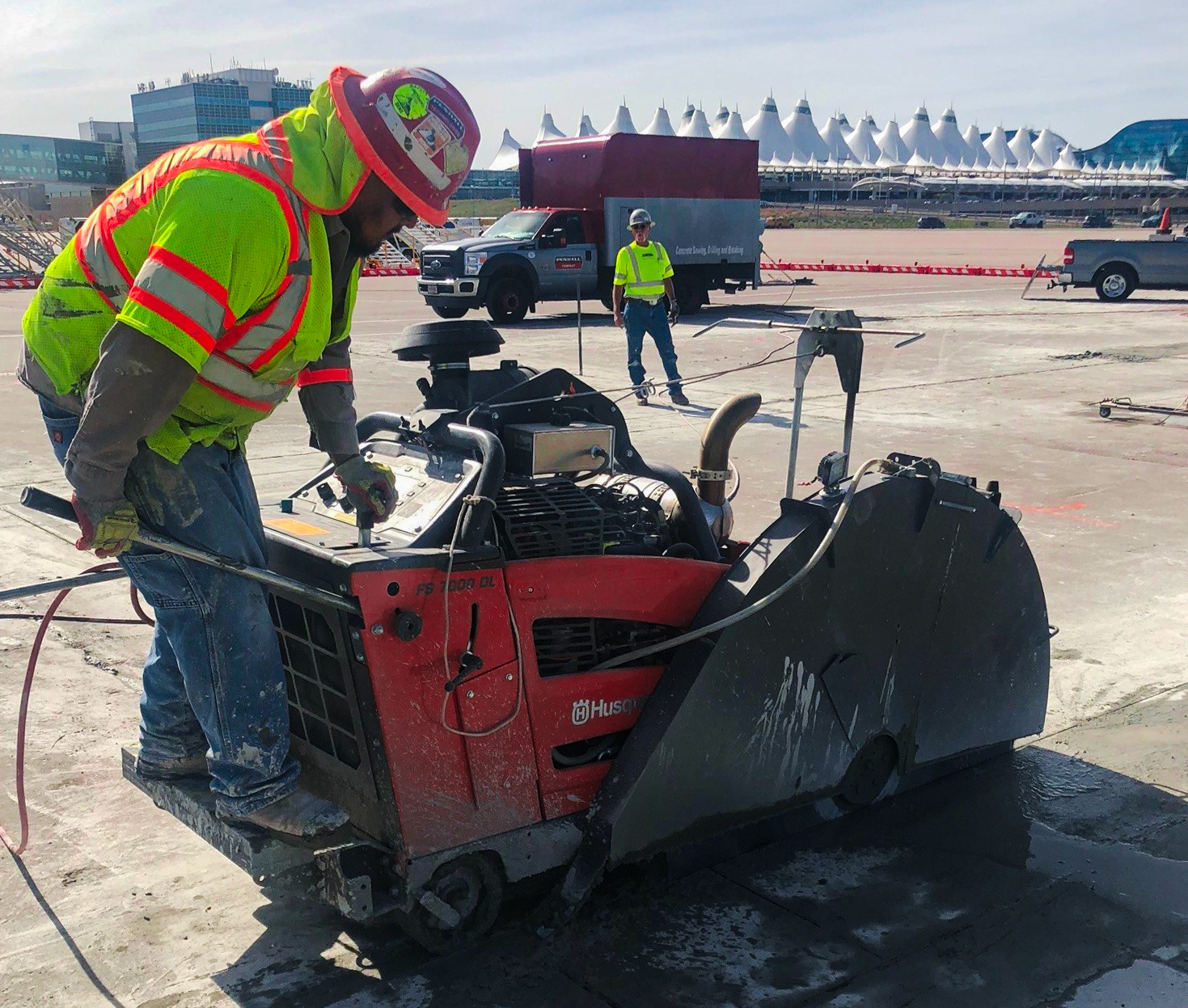
Commercial concrete cutting on a live job site succeeds or fails on sequencing, not sawing. The actual saw work, wall sawing, flat sawing, core drilling, wire sawing, takes hours. Lining up the structural sign-off, the utility scan, and the surrounding trades so that work can happen without stopping three other crews is what decides whether a penetration goes in on schedule or turns into a two-week hold.
That coordination problem gets worse as buildings get denser with MEP rough-in earlier in the schedule and slabs get thinner and more heavily post-tensioned to save floor-to-floor height. A GC running a mid-rise commercial project now has less margin for error on where and when concrete gets cut than they did fifteen years ago.
Where Commercial Concrete Cutting Fits in the Trade Sequence
Cutting crews sit in an awkward spot on most schedules. They need concrete that's cured enough to hold a load path safely, but they need access before drywall, ceiling grid, or finished flooring closes off the work area. On a lot of jobs, the cutting subcontractor gets penciled in wherever there's a gap, which is exactly how penetrations end up fighting with electrical rough-in or fireproofing.
The fix isn't more contingency time. It's a fixed cutting window tied to specific milestones, structural deck poured and cured to spec, MEP layout finalized and stamped, scan complete, sign-off in hand, so the crew shows up once and finishes the sequence instead of making three partial visits.
Sequencing Slab Penetrations Around MEP Rough-In
HVAC sleeves, plumbing stacks, and electrical conduit penetrations all compete for the same floor space, and usually for the same week on the schedule. Coring them out of sequence, before the MEP layout is locked, means redoing scans and sign-offs when a duct run shifts eighteen inches. Coring them too late means working around scaffolding, temporary power, and material staging that's already in the room.
Most GCs get better results locking core locations to the coordinated MEP drawings, not the architectural set, since that's the version that actually reflects where the sleeves land once ductwork and plumbing have been routed around each other.
Scanning and Structural Sign-Off Before Any Cut
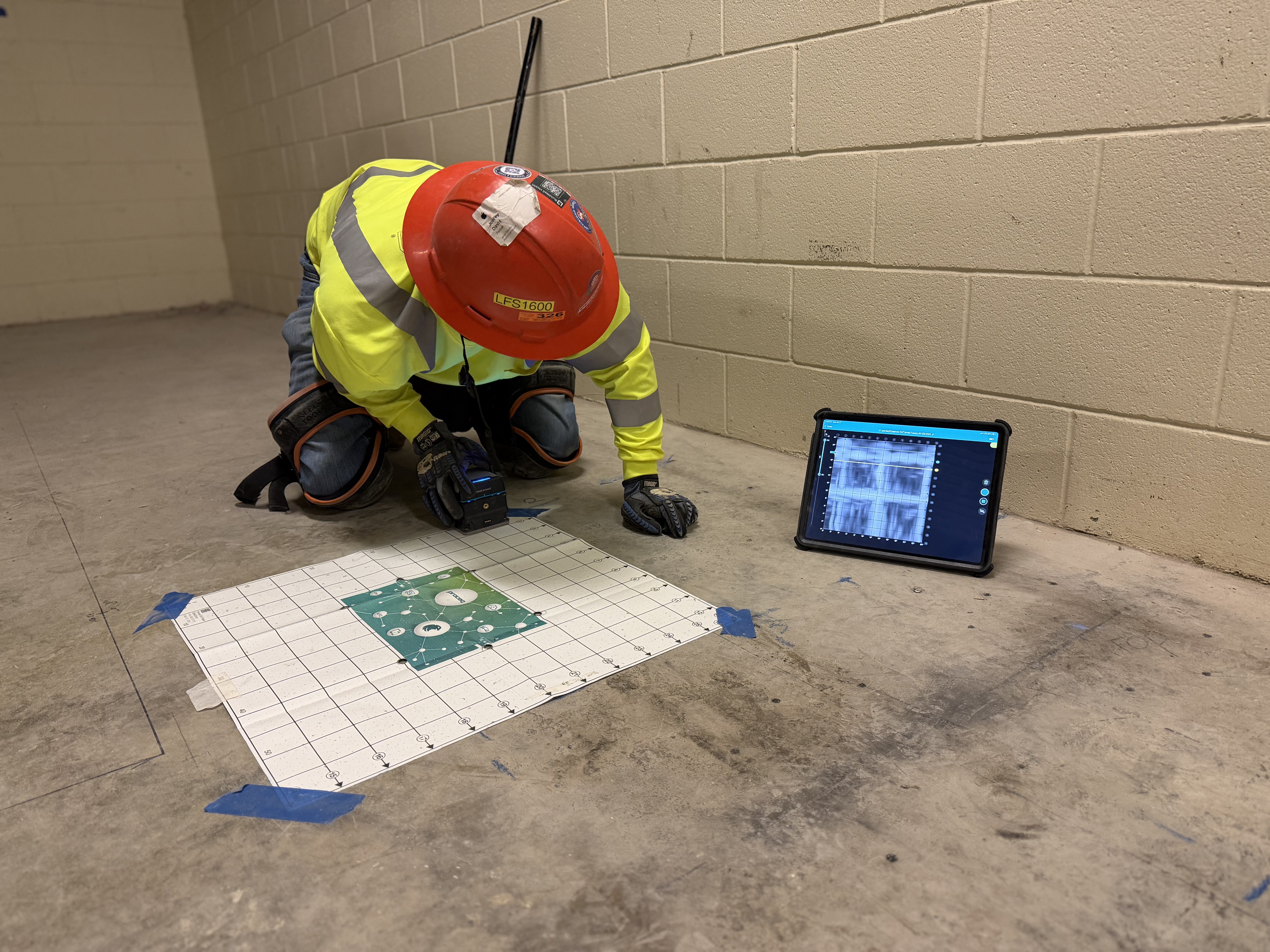
Every slab penetration and wall opening on an active commercial site should start with a GPR scan. It's a non-destructive pass over the cut area that reads embedded rebar, post-tension cables, conduit, and voids before anyone drills or saws. Handheld GPR units can locate the center of an embedded object within about a quarter inch, which is close enough to mark a safe cutting path with a real margin on either side.
That margin matters most on post-tensioned slabs. A PT cable holds enormous stored tension, and cutting into a live one can release that tension violently. That's why any core or saw cut on a PT deck needs the tendon layout confirmed by scan first, then reviewed against the structural drawings, and on most projects, sign-off from the engineer of record before the crew cuts. Skipping that step to save a day on the schedule is the single most common way a routine penetration turns into an incident report.
Wall Sawing for Openings in Load-Bearing and Shear Walls
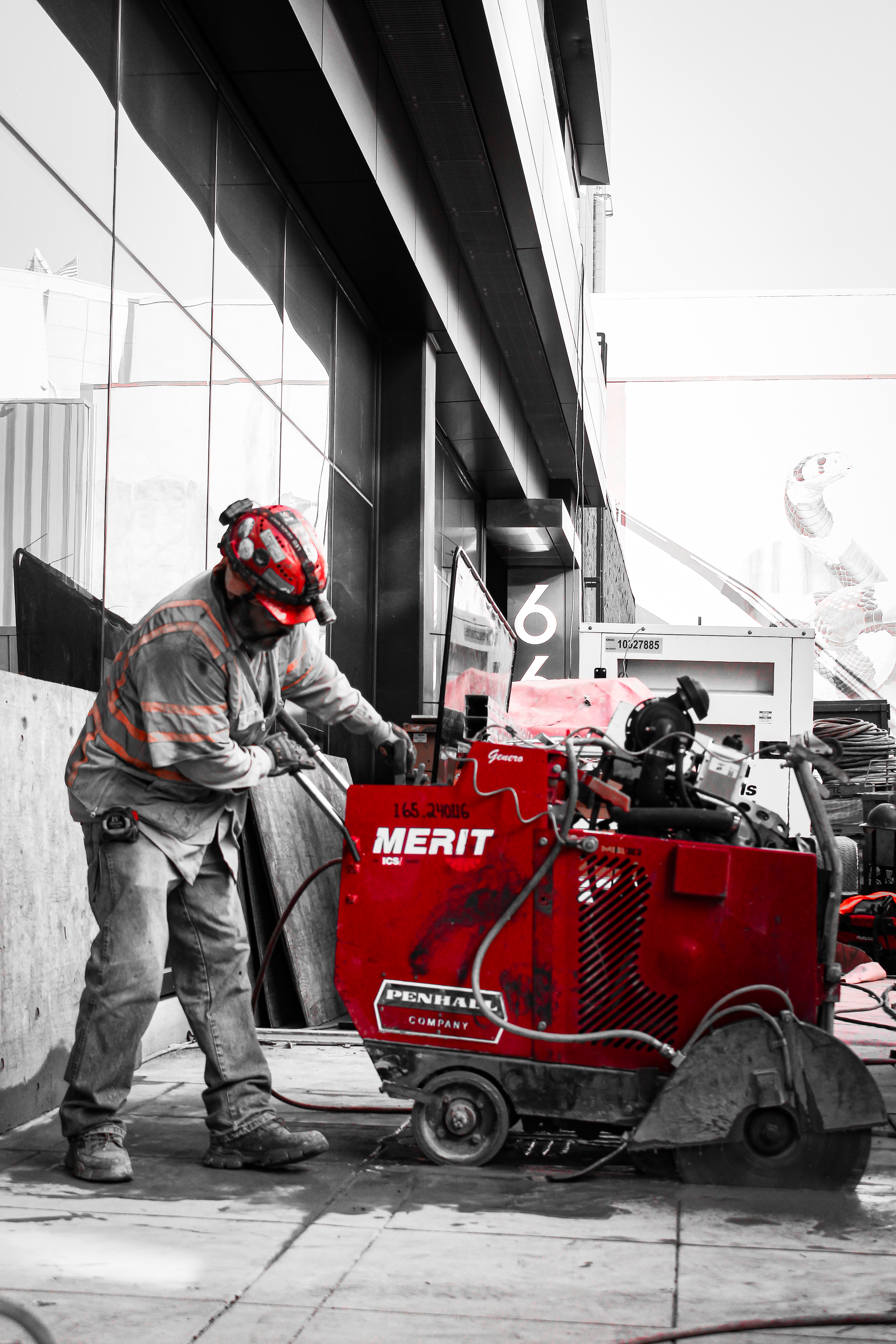
Wall sawing uses a track-mounted diamond blade that rides a rail bolted to the wall face, which lets the crew cut a straight, controlled line through concrete a flat saw can't reach, doorways, window retrofits, elevator shaft openings, new penthouse mechanical openings. On a non-structural partition, that's a same-day cut. On a load-bearing or shear wall, it's a different conversation.
Wall sawing concrete that's carrying load requires a shoring plan already in place before the cut starts, worked out with the structural engineer and the shoring subcontractor so the load path is picked up before the opening exists. GCs who treat that shoring coordination as a parallel task, running it alongside the scan and sign-off instead of after them, keep the wall opening from becoming the schedule's bottleneck.
Core Placements and Diamond Core Drilling on Multi-Trade Floors
Core drilling covers everything from a one-inch anchor hole to a multi-foot MEP sleeve, using a hollow diamond bit that cuts a clean cylindrical hole and pulls a solid core out rather than pulverizing the concrete. On a floor with electrical, plumbing, and HVAC all staging equipment at once, the core crew is usually working around, not ahead of, everyone else.
Hydraulic and electric core rigs both work in confined mechanical rooms and stairwells where a full-size flat saw won't fit, which is why core drilling is usually the method of choice for individual sleeve and dowel holes rather than large openings. Coordinating drill locations against the as-built MEP model, not just the permit set, cuts down on the rework that happens when a core lands two inches from where a hanger or a conduit run actually needs it.
Dust and Slurry Management on a Live Site
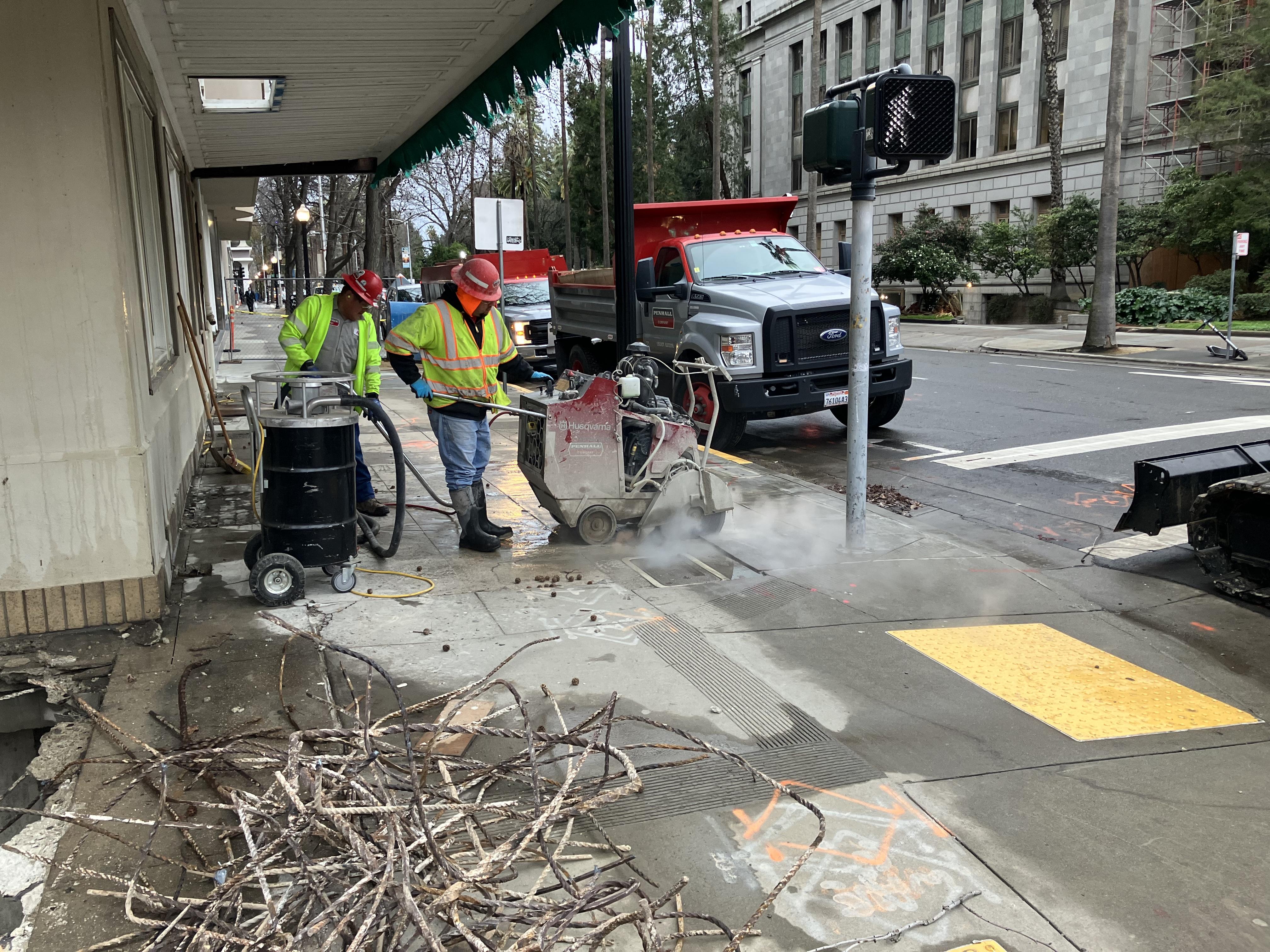
Wet cutting, running water continuously at the blade, is the primary control method under OSHA's respirable crystalline silica standard for construction. The rule sets a permissible exposure limit of 50 micrograms per cubic meter of air over an eight-hour shift, with an action level of half that. Following the water-fed methods in the standard's Table 1 controls is the most straightforward path to compliance for saw and core crews, and for outdoor wet cutting under four hours, it removes the need for a respirator entirely.
The slurry that water cutting generates is the other half of the problem. On an active site, that slurry can't just run across a floor other trades are finishing, or into a stairwell that's still in use. Vacuum slurry collection and containment barriers around the cut area keep runoff off adjacent work, and scheduling the cut for a time when the surrounding floor isn't hosting flooring or paint work avoids the argument that follows when it does.
Structural Sign-Off and Who Actually Has to Approve the Cut
Not every cut needs an engineer's signature. A hole through a non-structural slab-on-grade topping or a partition wall usually doesn't. A penetration through a structural slab, a transfer beam, a shear wall, or anything post-tensioned generally does, and the GC's job is knowing which category a given cut falls into before it's scheduled, not after the crew is standing there with a scan report and no one to approve it.
The paper trail that holds up is a scan report tied to a specific cut location, a request for information or submittal referencing that report, and a stamped response from the engineer of record approving the location, size, and any reinforcement or repair required around it. Keeping that documentation with the daily log, rather than in an email thread, is what saves a GC when an inspector or the structural engineer asks for it six weeks later.
Staffing the Work: Operated Equipment Rentals vs a Full Subcontract
Some scopes don't justify bringing on a dedicated concrete cutting subcontractor, a handful of core holes, one wall opening, a short flat-sawing run to demo a slab section. For that kind of gap in the schedule, operated equipment rental, the saw or drill rig and a trained operator, without carrying a full trade contract, gets the work done without adding another name to the subcontractor list.
Larger commercial and industrial concrete cutting scopes, thick structural transfer beams, heavy foundations, oversized columns, usually call for wire sawing or a full concrete cutting crew with track-mounted equipment rather than a single rented rig. The line between the two isn't the size of the project. It's whether the scope needs one operator for a day or a coordinated crew running scans, saws, and slurry containment across a full shift.
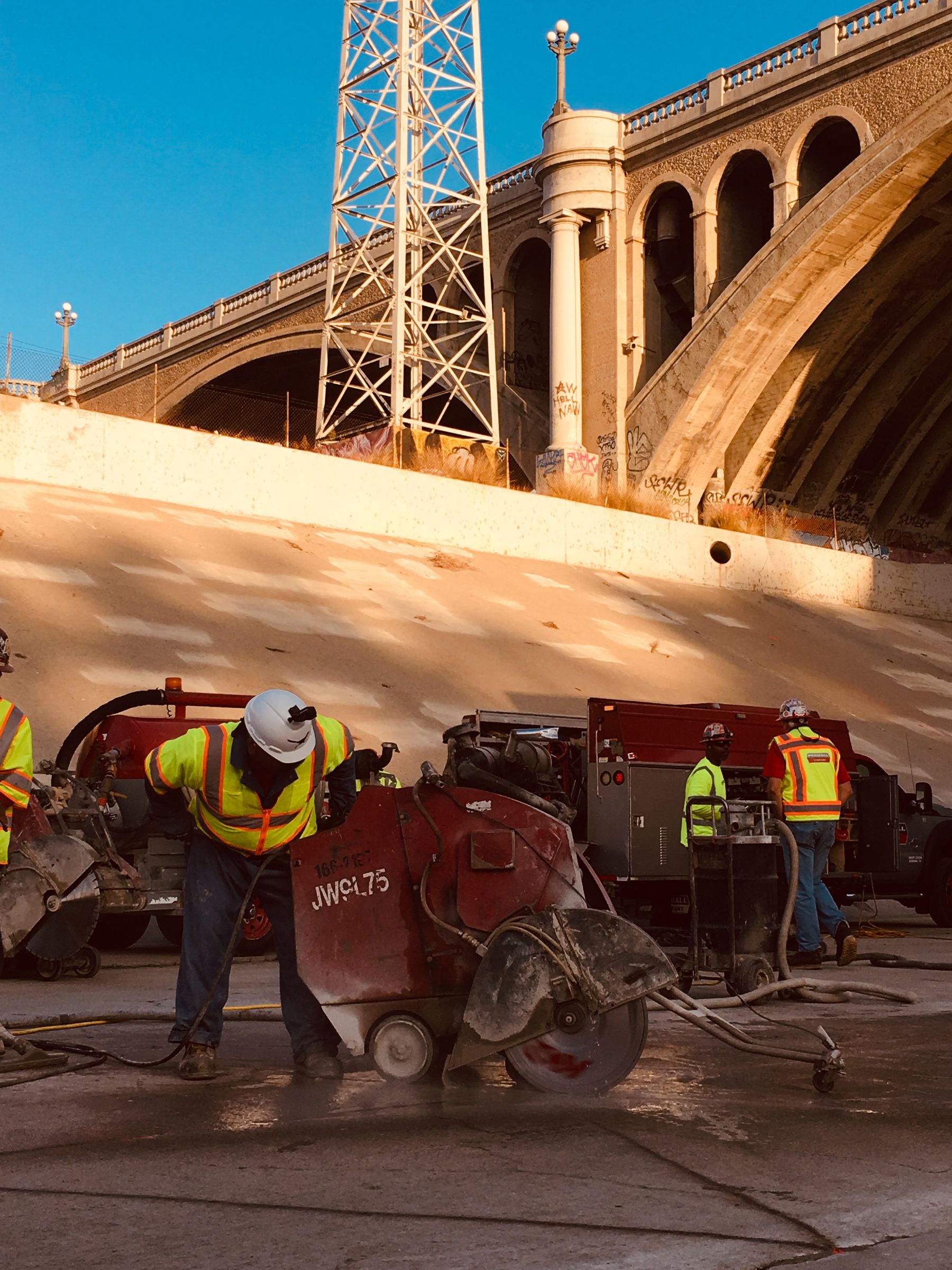
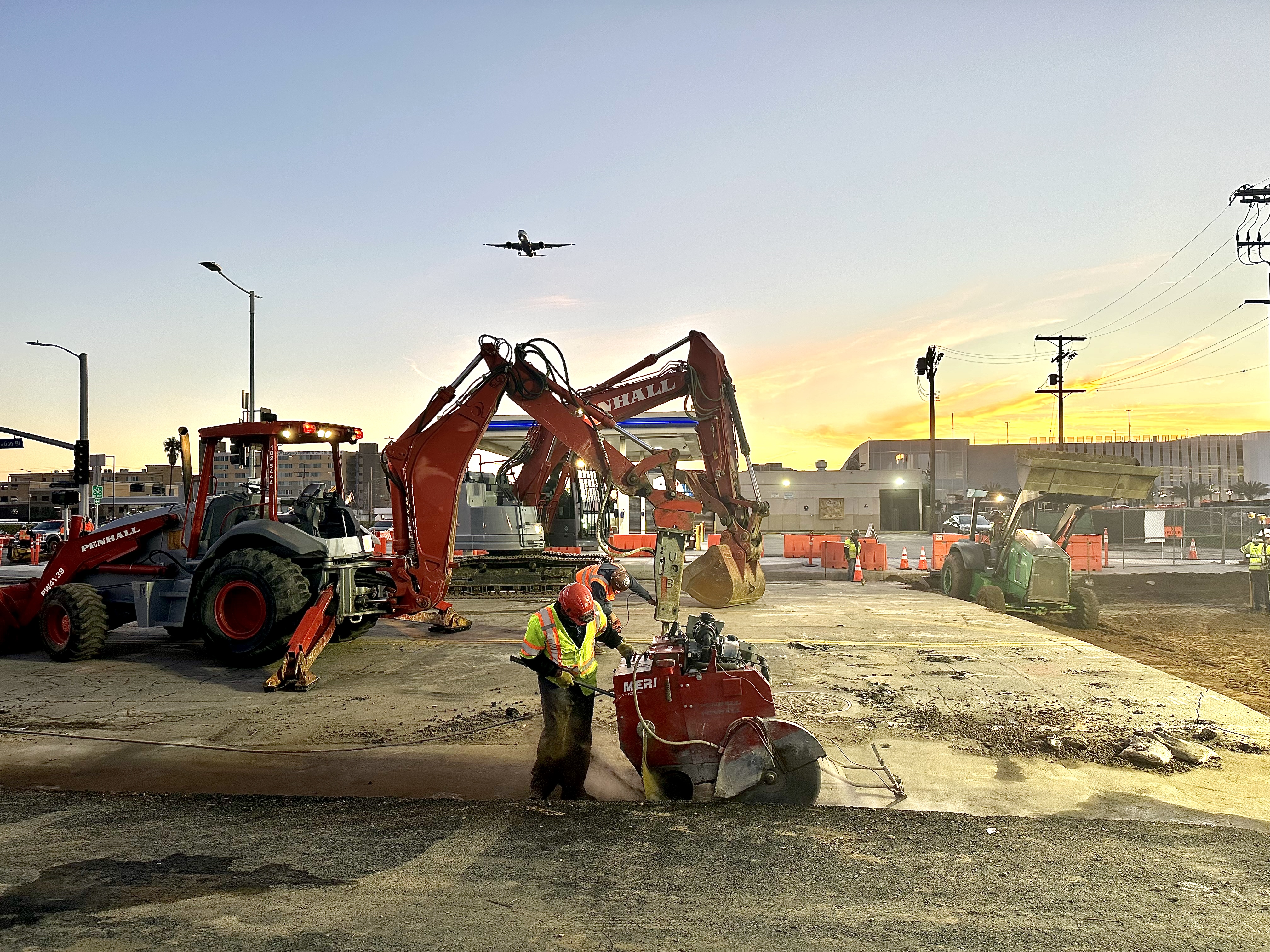
Post Tension Slab Repair and Emergency Cut Mitigation Protocols
When a cable strike occurs or structural modifications require cutting an existing tendon, field operations must transition immediately to containment and remediation protocols.
Executing selective concrete demolition provides safe access to damaged strands without disturbing surrounding sound concrete, laying the ground for structural repairs.
Structural Engineering Evaluation Hold Points
Work must stop immediately if a saw blade or core bit contacts a tendon. Field teams must clear the line of sight along the cable path and notify the structural Engineer of Record (EOR).
The EOR evaluates lost compression capacity, calculates load redistribution, and approves temporary shoring requirements. No further concrete removal or drilling may proceed without written EOR sign-off.
De-Tensioning, Splice Repair, and Pocket Grouting Procedures
Technicians carefully chip away concrete around the damaged cable to expose sound steel. Specialized hydraulic equipment safely de-tensions the strand before installing approved mechanical splice couplers.
Once spliced, hydraulic jacks re-tension the strand to specified engineering values. The repair pocket is then backfilled with high-strength non-shrink grout, restoring the structural integrity of the slab.
Partnering with Penhall Company for Structural Safety
Managing structural risk in post-tensioned structures requires proven technical expertise, modern field equipment, and tight quality controls. Penhall Company brings nearly seven decades of experience to complex commercial, industrial, and infrastructure projects.
Contact local Penhall branch locations for 24/7 emergency dispatch and project planning assistance. You can also schedule a specialized post-tension safety lunch and learn seminar to educate your engineering and field management personnel.