
What Is Concrete Grooving?
Concrete grooving is a specialized construction process that involves cutting channels or patterns into the surface of hardened concrete to improve traction, drainage, safety, and performance across a wide range of environments — from highways and airport runways to industrial floors and agricultural facilities.
Though grooves may look simple, they are cut with a high-precision process and serve a powerful function to extend the lifespan of concrete surfaces, ensuring the longevity, safety, and performance of vital transportation surfaces. Grooving techniques address different challenges specific to heavy traffic, high speeds, and intense weather conditions.
How Does Concrete Grooving Work?
Concrete grooving involves cutting precise, shallow channels into the pavement surface. Unlike grinding, which focuses on smoothness, grooving focuses on maximum friction and drainage, making it especially critical for high-speed environments like airport runways and curves on highways. The concrete grooving process utilizes specialized, heavy-duty grooving machines equipped with multiple diamond blades. These machines cut uniform, precise lines into the concrete.
The fundamental way concrete grooving works is through two primary principles: Water Displacement (Drainage) and Mechanical Interlock (Grip).
Water Displacement
The main reason smooth concrete surfaces become slick is the formation of a liquid film (water, oil, manure, etc.) that causes hydroplaning—the moving object rides on top of the liquid, losing solid contact with the pavement. The grooves are cut deep and wide enough to act as immediate drainage channels that capture and divert this liquid away from the contact zone. This action forces the liquid to flow into the groove, ensuring the tire rubber or hoof claw maintains direct, solid, high-friction contact with the surface ridges between the grooves. This principle is analogous to the treads on a car tire, which are specifically designed to channel water away, but in this case, the drainage is engineered directly into the pavement itself.
Mechanical Interlock
While drainage solves the liquid problem, mechanical interlock provides the physical grip. A smooth surface offers no purchase for lateral or braking force once the coefficient of friction is compromised. Grooving utilizes specialized diamond-tipped blades to cut channels with sharp, 90-degree-angle walls. These crisp, defined edges act as a physical obstruction for the moving object to push against. For vehicles and aircraft, these edges function like thousands of tiny cleats, providing mechanical resistance against skidding, which is vital for reducing stopping distance and maintaining control during hard braking.
What is Diamond Grooving?
Diamond grooving describes a specific, high-precision method of cutting channels or grooves into a hard surface, most often concrete, using diamond-tipped blades. The term diamond refers to the cutting tools used. Industrial-grade diamond particles are bonded to the steel cores of the saw blades. Diamond is the hardest material on the Mohs scale, allowing these blades to efficiently and precisely cut through extremely hard materials like fully cured concrete, asphalt, and stone without quickly dulling or damaging the aggregate.
How does Diamond Grooving Work?
Diamond grooving uses specialized machinery that mounts hundreds of closely spaced diamond saw blades onto a rotating drum. This equipment is capable of:
Cutting Precise Channels: The blades are set to a specific depth (e.g., ¼ inch) and spacing (e.g., 1 ½ inches apart) to create uniform, parallel channels in the pavement.
Achieving Clean Edges: The hardness of the diamond ensures the groove walls are crisp and defined, which is critical for providing the maximum mechanical interlock (or grip) for tires or hooves.
Efficiency: The strength of the diamond allows for rapid cutting, making it the most efficient method for large-scale projects like highways and runways.
Applications for Concrete Grooving
The need for high-performance traction dictates where grooving is most frequently employed. The specifications (depth, width, and spacing) are customized for the specific application.
Airport Runways and Taxiways
For runways and taxiways, concrete grooving is a non-negotiable safety measure designed to prevent aircraft from hydroplaning during critical high-speed operations like takeoffs and landings, particularly in heavy rain.
The pattern most commonly employed is transverse grooving, where channels are cut perpendicular to the direction of travel. This orientation is specifically chosen to maximize the rate of water evacuation along the runway's length where speeds are highest. The resulting safety impact is profound: grooving significantly reduces stopping distances on wet concrete, which is a major factor governed by Federal Aviation Administration (FAA) safety standards and ensures operational integrity even in adverse weather.
Highways, Bridge Decks and Tunnels
Grooving's application extends beyond air travel to crucial ground infrastructure. Here, the primary purpose is to increase wet-weather skid resistance and enhance steering control for civilian vehicles. The pattern used is more variable; it's often longitudinal grooving (parallel to traffic flow) on straight sections to aid in water channeling and steering, but switches to transverse grooving on steep ramps and sharp curves where lateral stability is paramount.
The safety impact minimizes the risk of cars skidding out of control on slick surfaces like wet bridge decks or within tunnels where humidity and condensation accumulate. Furthermore, in highway rehabilitation projects, grooving is frequently combined with concrete grinding (profiling) to first correct surface unevenness before applying the final texture.
Ramps, Loading Docks and Walkways
Concrete grooving is essential for safety in industrial and commercial areas, including ramps, loading docks, and walkways. The goal here is to enhance safety for both pedestrians and heavy equipment like forklifts.
Since these areas involve lower speeds but frequent turning and heavy loads, the pattern typically used is a tight, linear or diamond pattern. This texture is specifically designed to provide reliable grip for foot traffic and smaller wheels, reducing the risk of slips and falls in areas prone to moisture or spills.
Why is Concrete Grooving Essential for Safety?
Preventing Hydroplaning on Runways: This is the most crucial application. When a jet lands at high speed, water can build up beneath the tires. The grooves act as immediate drainage channels, evacuating the water and allowing the tire rubber to make direct contact with the concrete. Grooving dramatically increases the friction coefficient, preventing dangerous skidding and hydroplaning during braking.
Increasing Cornering Traction: On sharp highway curves or ramps, transverse grooves (cut perpendicular to traffic) provide additional mechanical grip, helping tires maintain their path and reducing the risk of skidding, particularly in wet conditions.
"Rumple Strip" Effect: While the primary goal is safety, grooving also provides an audible and tactile warning to drivers when used on highway shoulders or medians, indicating a departure from the lane.
Safety Considerations for Concrete Grooving Projects
Safely grooving concrete requires adherence to safety protocols, primarily because the process generates hazardous silica dust and involves high-powered machinery. Before starting, Personal Protective Equipment (PPE) is mandatory. This includes an N95 or better respirator to guard against dangerous crystalline silica dust, safety goggles or a face shield, hearing protection from the loud machinery, and heavy-duty gloves and clothing to protect the skin from abrasion and debris.
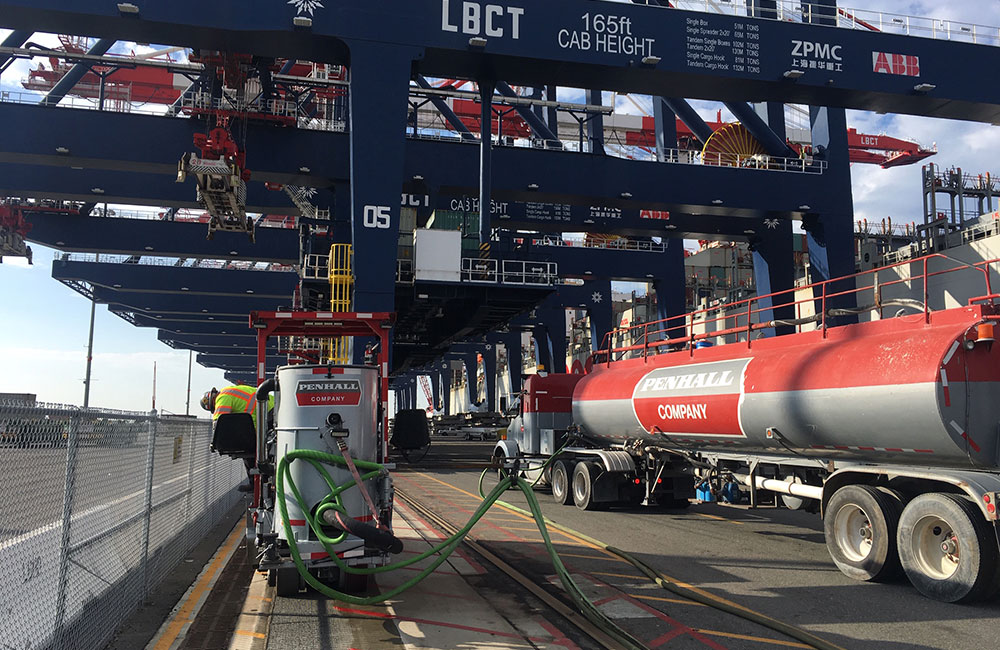
Site preparation and hazard control are equally critical. For large-scale projects, wet-cutting is mandatory; a continuous stream of water must be used to suppress silica dust at the source, transforming it into a manageable slurry that must be immediately vacuumed and disposed of according to environmental rules. Before any cutting begins, the subsurface must be scanned (e.g., using Ground Penetrating Radar) to locate and mark any hidden utilities, electrical conduits, or cables, as striking these can result in severe injury or electrocution.
Finally, operating the powerful grooving equipment requires caution and control. The operator must perform a full inspection before use, checking all safety guards and confirming that electrically powered equipment is using a GFCI. Maintain a balanced position and never force the machine; allow the equipment and the diamond blades to cut naturally to prevent dangerous kickback or jamming. By adhering to dust control, utility checks, and proper machine handling, the high risks associated with concrete grooving can be effectively managed.