
Roundup: Modern Bridge Demolition Projects
Concrete is a critical part of infrastructure, forming the foundations and spans of the bridges that connect our world. However, maintaining that connectivity requires constant renovation, repair, and sometimes complete replacement.
Demolition in the heavy highway and bridge sector is high-stakes work that cannot tolerate error. It requires precision to isolate concrete segments, powerful cutting technology to sever massive structural elements, and logistical coordination to manage debris removal over active roadways or environmentally sensitive waterways.
The following projects showcase how Penhall’s specialized concrete services, particularly precision cutting techniques like wall sawing and wire sawing, are essential to safely and efficiently deconstruct and renew bridges, vital transportation links.
Bridge Demolition Project Spotlights
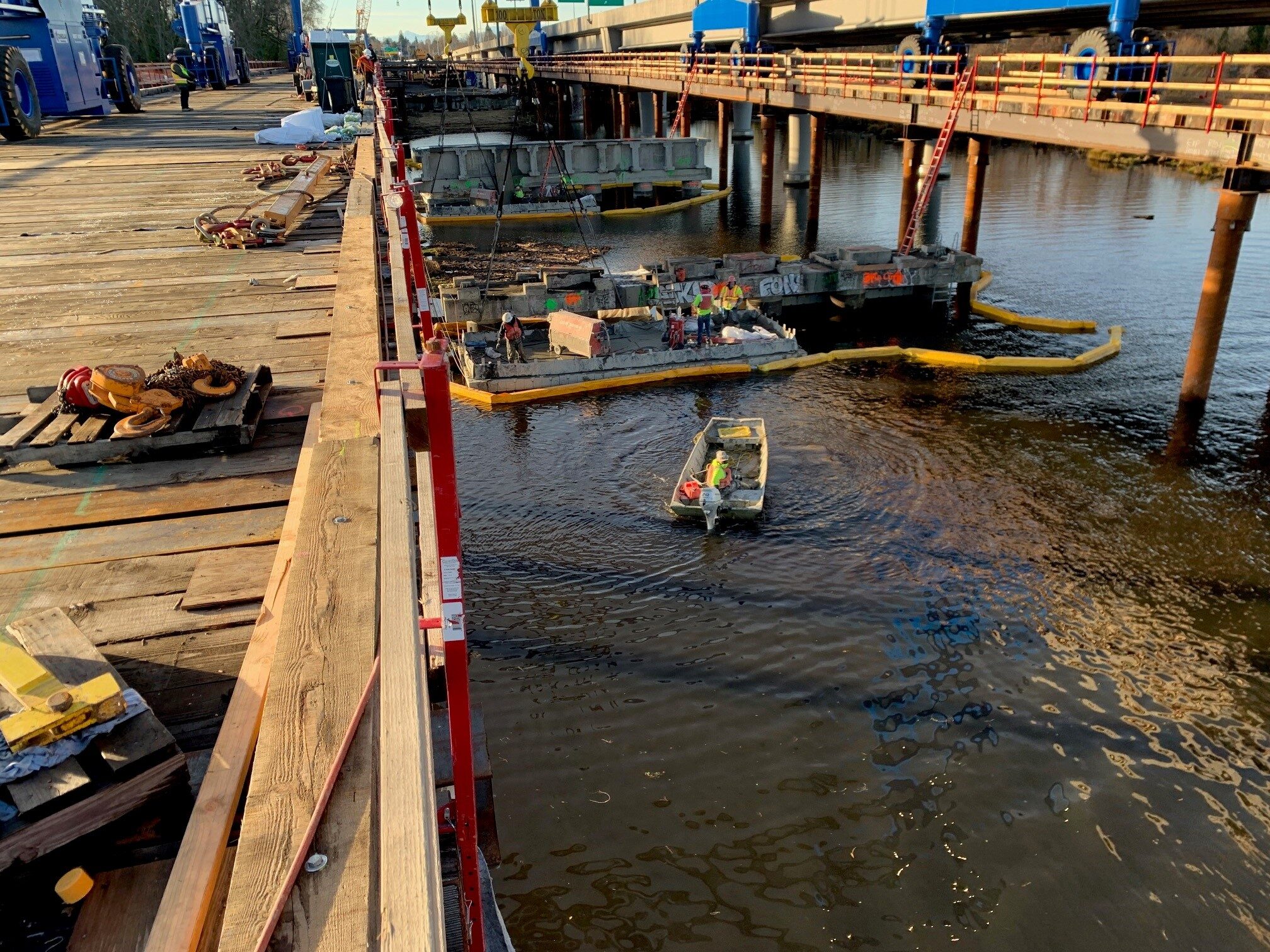
1. SR 520 Bridge Removal – Lake Washington (Seattle, WA)
The Challenge: Executing extensive precision cutting and coring for the removal of the SR-520 bridge segments over Lake Washington. The project involved environmental constraints, restricted access (requiring temporary trestle bridges and barge-mounted cranes), and evolving demolition sequencing.
The Approach: This massive DOT project was defined by sheer scale, requiring 75,000 linear feet of flat sawing (cutting concrete up to 34 inches thick), 7,000 core holes, and 16,500 square feet of wire and wall sawing. These precise cuts were necessary to segment the bridge deck and structural components into manageable pieces for safe, crane-lifted extraction.
Key Takeaway: Demonstrates the comprehensive use of advanced concrete cutting techniques (flat, core, wire, and wall sawing) to manage complex bridge removal over sensitive marine environments.
2. Bridge Demolition on Hwy 99 (Sacramento, CA)
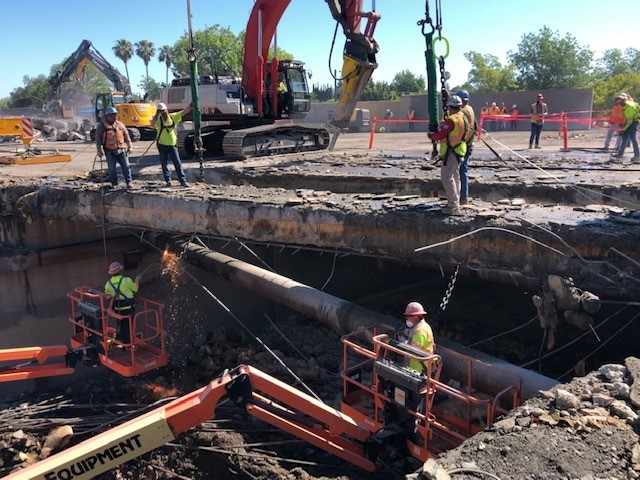
The Challenge: The safe and rapid demolition and removal of the 21st Ave undercrossing bridge over active Highway 99—a critical, high-profile infrastructure project.
The Approach: The operation began with slotting the bridge deck and torching the internal rebar. Utilizing boom lifts and excavators, the team rigged the massive girders to a 550-ton crane. The crane then lifted and relocated the large concrete segments to a staging area for subsequent breaking and removal.
Key Takeaway: Highlights the intense logistical coordination required for heavy highway work, ensuring zero disruption and maintaining strict safety protocols while maneuvering huge structural components over live traffic.
3. Wall Sawing Services for HWY 147 Bridge Removal (Raleigh, NC)
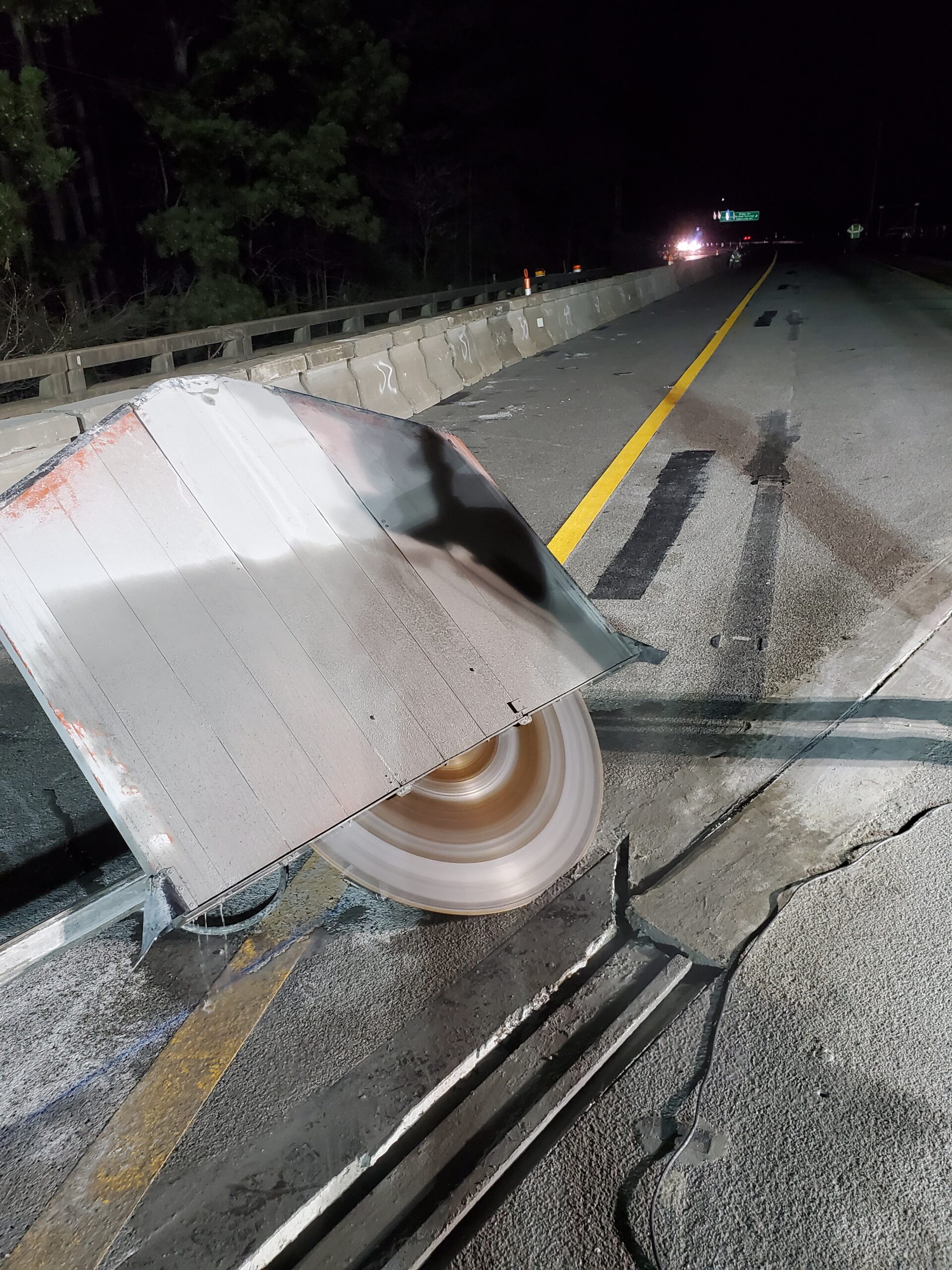
The Challenge: Performing a precision cut for the replacement of a bridge joint slide plate on the HWY 147 bridge, requiring the removal of the existing joint while preserving the structural integrity of the surrounding bridge deck.
The Approach: The team employed a specialized wall sawing unit (Husqvarna 482) with custom angle brackets to execute a precise 45-degree angle cut into the slide plate.
Key Takeaway: Illustrates the surgical nature of bridge maintenance, where wall sawing is used not for total demolition, but for accurate, selective cuts required for structural replacement and repair, completing the work on a precise schedule.
Building the Future of Infrastructure
Bridge projects from the multi-year, multi-service removal over Lake Washington to the targeted joint replacement in North Carolina underscore that modern infrastructure maintenance relies on a blend of brute strength and refined techniques. The common threads running through these successes are the commitment to precision cutting technologies (like diamond sawing), logistical planning, and a focus on safety, especially when operating over active highways and sensitive ecosystems. By mastering the removal of concrete giants, infrastructure experts ensure that today’s demolition paves the way for the stronger, safer bridges of tomorrow.