
At a Glance
- A diamond core drill uses a hollow, cylindrical bit embedded with industrial-grade diamond segments to grind through concrete, asphalt, brick, stone, and other masonry materials.
- Core drilling removes a clean, cylindrical plug (the "core") without causing vibration damage, microfractures, or impact stress to the surrounding structure.
- Three main equipment categories serve different project needs: hand-held drills (up to 3 inches), medium-duty rig-mounted drills (1 to 8 inches), and heavy-duty drills with electric, pneumatic, or hydraulic motors (8 inches and larger, with depths exceeding 100 feet).
- Water cooling is the standard method for most core drilling, lubricating the bit, suppressing dust, and flushing debris from the hole. Dry coring is available for locations where water is impractical
- Common applications include creating openings for electrical, plumbing, and HVAC installations, extracting core samples for structural testing, drilling anchor holes, and creating manhole or drainage penetrations.
- Pre-drilling concrete scanning with GPR or X-ray imaging is essential to locate rebar, post-tension cables, conduits, and other embedded hazards before coring begins.
- Penhall Company provides professional diamond core drilling services nationwide, with equipment capable of drilling from 1 inch in diameter to over 100 feet deep.
What Is Diamond Core Drilling?
Diamond core drilling is a specialized cutting method that uses a hollow, cylindrical drill bit with diamond-impregnated segments to grind through hard materials and extract a solid cylindrical plug, known as a core. Unlike standard percussion drilling or jackhammering, which fracture material through impact, core drilling grinds its way through the material using the extreme hardness of industrial diamonds. The result is a clean, precise, perfectly round hole with smooth edges and zero vibration damage to the surrounding structure.
This technique is the industry standard for creating openings in concrete, reinforced concrete, asphalt, brick, block, stone, and other masonry materials. It is used across virtually every type of construction and renovation project, from running a single plumbing pipe through a basement slab to drilling hundreds of anchor holes on a highway bridge deck. The method's combination of precision, speed, low noise, and structural safety makes it the preferred approach whenever a round penetration is needed in a hard material.
In this guide, we will walk through how diamond core drilling works, the equipment and bit types involved, wet versus dry coring methods, the full range of applications, important safety and pre-drilling considerations, and when it makes sense to hire a professional concrete coring contractor like Penhall Company.
How Diamond Core Drilling Works
The Diamond Core Bit
The core bit is the defining component of the system. It is a hollow steel cylinder (sometimes called a barrel or can) with diamond segments bonded to its cutting end. These segments are made from a mixture of synthetic industrial diamonds and a metal matrix (typically cobalt, bronze, or iron-based). As the bit rotates against the material, the diamond particles do the actual cutting, grinding through concrete and aggregate at the microscopic level. As the outer layer of diamonds wears away, fresh diamond particles are exposed in the matrix beneath, keeping the cutting edge sharp throughout the life of the bit.
Diamond core bits are available in a wide range of diameters, typically from less than 1 inch up to 60 inches or more for specialized applications. The bit diameter determines the size of the hole. Bit length (also called barrel depth) determines how deep a single pass can drill before the bit needs to be removed and reattached with an extension. Standard barrels accommodate 12 to 14 inches of depth per pass, but extensions allow drilling to virtually any depth.
The Drilling Process
The core drilling process follows a consistent sequence regardless of the equipment size. First, the operator secures the drill to the work surface. For rig-mounted drills, this involves anchoring a drill stand (also called a mast or column) to the concrete using a small threaded anchor bolt. The drill motor is then mounted to the stand, which acts as a guide rail to keep the bit aligned and apply consistent pressure. Hand-held drills may be used freehand for smaller holes or mounted on a vacuum-base stand for added stability.
Once the drill is secured and the appropriately sized bit is mounted, the operator starts the motor and engages the feed mechanism, which is usually a hand crank or lever that advances the spinning bit into the material. Water is applied continuously to cool the bit, suppress dust, and flush the ground material (slurry) out of the hole. The bit grinds through the concrete and any embedded material, including aggregate and rebar, until it penetrates the full thickness of the structure. The resulting cylindrical core either comes out attached to the bit or can be pulled from the hole manually.
Why Diamonds?
Diamond is the hardest known natural material, rating a 10 on the Mohs hardness scale. Concrete aggregate (granite, quartz, limestone) typically rates between 3 and 7 on the same scale. This extreme hardness differential is what makes diamond the ideal cutting medium for concrete. Diamond bits grind through material rather than chipping or fracturing it, which is why core drilling produces clean holes without introducing stress cracks or microfractures into the surrounding structure. This non-impact approach preserves the structural integrity of the concrete, which is critically important when drilling in load-bearing walls, post-tensioned slabs, and other structural elements.
Core Drilling Equipment: Types and Capabilities
Core drilling equipment ranges from compact hand-held units to large, truck-mounted rigs. The right tool depends on the hole diameter, depth, material hardness, reinforcement density, orientation (horizontal, vertical, or angled), and site access constraints. Professional coring contractors like Penhall Company carry a full range of equipment to match the demands of any project.
Hand-Held Core Drills
Hand-held core drills are small, lightweight units that resemble oversized shop drills. They are designed for holes up to approximately 3 inches in diameter in slabs, walls, and other surfaces where access is tight or where only a few penetrations are needed. Hand-held drills are typically electric-powered and can be operated freehand or mounted on a portable vacuum-base stand for improved accuracy. They are well suited for light-duty work such as drilling anchor holes, small conduit penetrations, or core sample extraction for lab testing.
Medium-Duty Rig-Mounted Drills
Medium-duty drills handle holes ranging from approximately 1 to 8 inches in diameter. These units use a 15 to 18 amp electric motor mounted on a drill stand that anchors to the work surface. The stand provides a rigid guide for the bit, ensuring straight, accurate holes even through thick, reinforced concrete. Medium-duty rigs are the workhorses of the coring industry, handling the majority of plumbing, electrical, and HVAC penetrations on commercial and residential construction projects. They strike a practical balance between portability and power.
Heavy-Duty Core Drills
Heavy-duty drills are built for large-diameter holes, heavily reinforced structures, and exceptionally deep cores. These units feature high-output motors in the 18 to 20 amp range and may be powered by electric, pneumatic (air), or hydraulic systems depending on the application and site conditions. Pneumatic and hydraulic motors are particularly useful in wet environments, confined spaces, or locations where electrical power is unavailable or poses a safety risk.
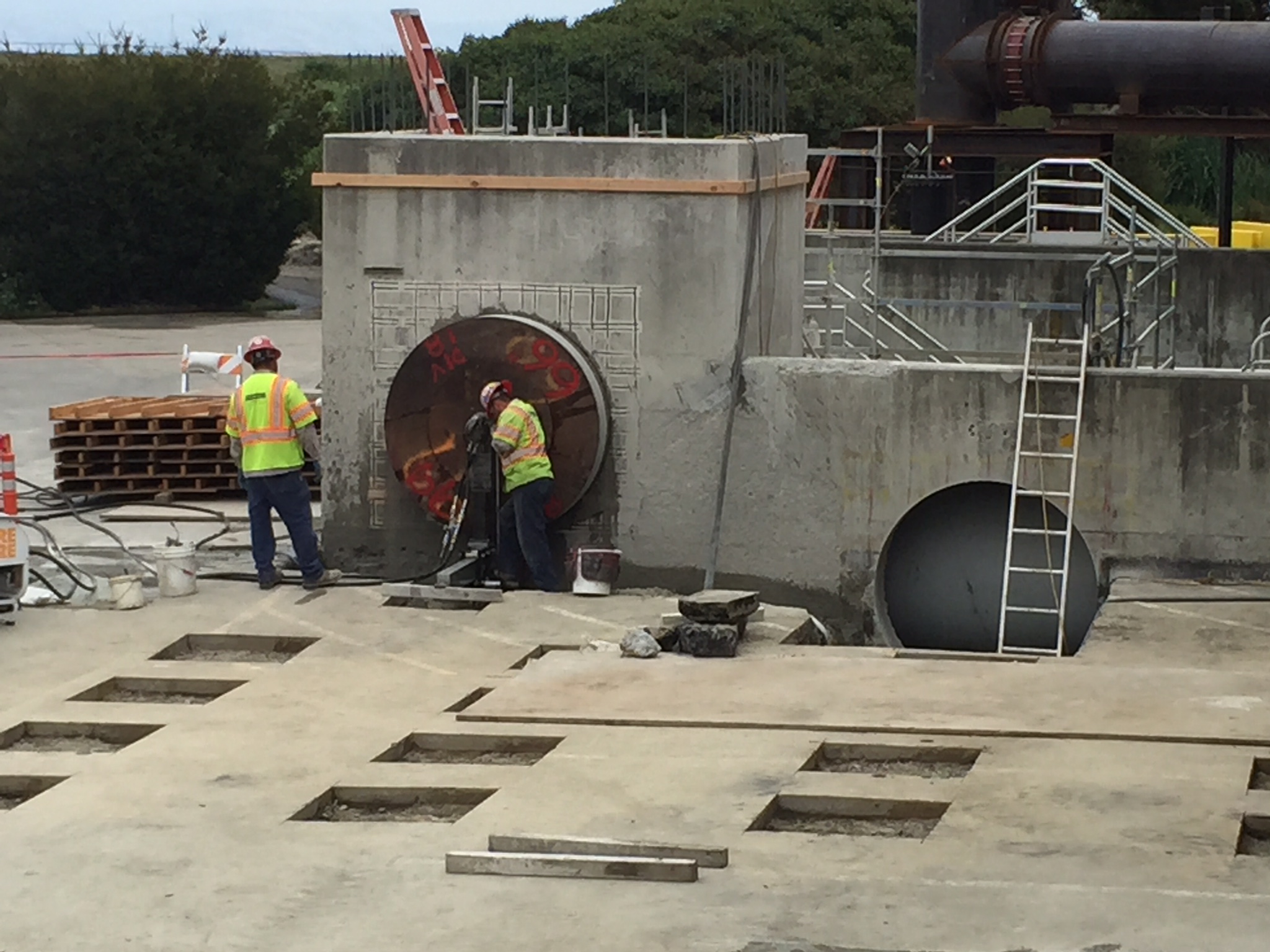
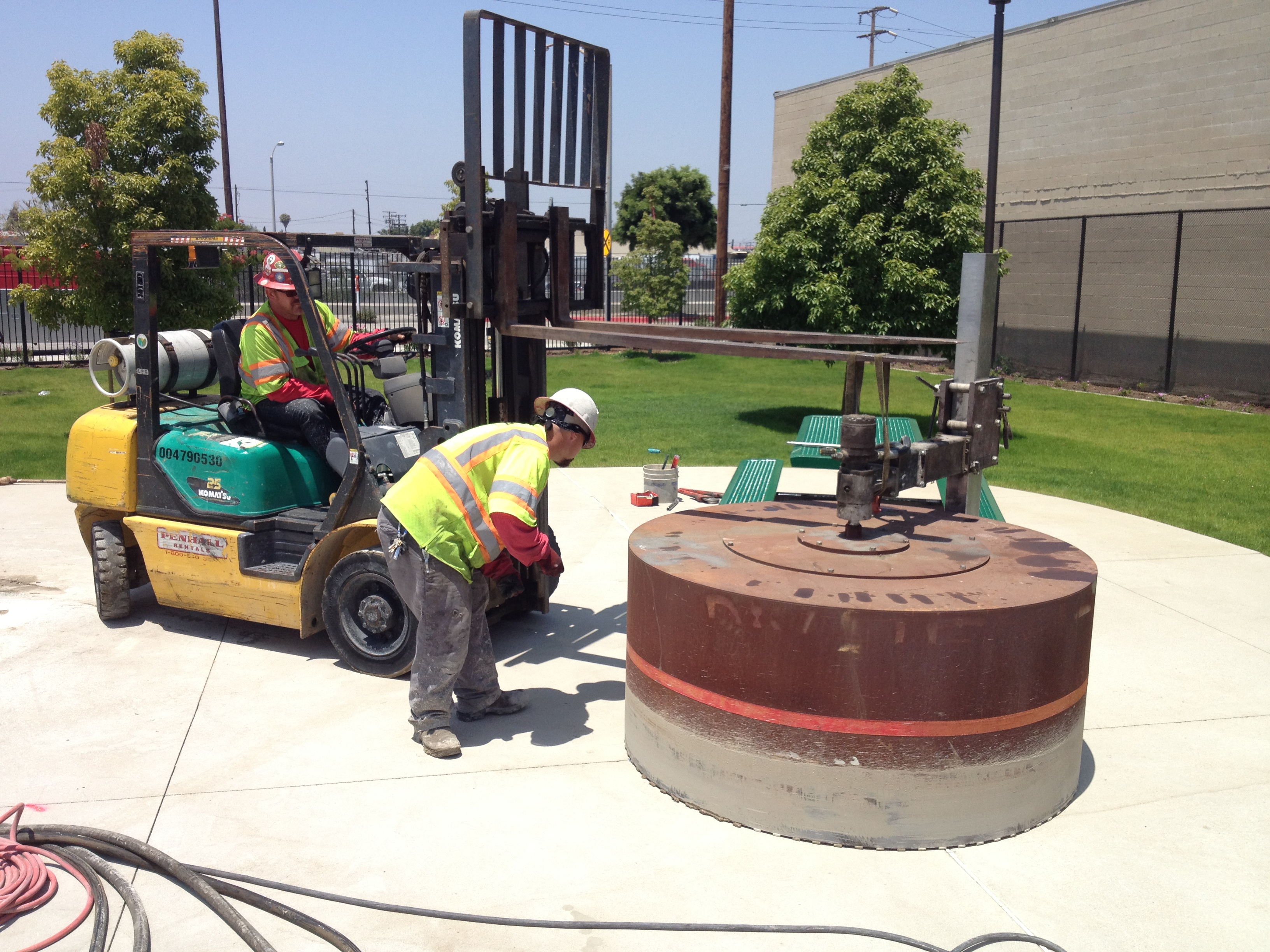
Heavy-duty rigs are used for large penetrations such as manhole openings, large-diameter pipe chases, and structural cores in dams, bridges, and industrial facilities. With continuous tubing technology and extension rods, heavy-duty drilling systems can reach depths exceeding 100 feet. Penhall Company's fleet includes custom-built drilling equipment designed for exactly these high-demand applications, with the capability to drill anywhere from 1 inch in diameter to more than 100 feet deep.
Wet Coring vs. Dry Coring
Wet Core Drilling
Wet coring is the standard method for most diamond core drilling applications. Water is supplied to the bit continuously during drilling, serving three critical functions: it cools the diamond segments to prevent overheating (which degrades the diamond bond and shortens bit life), it suppresses airborne dust (particularly important for silica dust exposure control), and it flushes the ground material (slurry) out of the kerf to prevent the bit from binding. Wet coring produces faster cut speeds, longer bit life, and cleaner holes compared to dry methods. Any core drill larger than a hand-held unit will typically require water cooling.
The trade-off with wet coring is water management. The slurry (a mixture of water and ground concrete) must be contained and cleaned up, which requires vacuum systems, slurry rings, or containment barriers depending on the site. In occupied buildings, water management becomes a significant logistical consideration. Professional coring contractors plan for slurry containment as a standard part of every wet-coring job.
Dry Core Drilling
Dry coring uses specialized bits designed to operate without water. These bits typically feature vacuum-brazed diamond segments or a different bond formulation that tolerates higher temperatures. Dry coring is used in situations where water is impractical or prohibited: interior spaces where water damage is a concern, electrical rooms, data centers, occupied healthcare facilities, or locations without a water supply. Dry coring produces more dust, so it is typically paired with a vacuum attachment or HEPA-filtered dust collection system to manage airborne particulates.
Dry coring is generally limited to smaller diameter holes (typically under 4 to 6 inches) and shallower depths, because the heat generated without water cooling limits how aggressively the operator can push the bit. For larger or deeper holes, wet coring remains the more practical and efficient method.
Common Applications for Diamond Core Drilling
Diamond core drilling serves a wide range of construction, renovation, and infrastructure applications. Because it produces clean, precise holes without vibration or structural impact, it is the preferred method for penetrations in virtually any concrete or masonry structure.
MEP Installations (Electrical, Plumbing, and HVAC)
The most common application for core drilling is creating openings for mechanical, electrical, and plumbing (MEP) installations. Running conduit for electrical wiring, pipes for plumbing and fire suppression systems, and ducts for HVAC all require penetrations through concrete floors, walls, and ceilings. Core drilling creates these openings cleanly and precisely, with exactly the diameter specified by the installing trades. This is particularly important in renovation and tenant improvement projects where existing concrete must be penetrated without damaging surrounding finishes or structural elements.
Concrete Sample Extraction and Structural Testing
Core drilling is the standard method for extracting concrete samples for laboratory testing. Engineers and inspectors pull cylindrical core samples to evaluate the compressive strength, density, composition, and condition of existing concrete. This type of destructive testing is a critical quality assurance tool for new construction and a diagnostic tool for evaluating aging structures, bridges, dams, parking garages, and other infrastructure.
Anchor Holes, Doweling, and Rebar Tie-Ins
Core drilling creates the holes needed for post-installed anchors, dowel bars, and rebar tie-ins. When new concrete must be structurally connected to existing concrete (such as adding a new slab next to an existing one, or connecting a new wall to an existing foundation), engineers specify drilled holes for epoxy-set rebar or mechanical anchors. Core drilling produces the clean, consistent-diameter holes that these connections require.
Manholes, Drainage, and Large Penetrations
Large-diameter core drilling creates openings for manholes, floor drains, sump pits, and large-pipe penetrations. These applications require heavy-duty equipment and experienced operators, as the large bit diameter generates significant torque and the resulting cores can weigh hundreds of pounds. Professional contractors use rigging and handling procedures to safely extract and remove heavy cores.
Bridge, Dam, and Infrastructure Work
Core drilling plays a major role in infrastructure construction and maintenance. On bridge projects, coring is used for drainage holes, railing and barrier anchor installations, and sampling for structural assessment. On dams, locks, and water treatment facilities, core drilling provides penetrations for instrumentation, drainage, and structural monitoring. These applications often require deep drilling, angled drilling, or work in confined and hazardous environments, which is where the expertise and specialized equipment of a contractor like Penhall becomes essential.
Pre-Drilling: Why Concrete Scanning Matters
Before any core drill touches a concrete surface, it is critical to know what is embedded inside the structure. Concrete slabs, walls, and structural elements routinely contain rebar, post-tension cables, electrical conduit, plumbing lines, and other embedded items. Striking a post-tension cable during coring can cause catastrophic structural failure. Hitting a live electrical conduit can cause electrocution. Even cutting through rebar, while the diamond bit can handle it, may compromise the structural integrity of the element if the rebar was not accounted for in the engineering plan.
This is why professional coring contractors pair their drilling services with subsurface scanning. Ground penetrating radar (GPR) scanning uses radar waves to map the location and depth of embedded objects in concrete. It is fast, non-destructive, and safe to use in occupied spaces. For situations where GPR data is ambiguous or where higher-resolution imaging is needed, digital X-ray imaging provides a detailed radiographic image of the concrete cross-section.
Penhall Company provides both GPR scanning and X-ray imaging as part of its integrated service offering. Having the scanning and coring performed by the same company streamlines the workflow: the scanning analyst marks safe drilling locations directly on the concrete, and the coring crew drills with confidence knowing that every penetration has been verified. This scan-then-core approach is the industry best practice and dramatically reduces the risk of costly, dangerous utility or structural strikes.
Core Drilling vs. Other Concrete Penetration Methods
Core drilling is not the only way to create an opening in concrete, but it is the preferred method for most applications. Understanding how it compares to alternatives helps explain why.
Core drilling vs. jackhammering (impact breaking): Jackhammering creates openings by fracturing concrete through percussive impact. It is effective for large-area removal but produces irregular edges, generates significant noise and vibration, creates airborne dust and debris, and introduces microfractures into the remaining structure. Core drilling produces a clean, precise opening with no vibration, no microfractures, and far less noise and dust. For round penetrations, core drilling is faster, cleaner, and safer for the structure.
Core drilling vs. saw cutting: Concrete saw cutting (flat sawing, wall sawing, wire sawing) creates straight-line cuts and is the right choice for square or rectangular openings, trenches, and full-section removals. Core drilling is the right choice for round penetrations. Many projects require both: saw-cut openings for large ductwork, plus cored holes for conduit and piping. Penhall provides both cutting and coring services under one contract, simplifying coordination.
Core drilling vs. rotary hammer drilling: Rotary hammer drills (SDS drills) are widely used for small anchor holes and fastener installations. They work by combining rotation with a hammering action. Rotary hammers are effective for holes up to about 1.5 inches in diameter in lightly reinforced concrete. Beyond that size, or in heavily reinforced structures, diamond core drilling takes over because it can cut cleanly through rebar without binding, produces a precise hole diameter, and does not generate the impact stress that can damage the surrounding structure.
Safety Considerations for Core Drilling
Core drilling is a specialized trade that requires training, proper equipment, and adherence to safety protocols. Key safety considerations include silica dust exposure management (OSHA's Table 1 requirements for respirable crystalline silica), proper water supply and slurry containment, secure anchoring of the drill to prevent torque-related injuries, electrical safety when drilling near or through energized systems, structural evaluation to ensure that cored openings do not compromise load-bearing capacity, and fall protection when drilling on elevated surfaces.
Penhall Company maintains rigorous safety programs across all of its operations. Every coring crew is trained in equipment operation, hazard recognition, silica exposure control, and emergency procedures. This commitment to safety is one of the primary reasons contractors, facility managers, and engineers choose to hire a professional coring company rather than attempting the work with general labor and rented equipment.
When to Hire a Professional Core Drilling Contractor
While small-diameter holes in simple, non-structural concrete can sometimes be handled by general contractors with the right equipment, many coring situations call for a specialist. You should consider hiring a professional coring contractor when the concrete is structurally reinforced (rebar, post-tension cables, or wire mesh), when the hole diameter exceeds 3 to 4 inches, when the drilling depth exceeds 12 inches, when the work involves angled or overhead drilling, when pre-drilling scanning is needed to avoid embedded hazards, when OSHA silica compliance documentation is required, or when the project involves a high volume of cores.
Penhall Company has been providing professional core drilling services since 1957. With over 1,300 professionals and branch locations across North America, Penhall has the equipment, training, and field experience to handle coring projects of any scale, from a single penetration in a residential basement to hundreds of cores on a commercial high-rise or infrastructure project. Penhall's integrated service model means you can get GPR scanning, coring, concrete cutting, and demolition all from a single provider. Contact Penhall for a free quote on your next coring project.