At a Glance
- Concrete cutting cost typically ranges from $5 to $35+ per linear foot, while concrete coring cost ranges from $75 to $500+ per core — but both figures depend heavily on project-specific variables.
- The biggest cost drivers are concrete thickness and depth, rebar presence and density, core or cut diameter, material hardness, and site accessibility.
- Reinforced concrete — especially slabs and walls with post-tension cables — is significantly more expensive to cut or core than plain concrete because it accelerates blade and bit wear.
- Mobilization, project location, scheduling, and whether GPR scanning is needed before work begins all factor into the final price.
- Getting an accurate quote requires knowing your concrete’s thickness, PSI rating, reinforcement type, and site conditions. Ballpark estimates without this information are rarely reliable.
- Penhall Company provides concrete cutting and coring services nationwide, with experienced crews and industry-leading safety standards.
Key Factors That Influence Concrete Cutting Cost
Concrete Thickness
Thickness is one of the most direct variables in concrete cutting cost. The thicker the material, the longer each cut takes, the faster blades wear, and the more passes may be required to complete the cut.
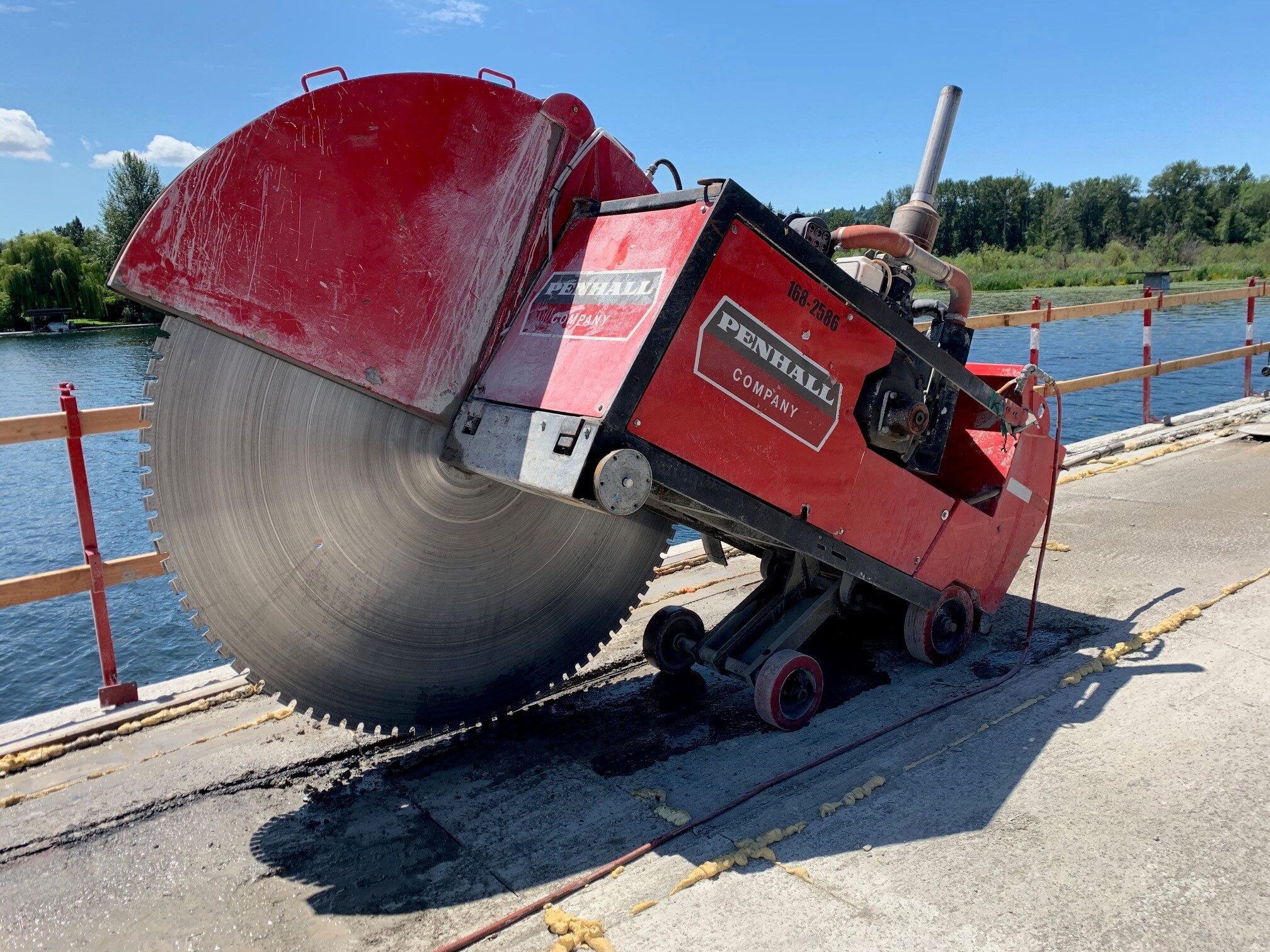
For flat sawing, the most common type of concrete cutting, used to cut horizontal slabs, blade depth is limited by equipment capacity. Standard flat saws can cut up to about 13–14 inches in a single pass. Thicker cuts require multiple passes, increasing time and cost. Wall saws and wire saws can handle greater thicknesses, but the equipment is more specialized and commands higher rates.
As a general benchmark: a straightforward cut through a 4-inch unreinforced slab will cost less per linear foot than a cut through an 8-inch reinforced slab, which will cost less than a cut through a 12-inch post-tensioned wall.
Reinforcement Type and Density
Rebar and wire mesh are the most common forms of concrete reinforcement, and both increase cutting and coring costs, but post-tension (PT) cables are in a category of their own.
When diamond blades or drill bits encounter steel, they wear significantly faster than when cutting plain concrete. A job that might yield 500 linear feet per blade on unreinforced concrete might yield only 200 feet per blade on heavily rebar-laden material. That’s more than double the blade consumption, and blades are a significant cost in any concrete cutting project.
Post-tension cables require an additional layer of precaution. PT cables are under extreme tension, and cutting through one without knowing its location can cause sudden cable release, posing a serious safety risk and potentially damaging the structure. Contractors working in post-tensioned structures must know the cable layout before cutting begins, which typically requires a GPR scan prior to any cutting or coring work. That scan is an additional cost but a non-negotiable one.
Concrete Hardness and Mix Design
Concrete is specified by its compressive strength, measured in PSI. Standard residential concrete is typically 3,000–4,000 PSI. Commercial and industrial concrete is often 5,000–8,000 PSI or higher. The harder the concrete, the faster it wears cutting equipment.
Ironically, very soft or aggregate-heavy concrete can also be harder on blades, certain aggregate types like quartzite or flint are extremely abrasive. This is why experienced contractors ask about the concrete type and age when quoting, not just the thickness.
Type of Cut Required
Not all cuts are created equal. Different cutting methods serve different applications, and each has its own cost structure:
Flat sawing (slab sawing): Used for horizontal surfaces. Generally the most cost-effective method when applicable. Priced per linear foot.
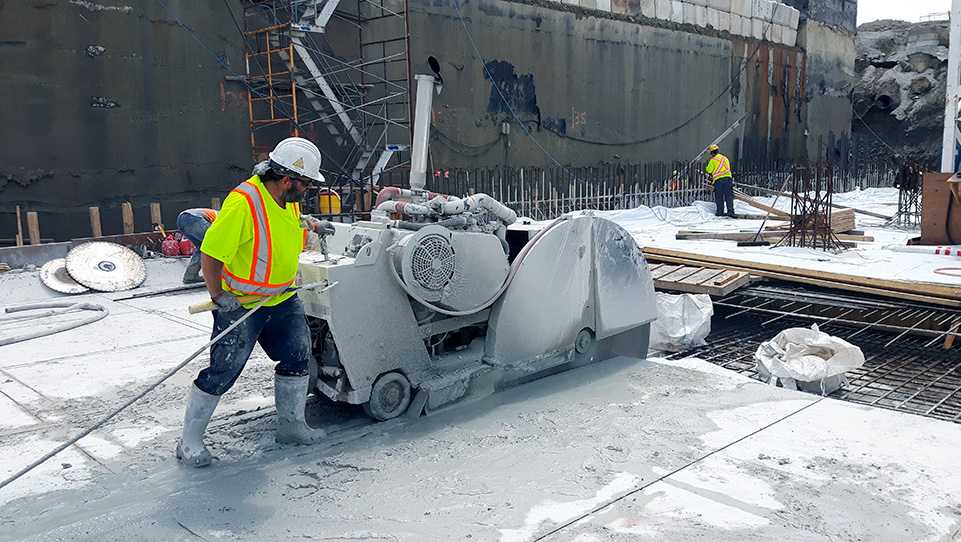
Wall sawing: Used for vertical or angled cuts in walls, columns, and elevated slabs. Requires track mounting and more setup. Higher cost per linear foot than flat sawing.
Wire sawing: Used for large, complex, or deep cuts where other methods can’t reach. Can cut through virtually any thickness. Highest cost per linear foot but sometimes the only viable option.
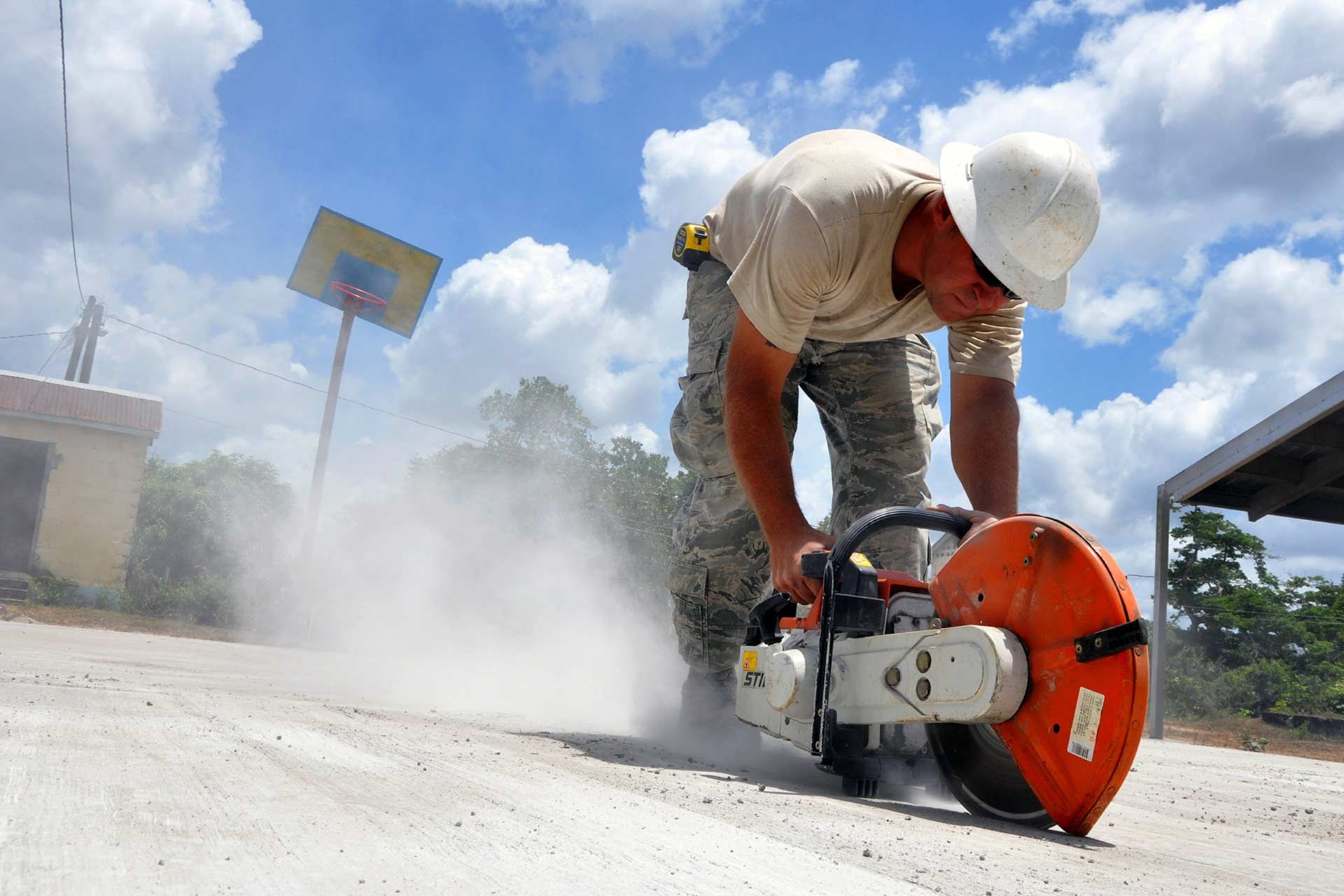
Hand sawing: Used in tight or inaccessible areas. Typically limited to shallower depths. Slower and more labor-intensive.
Length and Complexity of Cuts
Mobilization costs are relatively fixed regardless of the size of the job, getting crew and equipment to the site costs the same whether there’s 20 linear feet of cutting or 2,000. This means the cost per linear foot tends to decrease as the scope of work grows. Smaller jobs carry proportionally higher per-unit costs because mobilization expenses are spread across fewer linear feet.
Cut complexity also matters. A series of straight, parallel cuts across a flat open slab is the most straightforward scenario. Tight corners, multiple elevation changes, plunge cuts, or cuts in confined spaces add labor and setup time that increases per-cut cost.
Site Accessibility and Logistics
Equipment needs to get to the work area. If the cutting zone is on an open parking lot, setup is simple. If it’s in a basement with a narrow stairwell, on an elevated bridge deck, or in a live industrial facility, logistics become significantly more complex.
Overhead clearance limits which equipment can be used. Confined spaces may require smaller equipment that cuts more slowly. Working in an occupied building creates constraints around dust suppression, water management, and noise, all of which affect efficiency and cost. Access to power and water at the work site also factor in.
Water Availability and Slurry Management
Diamond cutting requires water for cooling and dust suppression. If water must be trucked in or a water management system is needed to contain and dispose of slurry, those add to project cost. OSHA’s silica dust regulations also require specific engineering controls when dry cutting isn’t permitted, which can affect required equipment and labor.
Key Factors That Influence Concrete Coring Cost
Many of the same variables that affect concrete cutting cost apply to coring as well, thickness, reinforcement, hardness, and site access all play a role. But coring has a few additional dimensions worth understanding:
Core Diameter
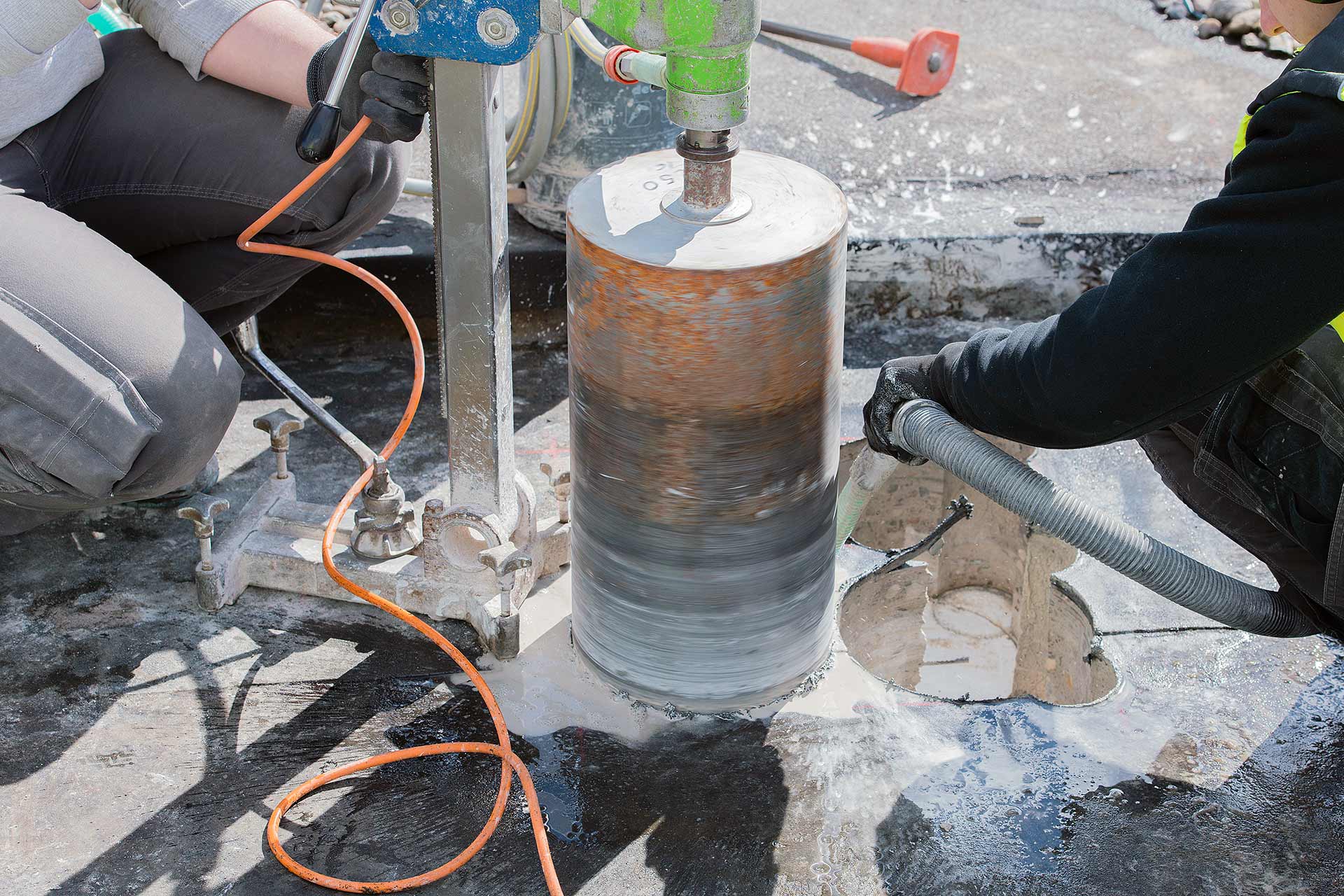
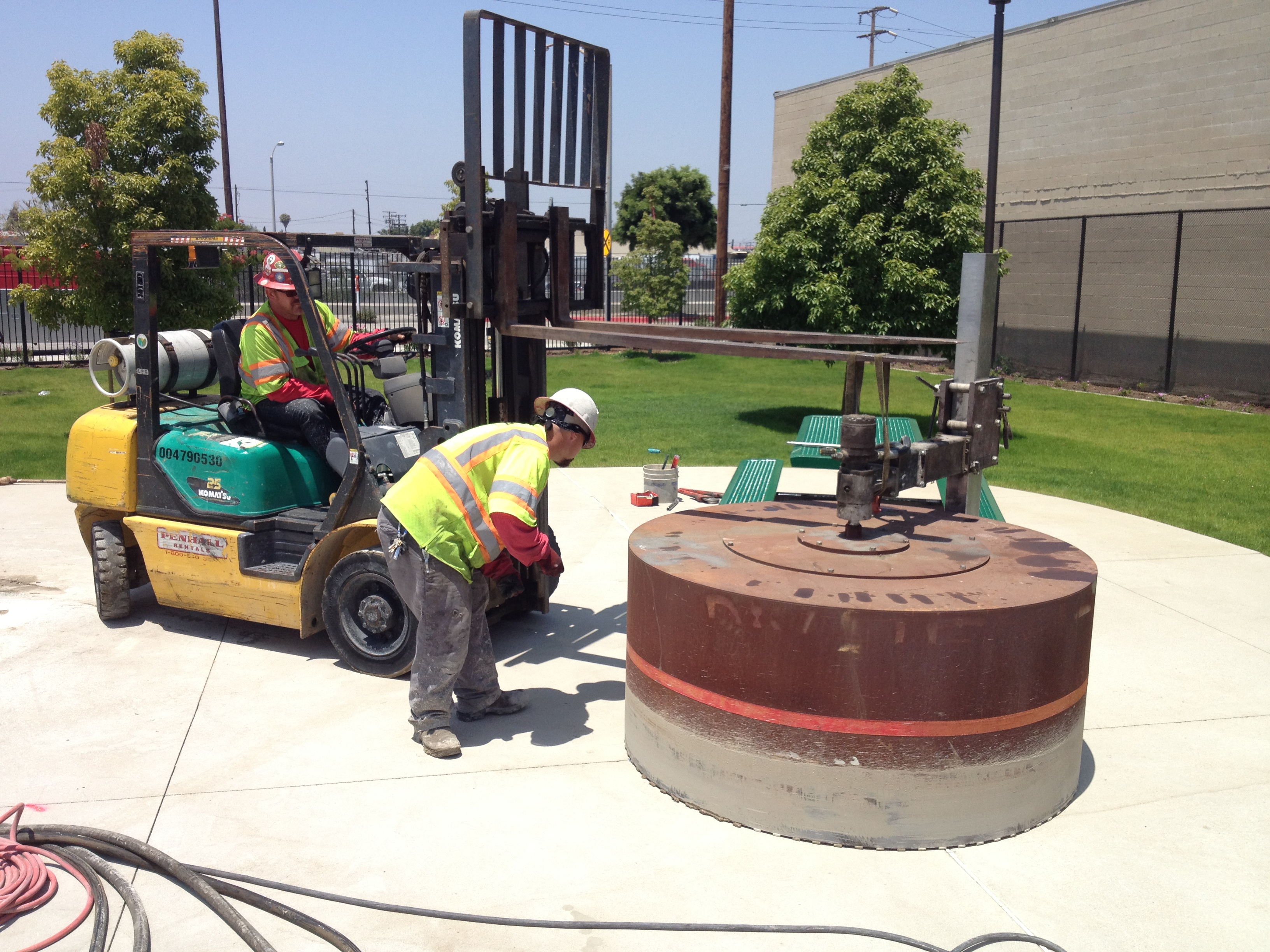
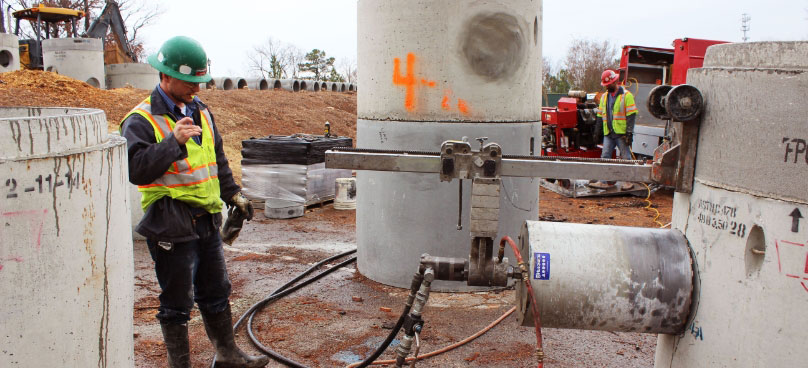
Core diameter is the most immediate cost variable in concrete coring. Small-diameter cores, typically 1 to 4 inches, are used for utility penetrations, test samples, and anchoring applications. Larger-diameter cores, from 6 to 36 inches or more, are used for pipes, HVAC ducts, structural openings, and other larger penetrations.
Larger diameter means a larger drill bit, more surface area being cut, greater force required, and slower drilling speed. A 4-inch core through 6 inches of unreinforced concrete is a much faster operation than a 20-inch core through the same material. Concrete coring cost scales significantly with diameter.
Depth of Core
A 6-inch core through a 4-inch slab is a fundamentally different job than a 6-inch core through a 24-inch wall. Deeper cores take longer, stress equipment more, and in some cases require core barrel extensions that add setup time. Depth is a direct multiplier on cost.
Reinforcement and Obstructions
Rebar encountered during coring accelerates bit wear and slows penetration rate. When cores need to be placed at specific locations, a GPR scan beforehand allows the crew to either avoid rebar or plan for it. Emergency repositioning of core locations in the field due to unexpected rebar adds cost and delays.
In post-tensioned slabs, hitting a PT cable with a core drill can be catastrophic. GPR scanning before coring post-tensioned concrete is not optional, it’s a safety requirement that should always be included in project scope and budget.
Number of Cores
As with cutting, mobilization costs are distributed across the total scope of work. A single core in a remote location carries a high per-core cost because the fixed costs of dispatch and setup are assigned to one penetration. A project with 50 cores of the same size in the same facility can be priced far more efficiently on a per-unit basis.
Angle and Orientation
Most concrete coring is done vertically or horizontally. Angled cores, overhead cores, or cores in confined geometries require specialized setups that take more time and sometimes require custom rigging. These scenarios carry a premium over standard coring.
Additional Cost Items to Budget For
GPR Scanning
Ground Penetrating Radar (GPR) scanning is used to map the interior of concrete before cutting or coring begins. It identifies rebar locations, post-tension cables, conduits, and voids. While GPR scanning adds a line item to the project budget, it almost always saves money overall by preventing unexpected rebar hits that destroy blades, enabling strategic placement of cuts and cores to minimize reinforcement encounters, and identifying post-tension cables that could cause a safety incident if cut.
Penhall offers GPR concrete scanning as part of its suite of services, and recommends scanning before virtually any cutting or coring work begins.
Mobilization and Demobilization
Mobilization refers to the cost of getting the crew, equipment, and materials to the job site and set up. For small jobs, mobilization can represent a substantial portion of the total cost. Understanding this helps explain why getting multiple small jobs done in a single mobilization is almost always more cost-efficient than spreading them across multiple visits.
Travel and Geographic Location
Labor rates vary by region. Projects in higher cost-of-living areas or markets with tight labor availability will carry higher rates. Remote projects or those requiring long travel times will also incur additional mobilization costs.
Scheduling and Urgency
Standard business-hours scheduling is typically the most cost-effective option. After-hours, weekend, or emergency work carries overtime premiums. In some cases, project timelines or facility operations (a hospital that can’t take downtime during the day, or a highway that can only be worked on at night) necessitate off-hours scheduling, which needs to be factored into the budget.
How to Get an Accurate Concrete Cutting or Coring Quote
Ballpark figures for concrete cutting and coring are of limited value because the variables that drive cost are so specific to each project. To get an accurate quote, be ready to provide:
- The type and dimensions of cuts or cores needed (length, diameter, depth)
- The concrete thickness and approximate PSI or age of the structure
- Whether the concrete is reinforced, and if so, the type of reinforcement (rebar, mesh, post-tension)
- Project schedule requirements and any after-hours or overtime constraints
Penhall’s Concrete Cutting and Coring Services
Penhall Company’s concrete cutting and concrete coring services combine decades of field expertise with a full suite of complementary capabilities, including GPR scanning, selective demolition, and structural repair, allowing Penhall to manage the full project workflow from pre-work scanning through final restoration under a single contract.
As North America’s largest provider of concrete cutting, coring, and demolition services, Penhall brings a scale of operational depth, equipment availability, crew experience, and geographic reach, that smaller contractors cannot match. With branch locations across the country, Penhall can mobilize quickly to support projects in any region.
Penhall’s Behavior-Based Safety (BBS) program ensures that every cutting and coring project is performed with rigorous attention to worker and public safety, a critical factor on any job involving post-tension structures, occupied buildings, or active infrastructure.