• Skip to main content

CONCRETE CORING COMPANY

  • About Us

    ABOUT PENHALL

    Penhall has been the United States' go-to concrete services partner since 1957.

    • OUR STORY

    • LEADERSHIP TEAM

    • SAFETY

    • CAREERS

    • RESOURCES

    • FREQUENTLY ASKED QUESTIONS

    • SUSTAINABILITY

    CONTACT PENHALL

    Penhall Trucks

    We've handled projects of all types and sizes, with a track record of excellence going back more than 65 years. Contact us about your next project.

    TALK TO US
  • Services

    CONCRETE SERVICES

    Whether it's coring, flat sawing, wall sawing, or breaking and removal, we pride ourselves in our experience, expertise, top-of-the-line equipment, and unwavering commitment to safety.

    • CONCRETE CORING

    • CONCRETE CUTTING

    • DEMOLITION

    • HYDRODEMOLITION

    • STRUCTURAL REPAIR

    • GRINDING & GROOVING

    • BRIDGE SERVICES

    • SCARIFYING & SHAVING

    • BREAKING & REMOVAL

    • OPERATED EQUIPMENT RENTALS

    SUBSURFACE SERVICES

    Our subsurface services provide industry-leading solutions in concrete scanning, private utility locating and mapping, digital x-ray imaging and fiber reinforced polymer, ensuring precision, safety, and efficiency.

    • CONCRETE GPR SCANNING

    • CONCRETE X-RAY IMAGING

    • PRIVATE UTILITY LOCATING & MAPPING

    • FIBER REINFORCED POLYMER

    LUNCH AND LEARN WITH PENHALL COMPANY

    Lunch & Learn

    We're excited to offer you an engaging and informative session that will introduce you to our range of services, industry expertise, and innovative solutions. As a leading provider in concrete cutting, coring, and demolition, Penhall Company is committed to delivering top-notch service and exceeding your expectations. Grab your seat, enjoy a delicious meal, and discover how partnering with us can benefit your projects.

    SCHEDULE A LUNCH & LEARN
  • Industries

    OUR PROJECTS

    Penhall Company has had the opportunity to work on some of the most challenging and wide-ranging projects in North America.

    • ALL PROJECTS

    • AVIATION

    • CHURCHES

    • COMMERCIAL

    • DOT / INFRASTRUCTURE

    • EDUCATION

    • ELECTRIC VEHICLE CHARGING

    • GRAFF

    • HEALTHCARE / HOSPITAL

    • HOSPITALITY

    • INDUSTRIAL

    • LOCK / DAM

    • POWER / NUCLEAR

    • RESIDENTIAL

    • WATER / WASTEWATER TREATMENT

    LATEST PROJECT

    Sutter Health 660 J Street Project

    LOCATION: Sacramento, CA
    SERVICE: Demolition, GPR Scanning, Core Drilling
    READ MORE
  • Locations
penhall menu logo
  • Careers
  • Contact Us
  • QUOTE REQUEST
  • This field is for validation purposes and should be left unchanged.
  • Site Contact Information

  • (XXX) XXX-XXXX
  •  
  • Job Site Location

  • After submitting this form a Penhall Company representative will be in contact with you to confirm your request. If this request is urgent, please call 1-800-PENHALL to be connected with the nearest Penhall branch. Upon submitting this form you will also receive occasional updates about our services and company announcements. You may unsubscribe from these e-mails at anytime. Grinding and grooving services are conducted by Emery Sapp & Sons, Inc. For specific inquiries related to grinding and grooving, click here or reach out to Chris Fitzpatrick at chris.fitzpatrick@emerysapp.com

  • About Us
    • Our Story
    • Leadership Team
    • Sustainability
  • Safety
  • Services
    • Concrete Services
      • Concrete Coring
      • Concrete Cutting
      • Demolition
      • Hydrodemolition
      • Structural Repair
      • Grinding & Grooving
      • Bridge Services
      • Scarifying & Shaving
      • Breaking & Removal
      • Operated Equipment Rentals
    • Subsurface Services
      • Concrete GPR Scanning
      • Digital X-Ray Imaging
      • Private Utility Locating & Mapping
      • Fiber Reinforced Polymer
  • Industries
  • Resources
    • Articles
    • Frequently Asked Questions
  • Contact Us
  • Find a Branch
  • Request a Quote
  • JOIN PENHALL COMPANY
  • Concrete Coring Company
×
  • About Us
    • Our Story
    • Leadership Team
    • Sustainability
  • Safety
  • Services
    • Concrete Services
      • Concrete Coring
      • Concrete Cutting
      • Demolition
      • Hydrodemolition
      • Structural Repair
      • Grinding & Grooving
      • Bridge Services
      • Scarifying & Shaving
      • Breaking & Removal
      • Operated Equipment Rentals
    • Subsurface Services
      • Concrete GPR Scanning
      • Digital X-Ray Imaging
      • Private Utility Locating & Mapping
      • Fiber Reinforced Polymer
  • Industries
  • Resources
    • Articles
    • Frequently Asked Questions
  • Contact Us
  • Find a Branch
  • Request a Quote
  • JOIN PENHALL COMPANY
  • Concrete Coring Company
penhall menu logo

FRP Structural Upgrades on Aging Transportation and Civil Infrastructure: When It's the Right Specification

CALL FOR A QUOTE
1-800-736-4255

At a Glance

  • Fiber reinforced polymer (FRP) is a strengthening method used to add load capacity or extend service life on an existing concrete structure without adding significant weight.
  • FRP is often specified when a structure needs added strength, but full replacement is not justified by cost, schedule, or continued service requirements.
  • Load requirements, remaining service life, and access conditions determine whether FRP, added rebar reinforcement, or replacement fits the project best.
  • Common applications include bridge girders and columns, parking structure beams, and industrial members carrying increased load demands.
  • FRP resists corrosion well because it will not rust, but it carries different fire and UV exposure limits than steel reinforcement, so exposure conditions matter in the specification.
  • A structural engineer needs to evaluate loading, environment, and existing condition before FRP is specified as the repair method, not a general contractor working from a catalog spec.
Penhall Sacramento-16
penhall lax edited-24

Repair, Reinforce, or Replace: The Decision in Front of Structural Engineers

Aging transportation and civil infrastructure rarely reaches a clean choice between fixing a structure in place and leaving it alone. Bridge components, parking structure beams, and industrial members age unevenly. Some sections show real deterioration while the surrounding structure remains sound. Full replacement solves the problem but comes with cost, schedule, and often closure impacts that owners want to avoid when a targeted repair will do the job. Reinforcement with FRP is one of the tools available to close that gap, but it fits some situations far better than others.

What FRP Reinforcement Does and How It Is Applied

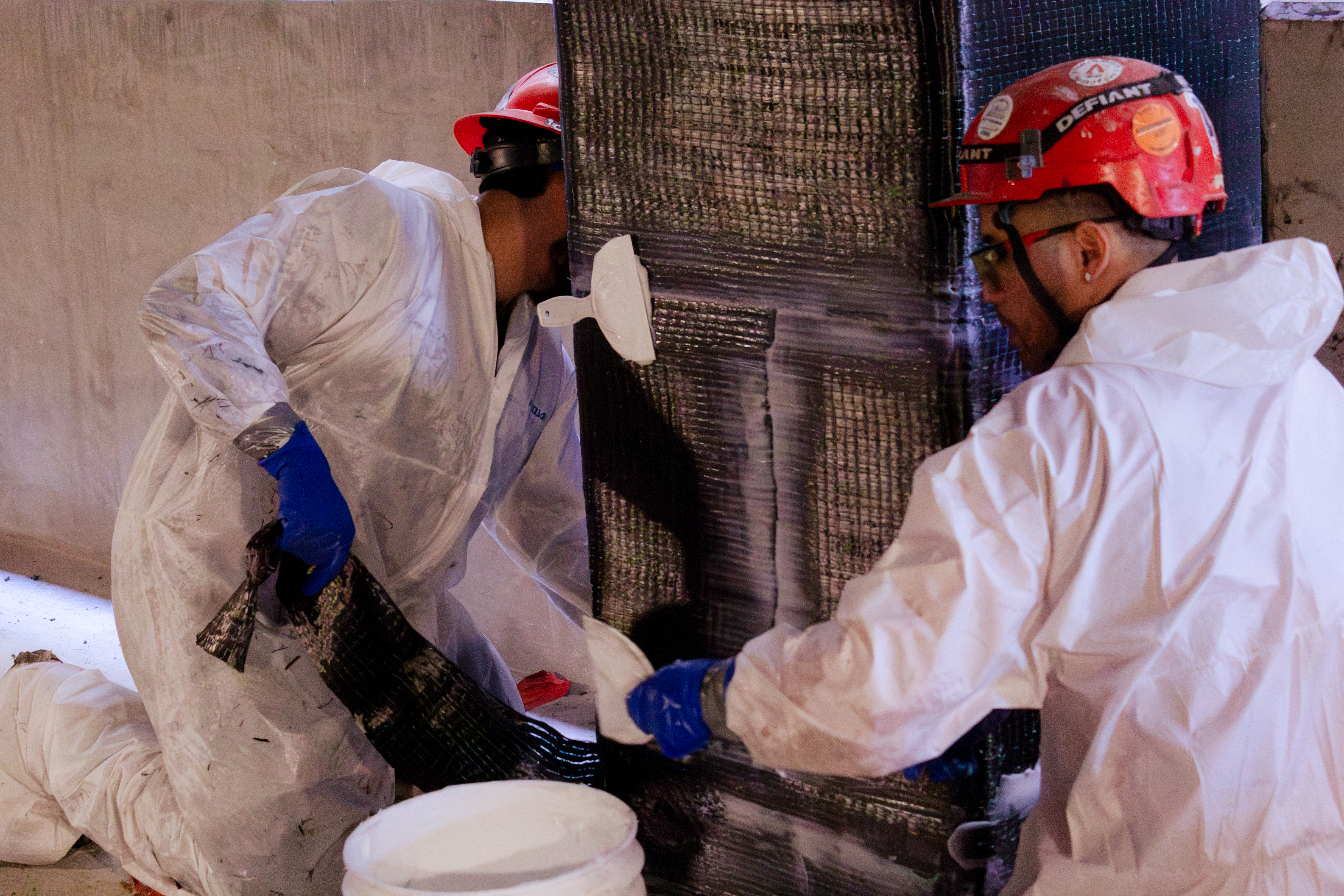
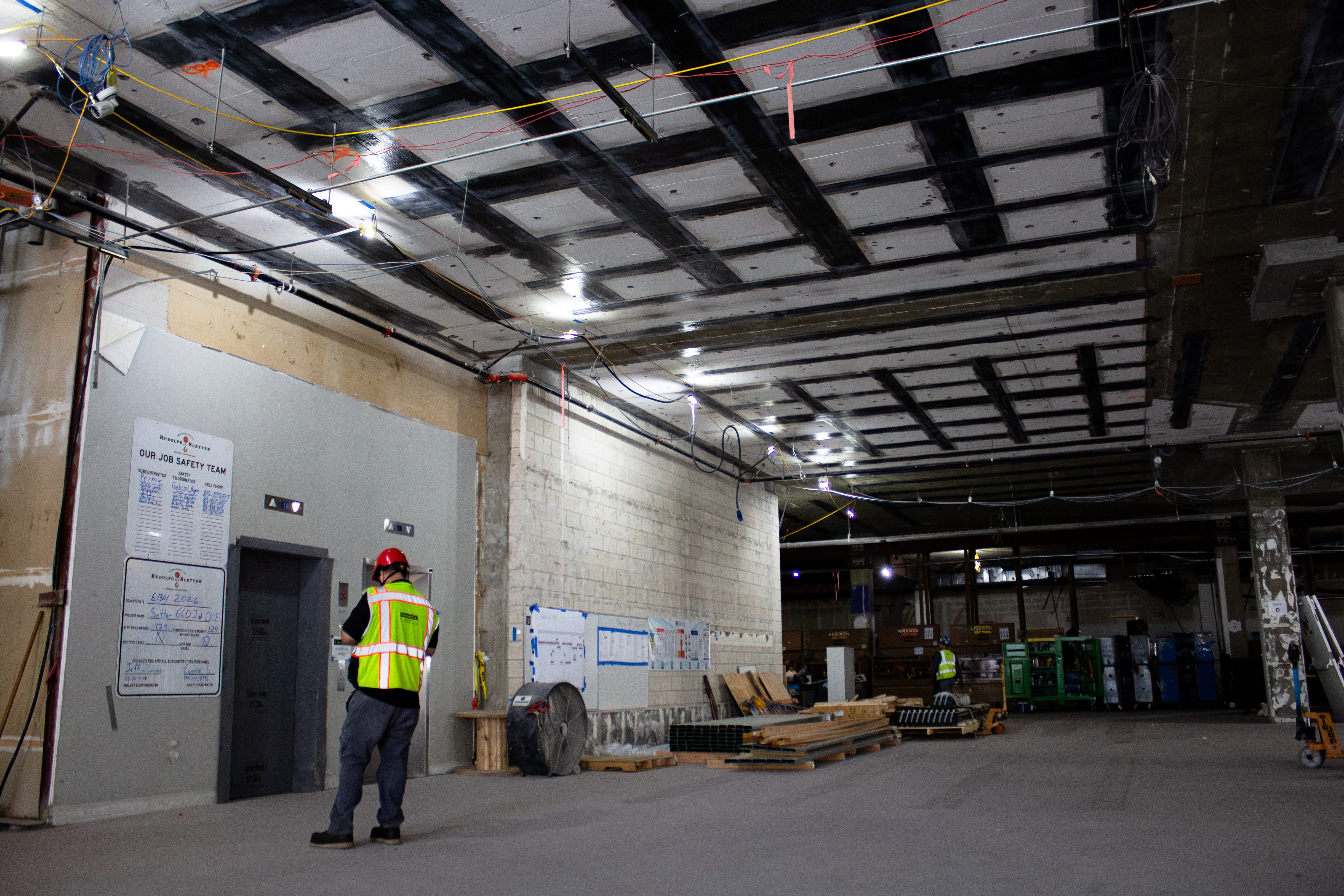
FRP systems add tensile or flexural strength to an existing concrete member by bonding fiber material to the surface or embedding it near the surface. Fiber type varies by application: carbon fiber offers the highest strength-to-weight ratio and sees the most use on structural upgrades, glass fiber costs less and works well where strength demands are lower, and aramid fiber sees more specialized use where impact resistance matters.

Common installation methods

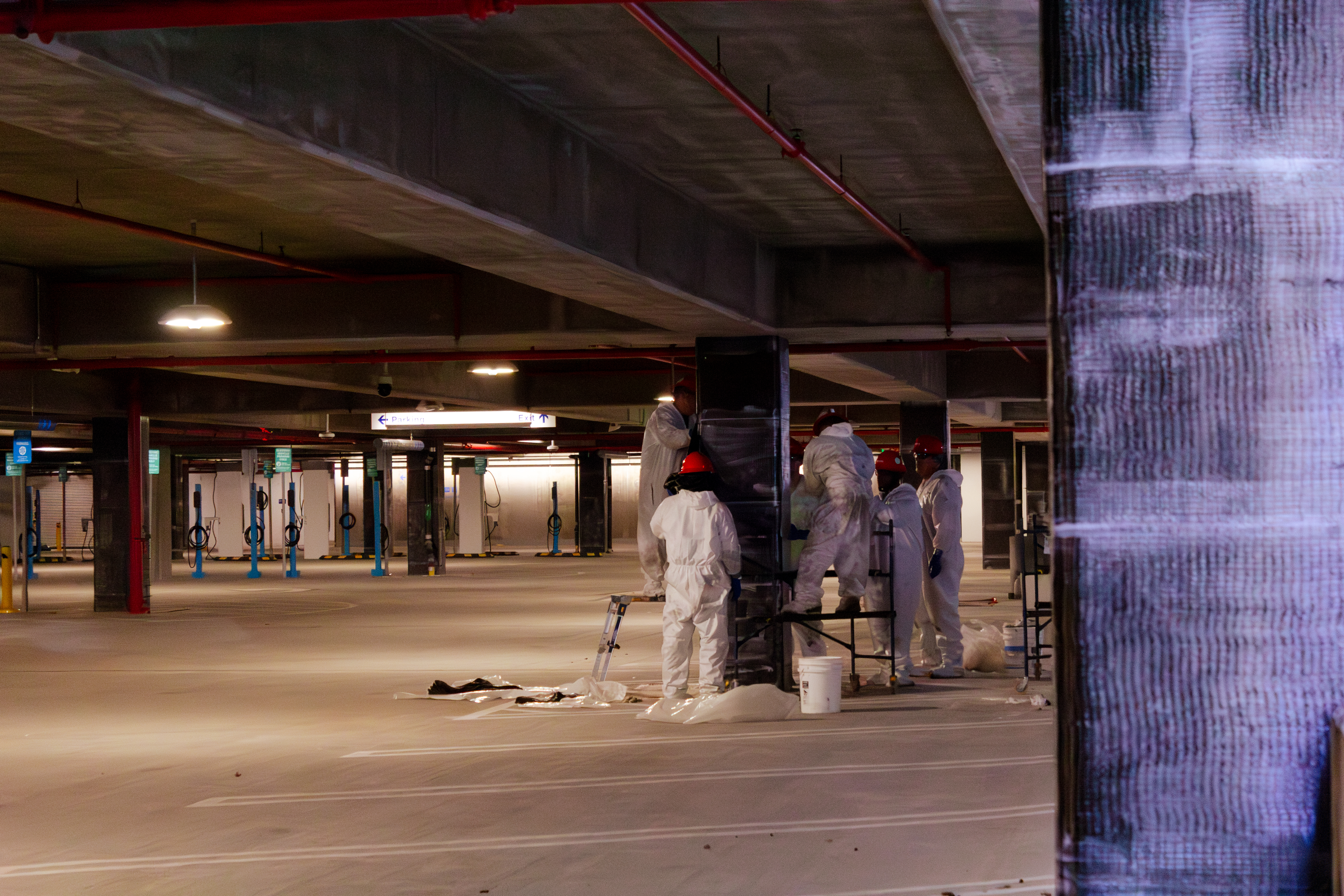
  • Wet layup, where fiber sheets are saturated with resin and applied directly to a prepared concrete surface
  • Near-surface mounted (NSM) bars, where FRP rods are set into grooves cut into the concrete cover and bonded in place
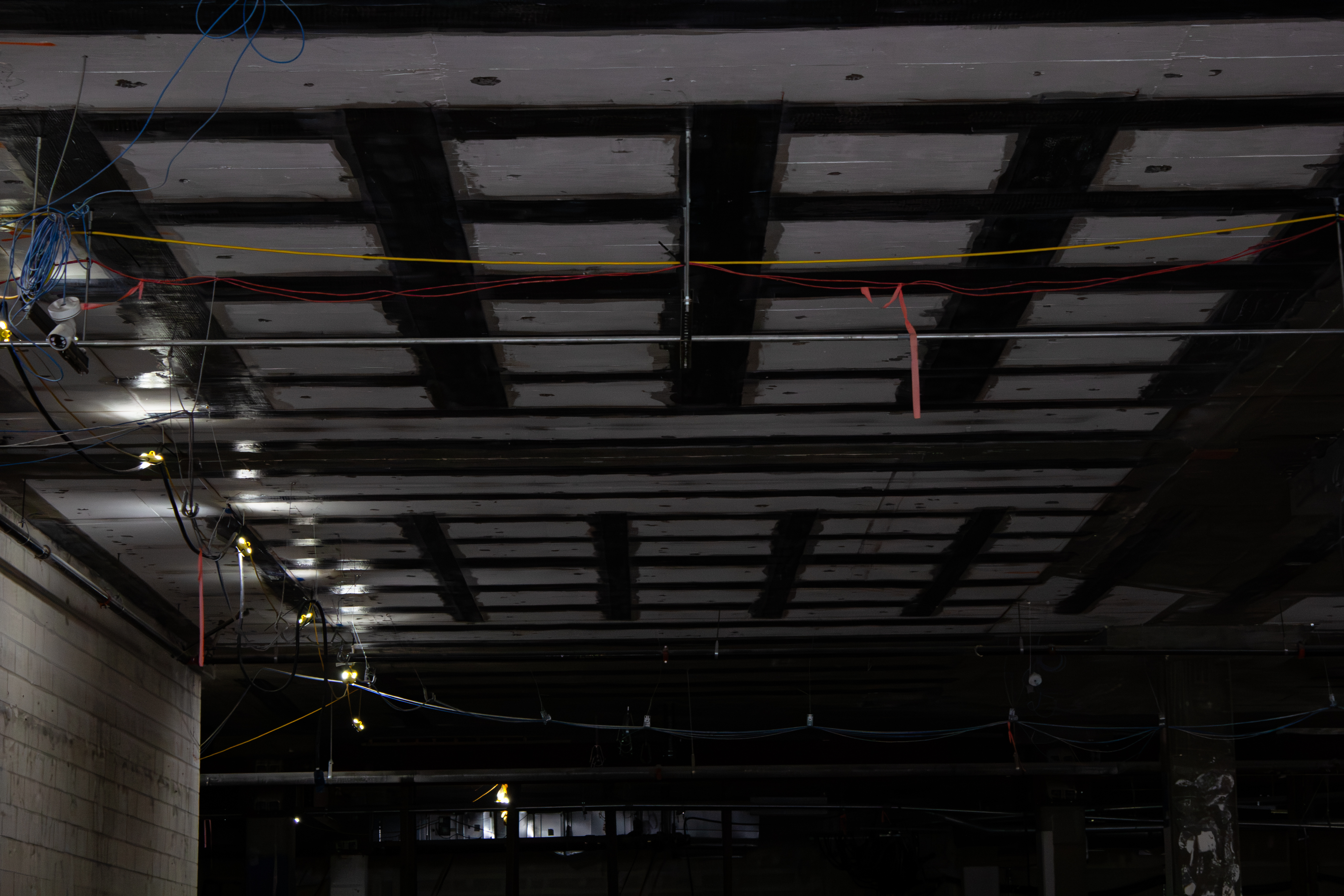
  • Pre-cured FRP strips, which are manufactured off site and bonded to the structure with an adhesive

Surface preparation determines how well an FRP system performs over time. The concrete surface has to be sound, clean, and free of laitance or contamination before bonding, since the strength of the system depends on the bond between the fiber and the substrate holding under load.

When FRP Is the Right Specification

  • A structure needs added load capacity and the underlying concrete is still structurally sound
  • Section loss from corrosion or deterioration is present but has not compromised the member beyond repair
  • The environment involves corrosion exposure where added steel reinforcement would face the same deterioration risk
  • Added weight from a conventional concrete jacket or steel plate would create other problems, such as exceeding a foundation's load capacity
  • Access conditions limit the use of heavier construction methods or require the structure to stay in service during the work

When FRP Is Not the Right Fit

  • The concrete substrate has deteriorated too far for a reliable bond, such as widespread delamination or advanced section loss
  • The application requires a fire rating that FRP resin systems cannot meet without added protection
  • The structure needs a change in geometry or load path that reinforcement alone cannot deliver
  • A cost comparison shows replacement is the more practical choice once schedule, traffic control, and closure costs are factored in

Applications on Aging Transportation and Civil Infrastructure

Bridges make up a large share of FRP reinforcement work, most often on girders and columns that show deterioration but retain enough section to carry an FRP wrap or strip system. Parking structures are another common application, particularly on beams and slabs where corrosion from de-icing chemicals has reduced rebar section without compromising the member outright. Industrial structures see FRP used to reinforce members carrying new or increased load demands, such as equipment additions that raise the design load beyond what the original structure was built for.

Evaluating Load Requirements and Long-Term Performance

  1. Complete a condition assessment to document existing deterioration, section loss, and substrate quality
  2. Establish the current load rating and the target load capacity the structure needs to reach
  3. Evaluate environmental exposure, including moisture, chemical exposure, and temperature range at the site
  4. Have the structural engineer design the FRP system, including fiber type, layup schedule, and anchorage details
  5. Install the system following the manufacturer's specification and the engineer's design
  6. Complete quality assurance testing, such as bond testing, to confirm the installed system performs as designed

Long-term performance depends on getting each of these steps right. An FRP system installed over a substrate that was not properly prepared, or designed without an accurate load assessment, will not deliver the service life the specification assumes.

Choosing a Contractor for FRP Structural Upgrades

FRP installation calls for a contractor with documented experience preparing substrates, installing fiber systems to manufacturer specifications, and coordinating with the structural engineer on design details and field conditions. Project teams should confirm a contractor's history on similar structure types, its quality assurance process for bond testing, and its ability to adjust installation sequencing around active transportation or facility operations.

Penhall supports FRP structural upgrades on bridges, parking structures, and industrial facilities. Learn more about Penhall's Fiber Reinforced Polymer, Bridge Services, and Structural Repair capabilities.
Penhall Sacramento-12
penhall lax edited-43

frequently asked questions

What is FRP concrete repair?

FRP concrete repair uses fiber reinforced polymer material, bonded to or embedded near the surface of an existing concrete member, to add strength without the added weight of a conventional concrete jacket or steel plate. It is used on bridges, parking structures, and industrial members that need more load capacity or additional support after section loss from deterioration.

What is the difference between FRP reinforcement and FRP reinforcement bars?

FRP reinforcement is a general term for strengthening an existing structure with fiber material, most often applied as sheets, strips, or wraps bonded to the concrete surface. FRP reinforcement bars, sometimes used in near-surface mounted applications or in new construction, are rigid FRP rods that replace or supplement steel rebar, offering corrosion resistance in place of traditional reinforcement.

How long does an FRP structural upgrade last?

Service life depends on installation quality, exposure conditions, and ongoing maintenance, but a properly designed and installed FRP system can add decades of service life to a structure when the substrate is sound and the bond is verified during installation.

Can FRP be used on a structure with active corrosion?

FRP can be applied over a structure with corrosion-related section loss once the affected concrete has been removed and the substrate has been repaired to a sound condition. FRP does not stop ongoing corrosion inside the concrete, so any active corrosion needs to be addressed as part of the repair scope before the FRP system goes on.

Is FRP more cost-effective than replacing a structure?

In many cases, yes, particularly when the underlying concrete remains sound and replacement would trigger closure, traffic control, or schedule costs that outweigh the reinforcement scope. A full cost comparison depends on the specific structure, its condition, and the owner's schedule constraints.

Does Penhall design FRP systems or only install them?

Penhall installs FRP systems designed by the project's structural engineer, coordinating substrate preparation, fiber application, and quality assurance testing to the approved design.

☎ CALL TO SCHEDULE SERVICE
FOLLOW US

#PenhallRedandGray

penhall menu logo
HEADQUARTERS

1212 Corporate Dr. Suite 500
Irving, TX 75038

1-800-PENHALL

CA Contractors License #568673

FIND YOUR LOCAL PROVIDER
COMPANY

Our Story

Leadership Team

Careers

LOCATIONS

Penhall Company (USA)

Concrete Coring Company (HI)

SERVICES

Concrete Coring

Concrete Cutting

Concrete Scanning

Concrete X-Ray Imaging

Private Utility Locating & Mapping

Demolition

Grinding & Grooving

Bridge Services

Surface Preparation

Concrete Breaking & Removal

Fiber Reinforced Polymer

Hydrodemolition

To receive notifications about our articles, sign up below. You may unsubscribe from these e-mails at anytime.

  • This field is for validation purposes and should be left unchanged.

ENR The Top 600 Logo
ISNetworld logo
Avetta

© Copyright 2026 | Penhall Company | Terms & Conditions | Supplier Code of Conduct | Supplier Terms & Conditions | Sitemap | All Rights Reserved

  • About Us
    • Our Story
    • Leadership Team
    • Sustainability
  • Safety
  • Services
    • Concrete Services
      • Concrete Coring
      • Concrete Cutting
      • Demolition
      • Hydrodemolition
      • Structural Repair
      • Grinding & Grooving
      • Bridge Services
      • Scarifying & Shaving
      • Breaking & Removal
      • Operated Equipment Rentals
    • Subsurface Services
      • Concrete GPR Scanning
      • Digital X-Ray Imaging
      • Private Utility Locating & Mapping
      • Fiber Reinforced Polymer
  • Industries
  • Resources
    • Articles
    • Frequently Asked Questions
  • Contact Us
  • Find a Branch
  • Request a Quote
  • JOIN PENHALL COMPANY
  • Concrete Coring Company
  • About Us
    • Our Story
    • Leadership Team
    • Sustainability
  • Safety
  • Services
    • Concrete Services
      • Concrete Coring
      • Concrete Cutting
      • Demolition
      • Hydrodemolition
      • Structural Repair
      • Grinding & Grooving
      • Bridge Services
      • Scarifying & Shaving
      • Breaking & Removal
      • Operated Equipment Rentals
    • Subsurface Services
      • Concrete GPR Scanning
      • Digital X-Ray Imaging
      • Private Utility Locating & Mapping
      • Fiber Reinforced Polymer
  • Industries
  • Resources
    • Articles
    • Frequently Asked Questions
  • Contact Us
  • Find a Branch
  • Request a Quote
  • JOIN PENHALL COMPANY
  • Concrete Coring Company