At a Glance
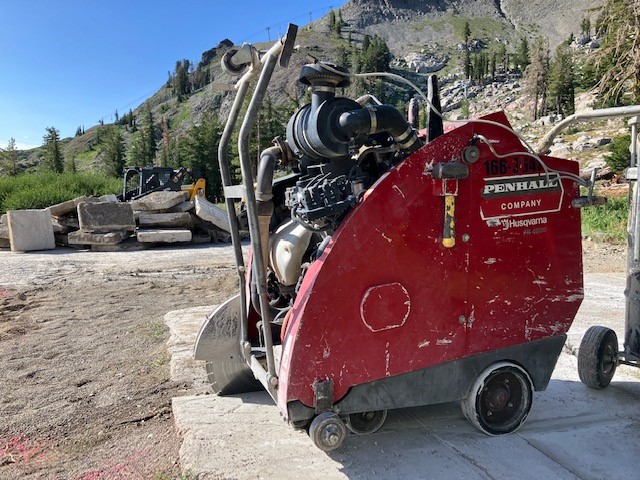
- Flat Saws: Self propelled, walk behind or ride on units built for horizontal cutting, such as slabs, pavements, and expansion joints, at depths up to about 25 inches.
- Wall Saws: Track mounted saws that cut vertical, inclined, or overhead surfaces with precise, straight lines, reaching depths up to about 36 inches from a single side.
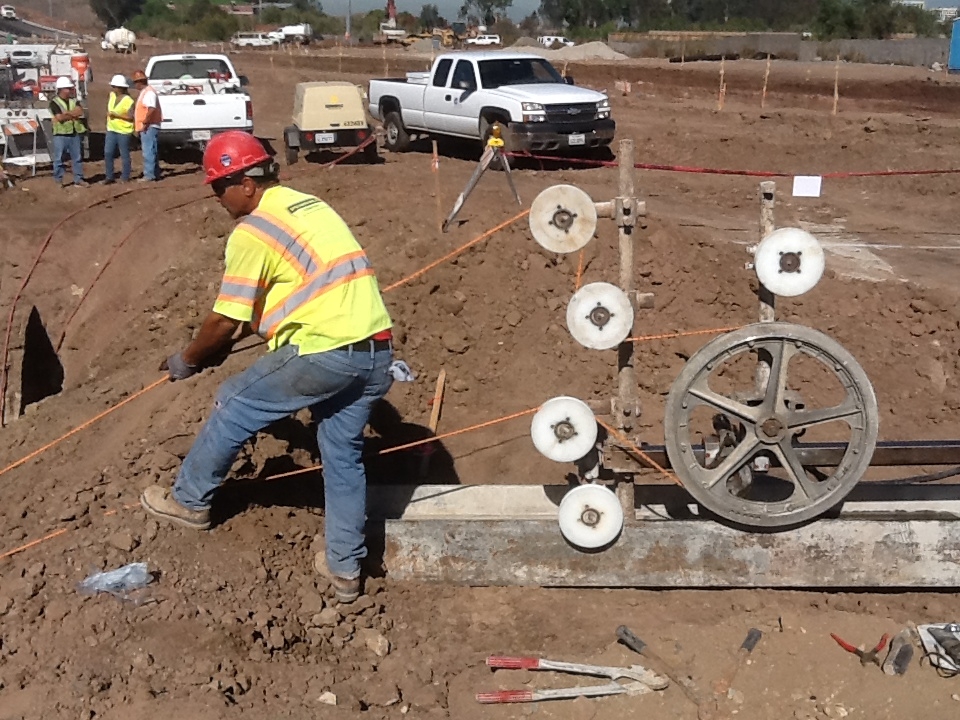
- Wire Saws: Diamond bead cable driven by a hydraulic power unit, used for mass concrete and irregular shapes where depth or geometry rules out a circular blade.
- Chain Saws: Diamond chain saws that plunge cut square corners and tight openings without the overcut a circular blade leaves behind.
- Choosing Between Them: Depth, surface orientation, corner requirements, and site access are the four factors that usually decide which saw fits the job.
Why Saw Selection Matters
Choosing a concrete saw isn't just about matching a tool to a task. The wrong choice can mean a saw that can't reach the required depth, a cut that damages structural steel it shouldn't touch, or equipment that simply can't fit or operate on the site. For GCs, project engineers, and estimators specifying or bidding cutting scope, understanding what each saw type can and can't do is what keeps that decision from becoming a change order later.
There are four primary types of concrete saws used on commercial and infrastructure projects: flat saws, wall saws, wire saws, and chain saws. Each is built for a different combination of surface orientation, depth, and site condition.
Flat Saws (Slab Saws)
Flat saws, also called slab saws, are built for horizontal cutting. They're the most common saw on a jobsite for a reason: pavement, floor slabs, expansion joints, and utility trenching all call for a saw that can travel a straight line across a flat surface.
- Depth capability: Up to about 25 inches with the largest blades, though most commercial slab work falls in the 6 to 12 inch range.
- Power options: Gas, diesel, or electric, depending on whether the work is outdoors or inside an occupied building.
- Best suited for: Pavement removal, expansion joint cutting, slab sectioning, and trenching for utilities beneath floors.
- Site consideration: Diesel and gas units aren't an option in enclosed, occupied spaces due to exhaust. Electric flat saws solve that problem but need a power hookup on site.
Wall Saws (Track Saws)
Wall saws, sometimes called track saws, are the vertical counterpart to flat saws. A guide track anchors to the wall or incline, and the saw travels along it, which is what gives wall sawing its signature: straight, plumb, repeatable cuts through vertical or overhead concrete.
- Depth capability: Up to about 36 inches from a single side, or deeper if the structure is accessible from both faces.
- Power options: High frequency electric or hydraulic, both quieter and cleaner than gas powered handheld saws.
- Best suited for: Door and window openings, elevator shaft penetrations, HVAC and mechanical openings, and any vertical cut that needs to stay straight over a long run.
- Site consideration: The track needs to be anchored to the surface, so wall sawing works best where there's a stable, accessible face to mount to.
Wire Saws
Wire saws use a continuous loop of diamond studded steel cable, driven by a hydraulic power unit, to cut through concrete. Because the wire wraps around the structure rather than plunging in from one face, wire saws aren't limited by blade diameter the way circular saws are.
- Depth capability: Effectively unlimited. Thickness isn't the constraint it is for a flat or wall saw.
- Power options: Hydraulic power units, typically staged near the cut.
- Best suited for: Mass concrete over about 36 inches thick, irregular or curved geometry, and cuts that need to avoid the vibration a circular blade or impact tool would generate.
- Site consideration: Wire saws need clearance to wrap the cable around the structure and a drop zone kept clear during the cut, so access and layout planning matter more here than with a flat or wall saw.
Chain Saws
Concrete chain saws use a diamond segmented chain around a guide bar, similar in concept to a wood cutting chainsaw but built for reinforced concrete. Their defining advantage is the plunge cut: a chain saw can start cutting from a flat face and cut into a corner cleanly, something a circular blade physically can't do without leaving material behind.
- Depth capability: Roughly 15 to 25 inches, depending on the bar length.
- Power options: Electric, hydraulic, or gas.
- Best suited for: Squaring off corners after a wall saw cut, small openings in tight spaces, and any cut where a circular blade's rounded profile would leave an overcut.
- Site consideration: Chain saws cut more slowly and wear consumables faster than a wall saw, so they're typically specified for corner work and small openings rather than long linear runs.
Why a Circular Blade Can't Cut as Deep as It Looks
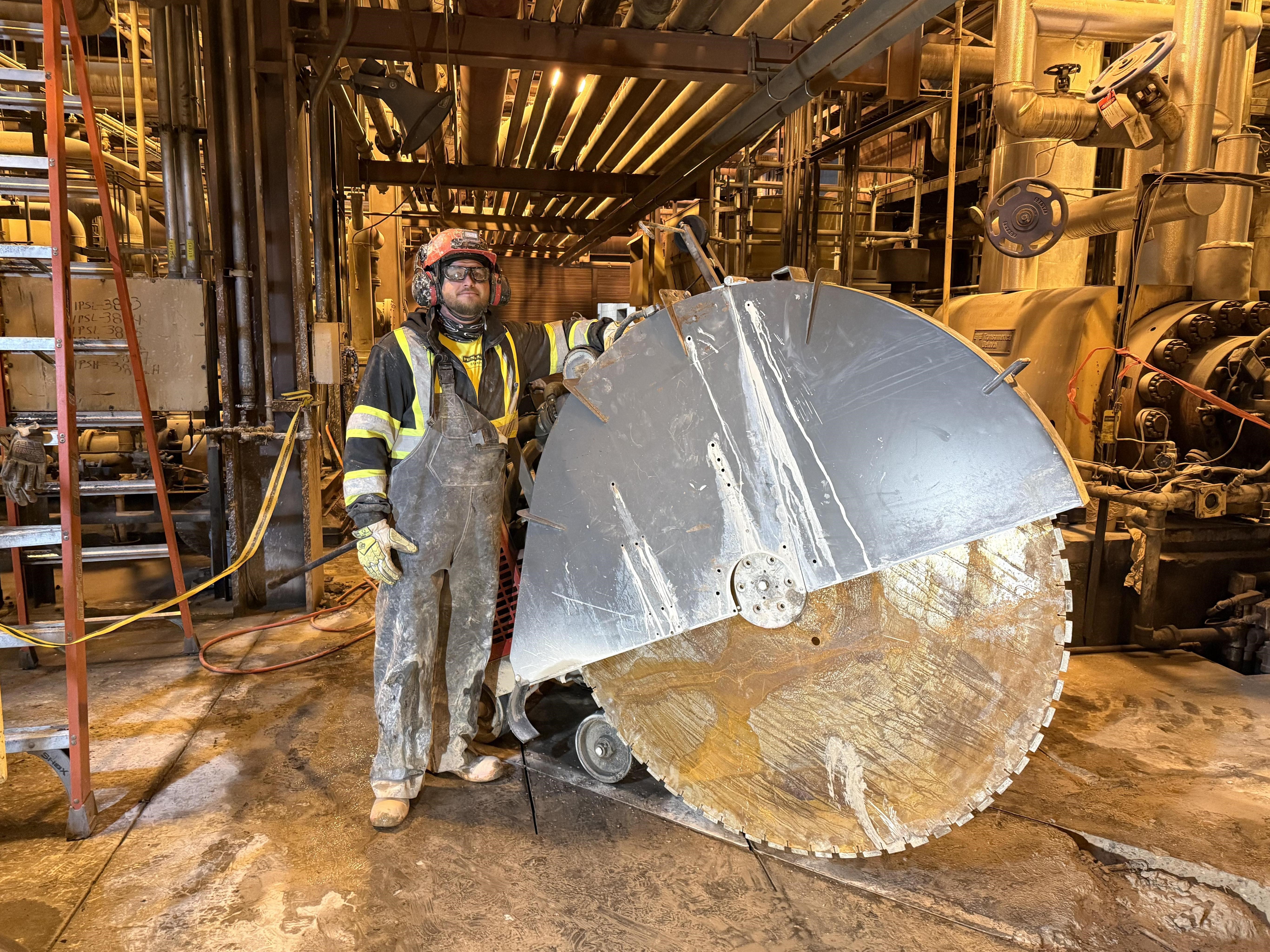
Flat saws and wall saws both use circular diamond blades, and there's a mechanical limit worth knowing when specifying depth. A circular blade's usable cut depth is roughly 40 to 45 percent of its total diameter, not half, because the arbor and blade guard housing take up space at the center. A 36 inch blade, in practice, cuts closer to 14 or 15 inches deep rather than 18.
This also explains why circular blades leave an overcut at corners. As the blade curves down through a wall or slab, its radius causes it to cut past the intended corner line on the far side. When a project spec prohibits that overcut, a wall saw handles the primary linear cuts and a chain saw or core drill finishes the corners flush.
Matching the Saw to the Job
A simple way to work through saw selection:
- Horizontal surface, depth 25 inches or less: Flat saw.
- Vertical or inclined surface, depth 36 inches or less: Wall saw.
- Corner overcut isn't allowed: Wall saw for the linear runs, chain saw to finish the corners.
- Mass concrete over 36 inches thick, or irregular geometry: Wire saw.
- Small opening or tight plunge cut: Chain saw.
Site conditions matter as much as the numbers above. Indoor, occupied spaces call for electric equipment over gas or diesel. Vibration sensitive areas, such as near active lab equipment or fresh concrete, favor wire saws and wall saws over impact tools. And any cut path should be checked with subsurface scanning first, since embedded rebar, post tension cable, and live conduit change what's actually safe to cut through.
Where Each Saw Type Shows Up on Real Projects
Heavy Civil and Infrastructure: Bridges, dams, and lock structures often call for wire saws on mass elements like piers and abutments, paired with high horsepower flat saws for deck and pavement work.
Commercial Renovations: Wall saws handle door, window, and shaft openings in occupied buildings, with chain saws squaring off the corners so adjacent rebar stays intact.
Industrial and Processing Facilities: Electric flat saws cut utility trenches without exhaust concerns in active plants, while wire saws section heavy equipment foundations without disrupting nearby operations.
Ready to Discuss Your Next Cutting Scope?
These four methods are the core of Penhall's concrete cutting capabilities, backed by crews who work with this equipment daily. Visit our concrete cutting page to see the full range of services, or check out operated equipment rentals if your project needs extra saws, crews, or equipment on a rental basis.