
Bridge demolition is a complex process that requires much more than breaking apart concrete and removing old structures. Every phase must be carefully planned around structural conditions, heavy equipment, nearby traffic, and the surrounding environment.
Penhall Company’s Major Projects team is putting that expertise to work on the Brent Spence corridor, a major transportation route connecting Cincinnati, Ohio, and Covington, Kentucky. As part of the corridor improvement project, Penhall is performing demolition work on existing bridges and structures to help make way for planned infrastructure improvements.
From engineered demolition plans to crane lifts involving steel beams weighing up to 193,000 pounds, the project demonstrates the coordination and precision required to take down bridge structures safely and efficiently.

What Makes Bridge Demolition So Complex?
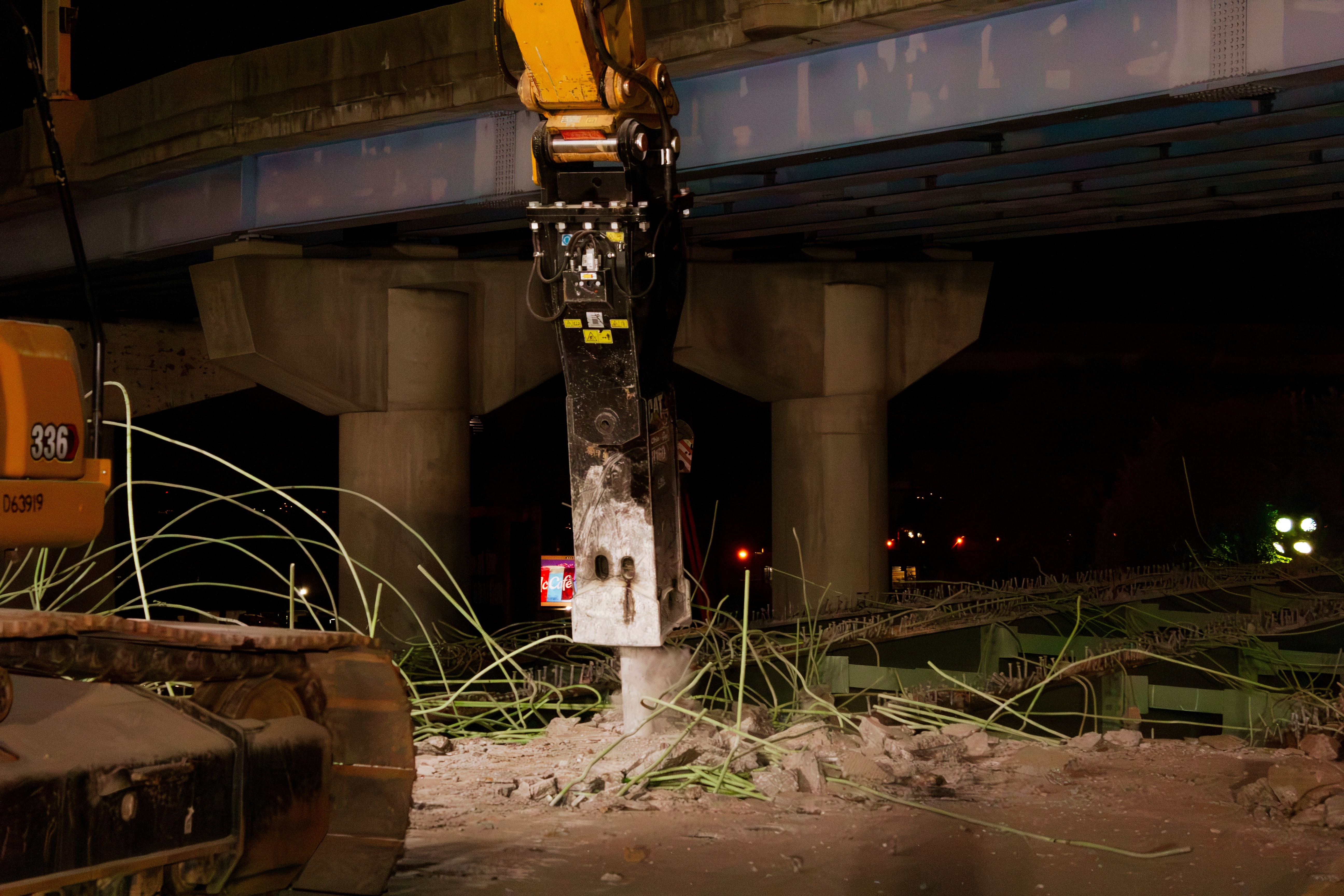
Unlike conventional demolition, bridge demolition often takes place above active roadways, railroad tracks, waterways, or other infrastructure that must be protected throughout the work. Crews must determine how existing structures will be dismantled, how individual components will be removed, and how equipment and personnel can work safely in a constrained environment.
On the Brent Spence corridor project, Penhall’s work includes several demolition methods, including:
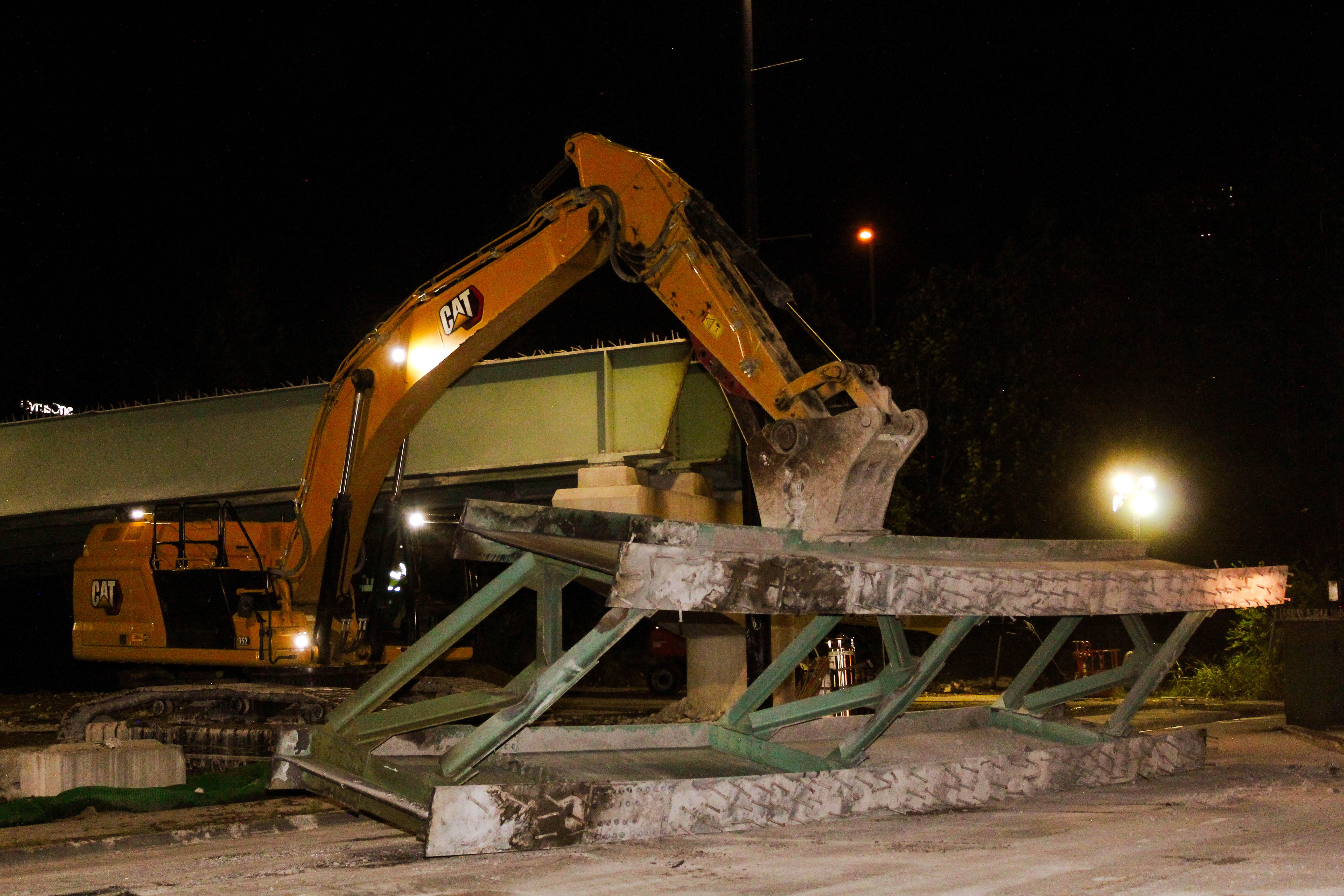
- Concrete Deck Demolition: Breaking and removing sections of existing bridge decks using heavy excavators equipped with breakers and pulverizers.
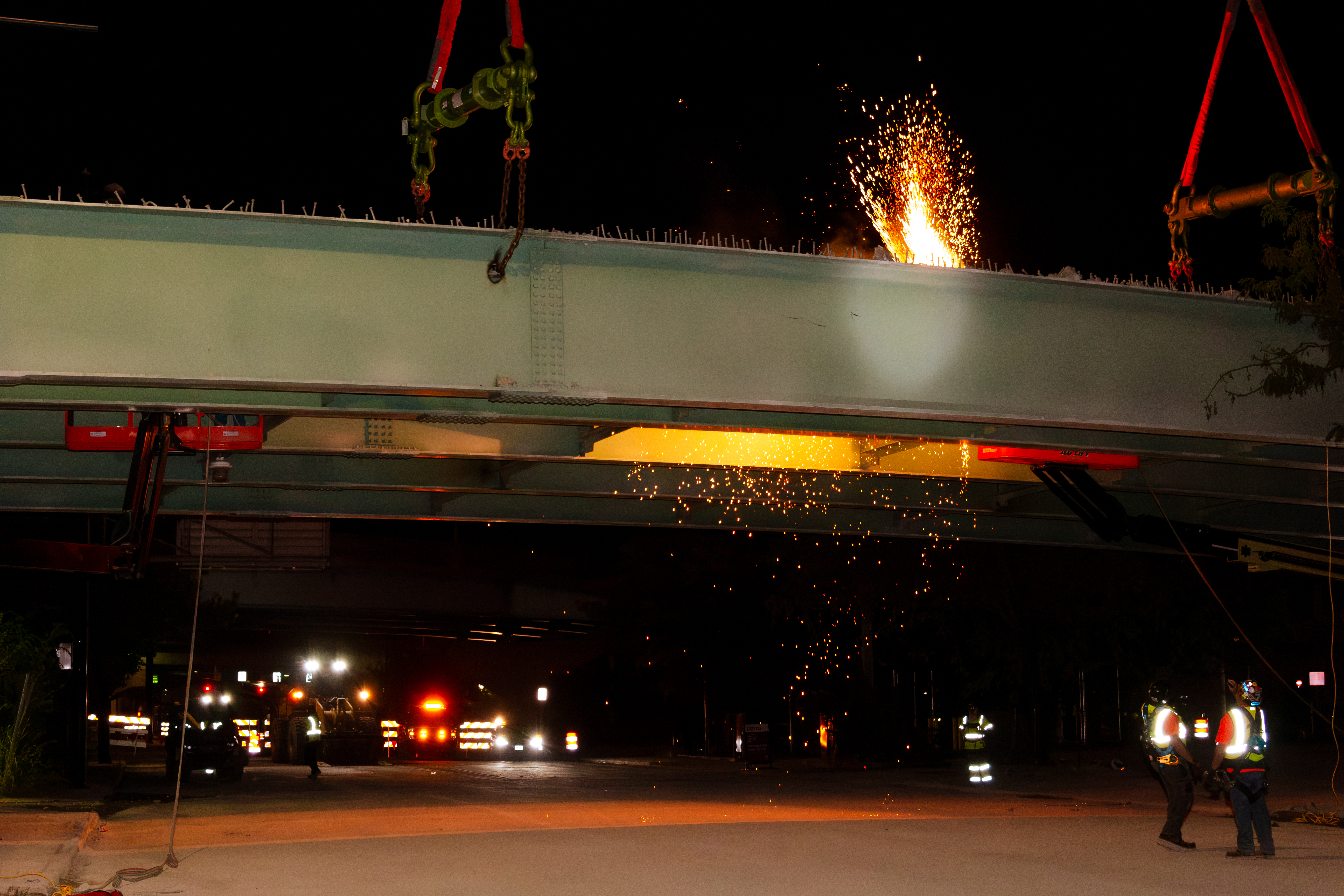
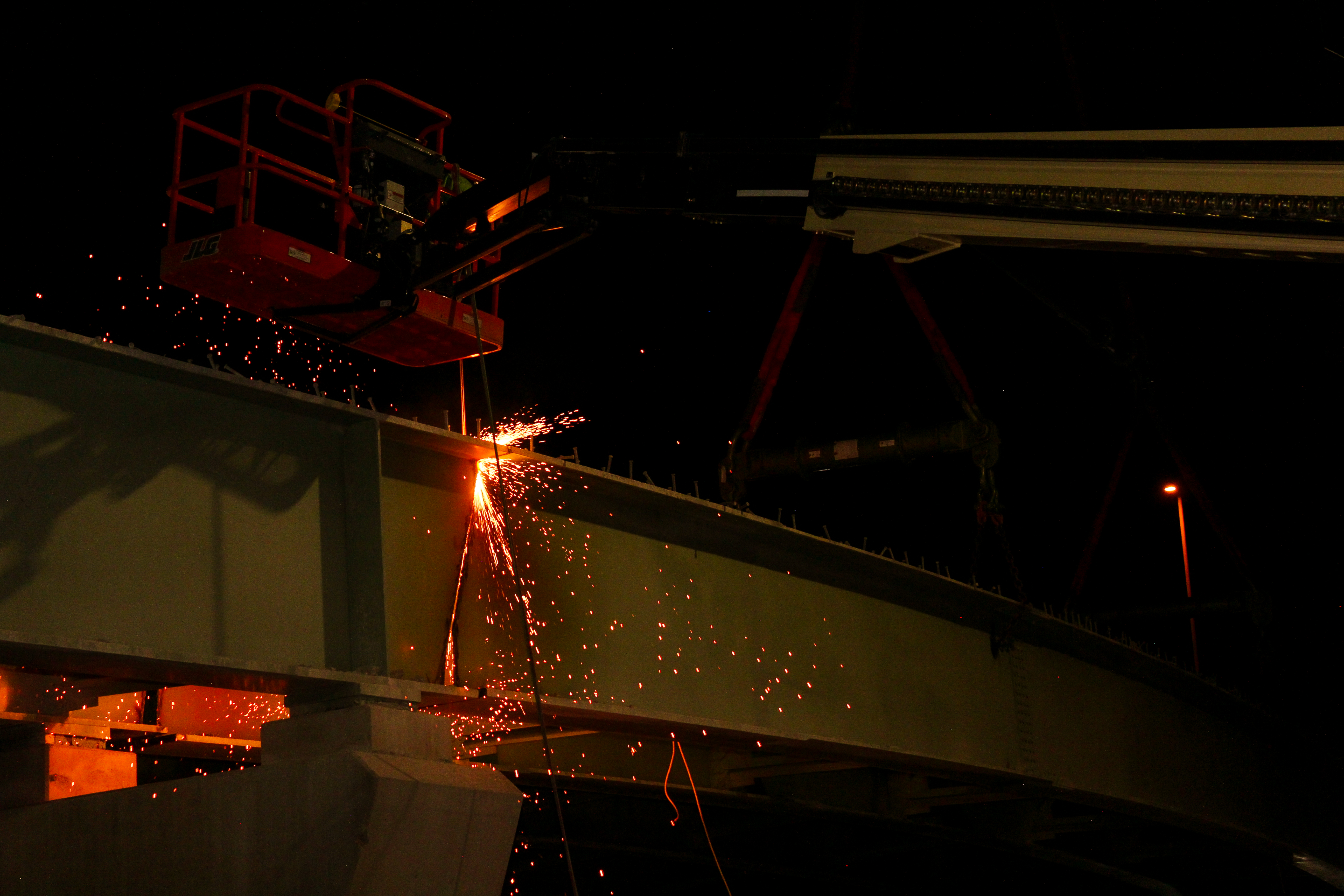
- Crane-Assisted Steel Removal: Coordinating crane lifts to remove large steel beams and other structural components.
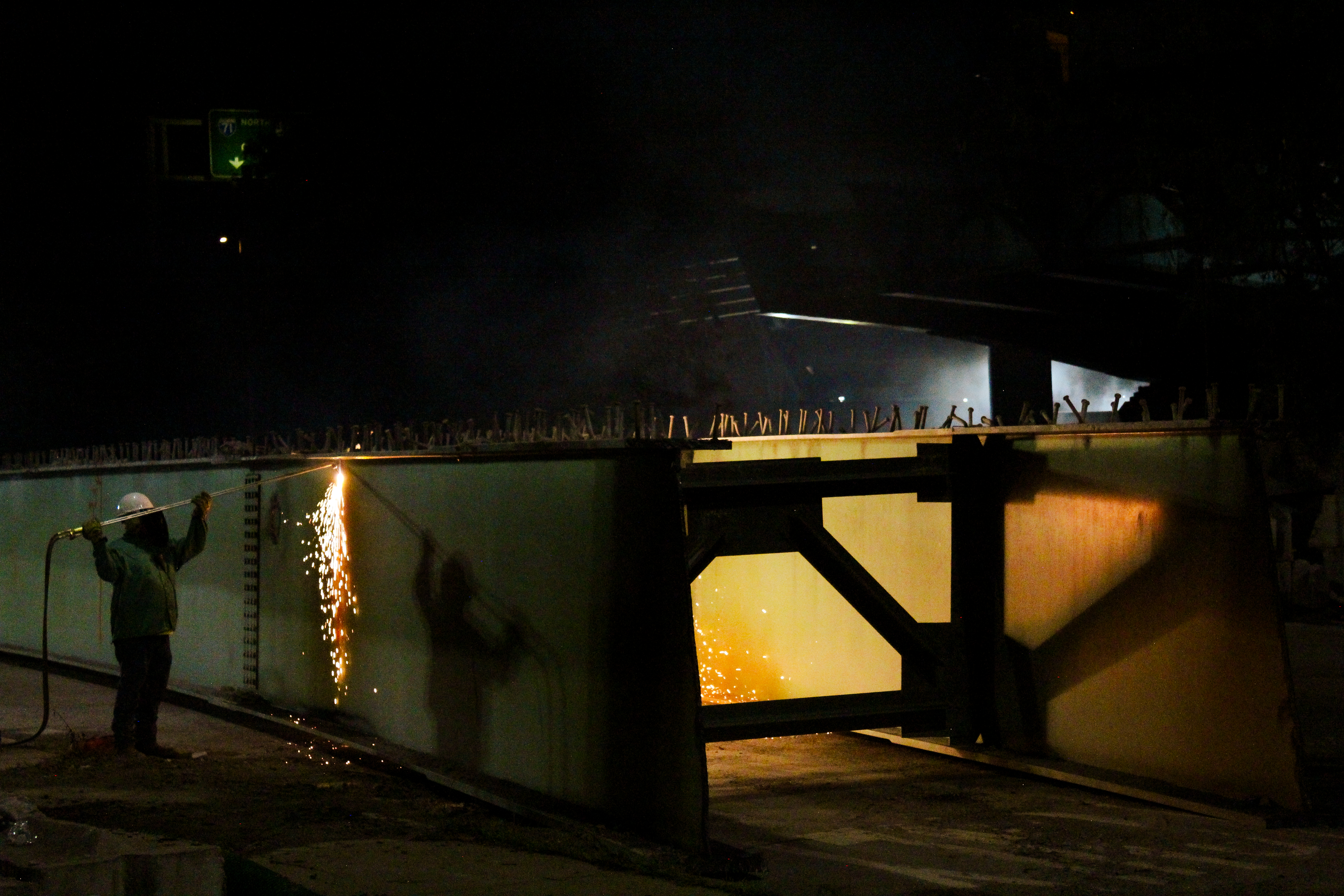
- Precision Saw Cutting: Cutting concrete in designated areas to help control removal and separate sections of existing structures.
- Wire Sawing: Cutting through large concrete elements, including bridge bent caps, where controlled removal is required.
- Machine and Hand Chipping: Removing concrete around connection points where new construction will tie into existing structures.
The appropriate method depends on the structure, the demolition sequence, access limitations, and the requirements of the surrounding work area.
Engineering and Planning Come First
Successful bridge demolition begins well before equipment arrives on site. Detailed planning helps determine the sequence of removal, equipment positioning, lifting requirements, and how each phase will be executed.
For the Brent Spence corridor project, Penhall worked with engineering partner Genesis Engineering to develop demolition plans. Those plans underwent detailed review by the general contractor and the Ohio Department of Transportation (ODOT) before crews moved forward with the work.
This preparation is especially important when removing large structural components. Each step must account for the existing structure, the weight and dimensions of the material being removed, and the equipment needed to complete the operation.
By breaking the work into carefully planned steps, the project team can coordinate demolition activities and address potential challenges before they affect field operations.
Coordinating Heavy Crane Lifts
Some of the most demanding tasks on a bridge demolition project involve removing large steel beams from elevated structures.
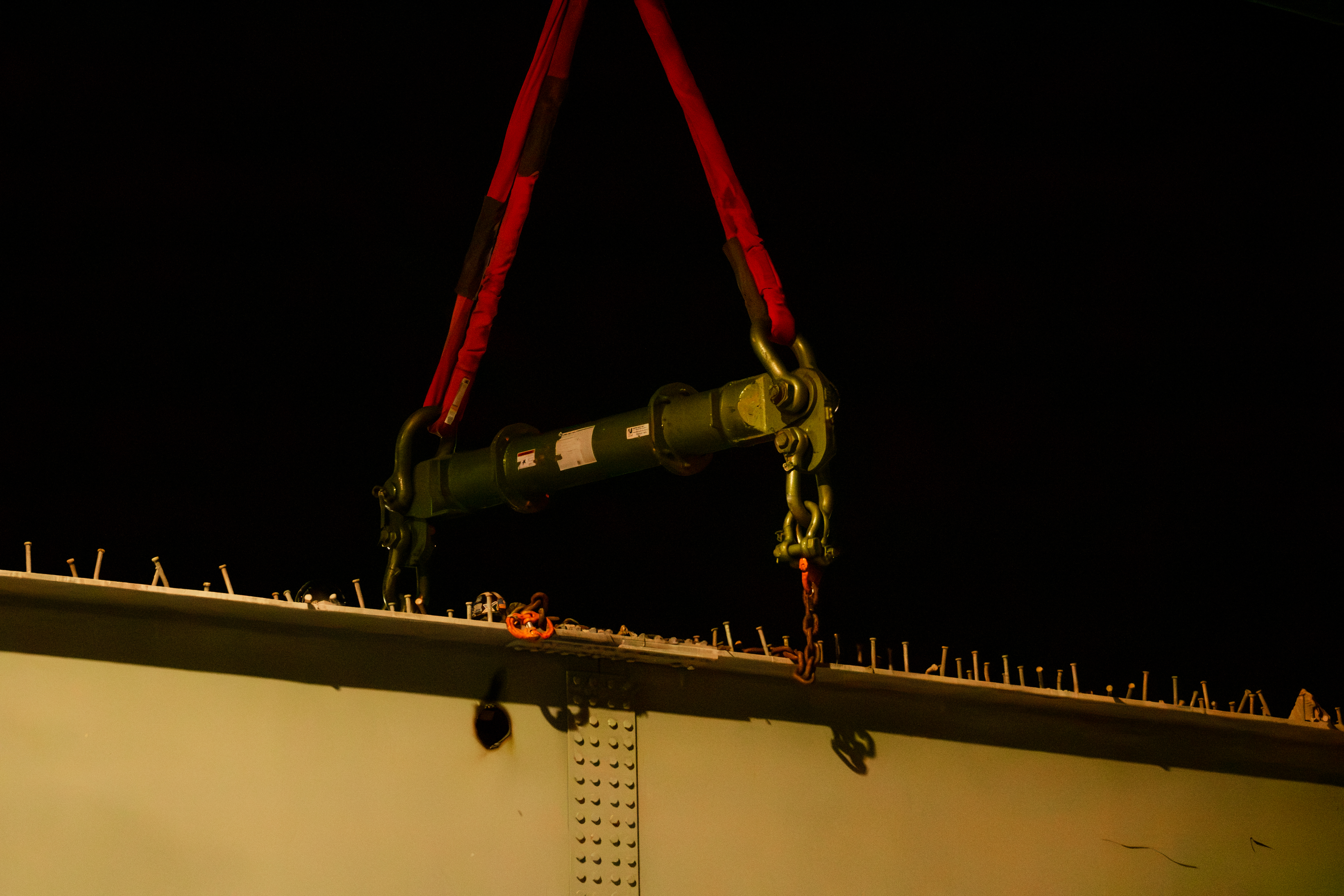
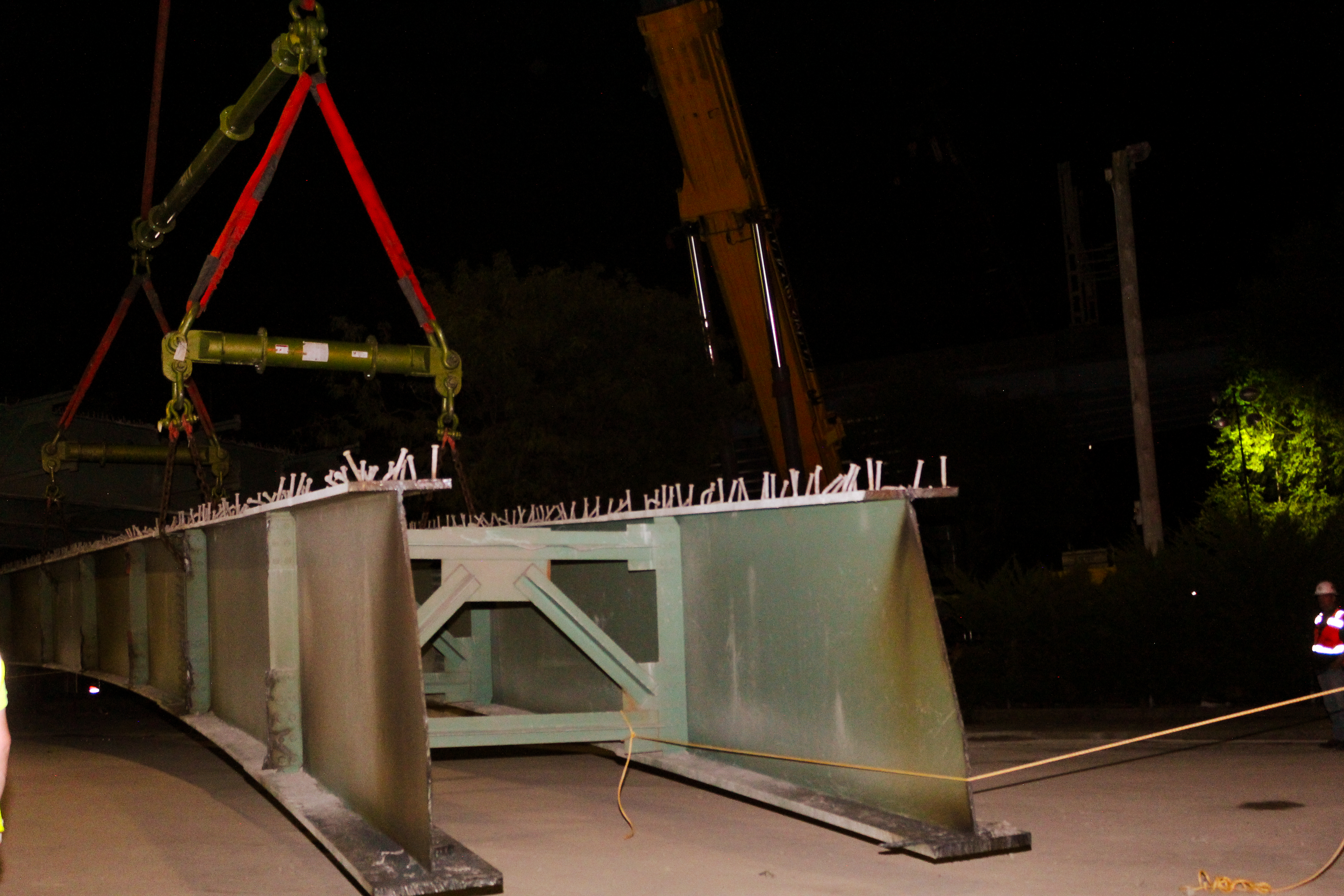
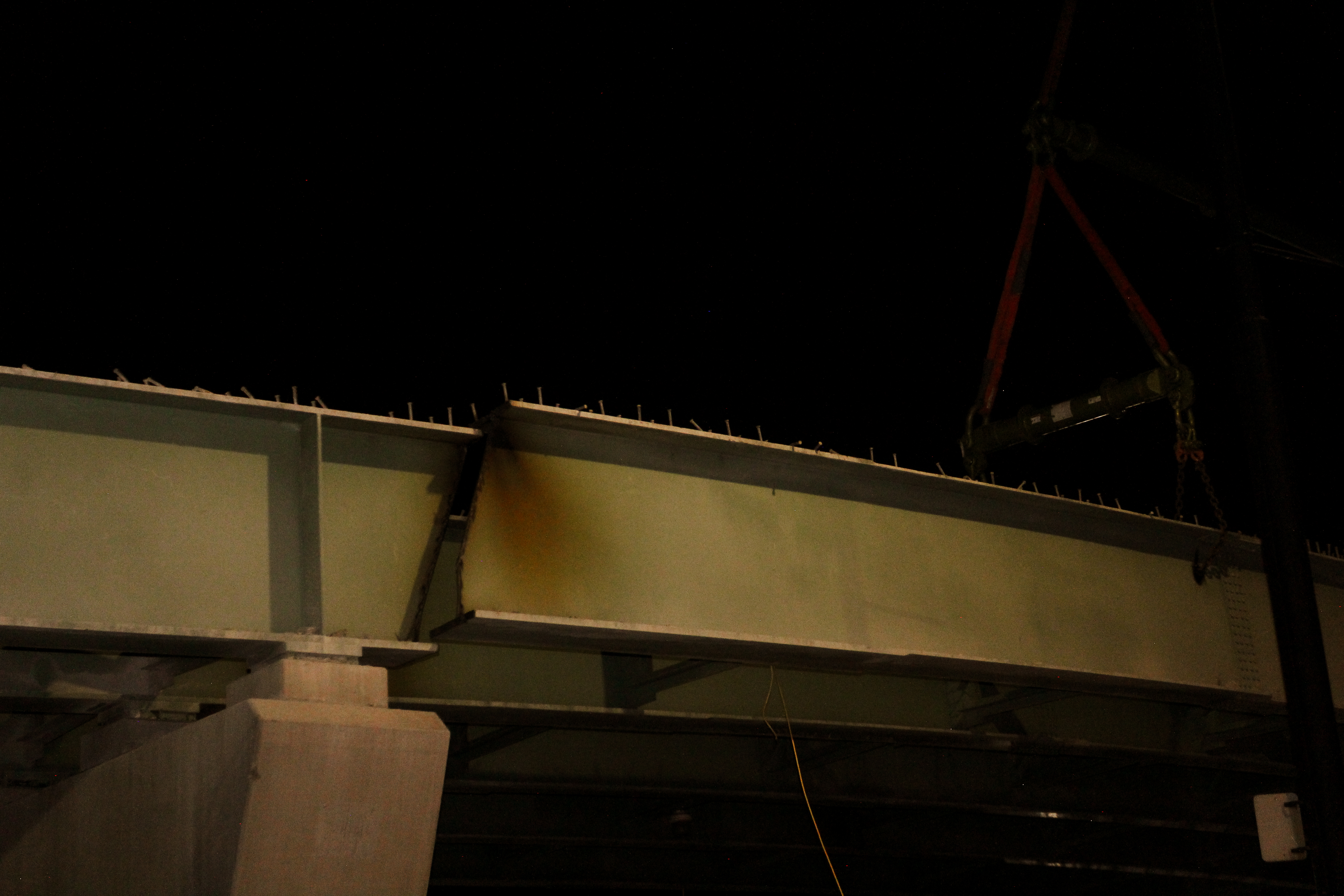
On the Brent Spence corridor project, certain steel beams weigh as much as 193,000 pounds. Removing components of this size requires detailed lift planning, appropriate crane capacity, coordinated rigging, and communication among everyone involved in the operation.
The work also includes tandem crane operations, in which two cranes coordinate to handle a lift. These operations require careful planning to account for the load, equipment positioning, and the movement of the component throughout the lift.
The challenge increases when lifts take place above railroad tracks or roadways. Crews must coordinate the work around these areas while following the approved demolition and lifting plans.
Working at Height and Around Existing Infrastructure
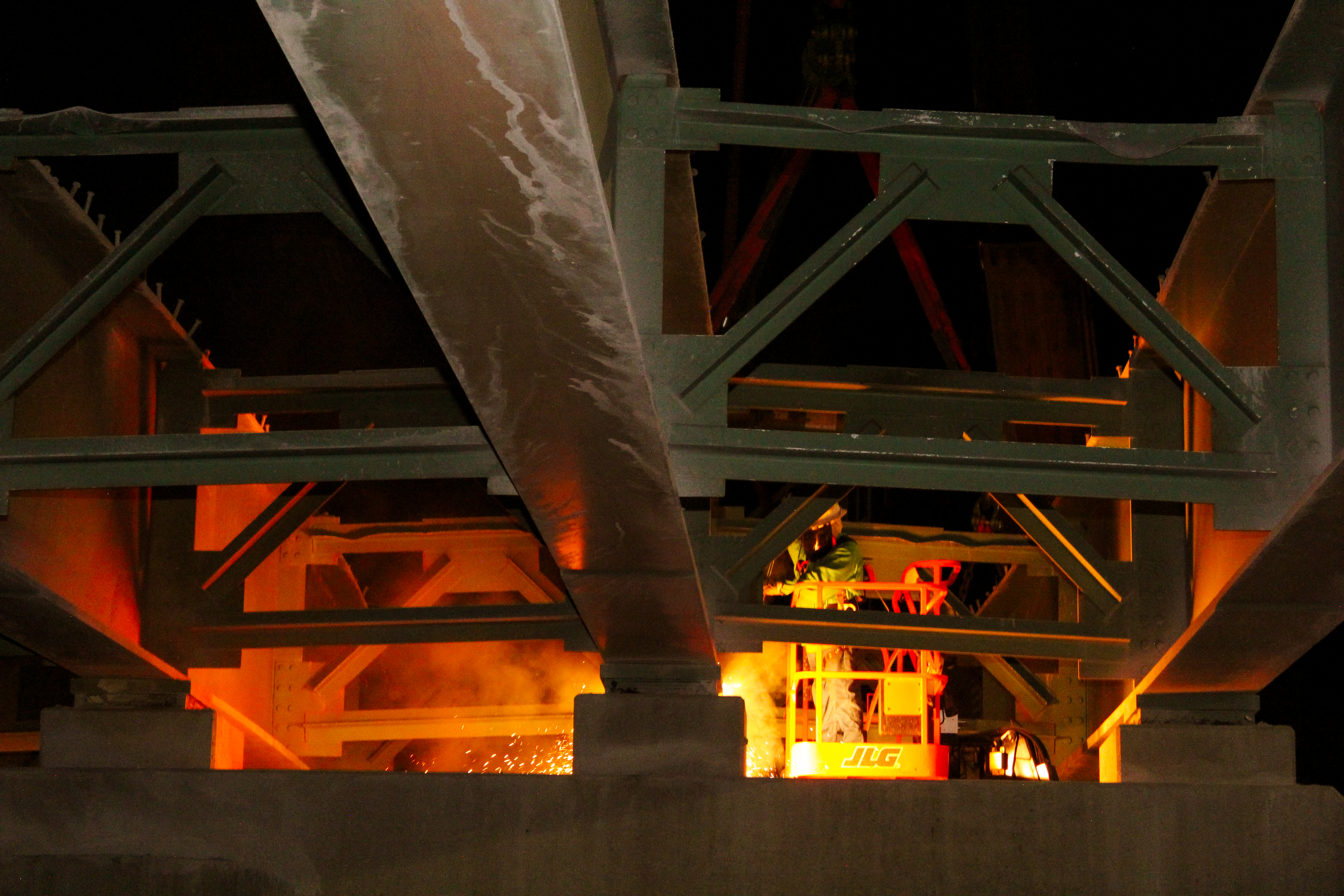
Bridge demolition often requires crews to work well above ground level while removing concrete and structural components. On the Brent Spence corridor project, some work takes place approximately 75 feet above the ground.
These conditions make equipment access, work sequencing, and coordination particularly important. Crews must account for changing work areas, the positioning of heavy machinery, and the need to remove materials in a controlled manner.
Much of Penhall’s work on this project has also been performed at night. Working during nighttime hours adds another layer of coordination, particularly when demolition activities take place near transportation infrastructure.
Planning each phase in advance helps crews understand the work sequence, equipment requirements, and site-specific challenges before beginning each operation.
A Multi-Phase Infrastructure Improvement Project
The Brent Spence corridor project involves planned demolition work across multiple phases in Ohio and Kentucky.
Ohio Phase 1A includes the removal of Bridges 46, 146.3, 30.A, 31, and 167, with work scheduled from July through October 2026. Ohio Phase 1B is planned for May through August 2027 and includes Bridges 45, 30, 146, 163, and 37.
The first Kentucky phase is scheduled to begin in December 2026 and includes planned removal of bridges, spans, and feeder ramps along I-71/I-75 between Martin Luther King Jr. Boulevard and the Ohio River.
Phased demolition allows the broader project team to coordinate work across multiple structures and locations as corridor improvements progress.
The project addresses transportation infrastructure serving a growing region where increased population and traffic have placed additional pressure on existing roadways. Replacing or modifying existing structures is part of the larger effort to support future transportation needs.
Penhall’s Role in Complex Bridge Demolition
Managing large-scale bridge demolition requires the right combination of engineering, specialized equipment, experienced crews, and coordination across project teams.
Penhall’s Major Projects team is leading the demolition work, with saw operators supporting the project from the Indianapolis and Greer, South Carolina, branches and additional logistics support from the Columbus branch.
Crews use a combination of excavators, concrete breakers and pulverizers, cranes, rigging equipment, saw-cutting systems, and access equipment to complete different aspects of the work. Crew size varies based on the task, with approximately 8 to 12 employees supporting operations depending on project needs.
Each phase brings its own challenges, from breaking down concrete decks to coordinating heavy lifts and making precise cuts where existing structures connect with future construction.
The Brent Spence corridor project highlights the planning and specialized capabilities required to perform demolition on active infrastructure projects, where precision, coordination, and careful execution are essential.
Supporting the Next Phase of Infrastructure
Bridge demolition is an important part of rebuilding and improving transportation infrastructure. Removing existing structures requires a deliberate approach that accounts for structural conditions, equipment capabilities, and the surrounding environment.
Through engineered planning, specialized concrete removal methods, and coordinated crane operations, Penhall is supporting the next phase of improvements along the Brent Spence corridor.
Learn more about Penhall’s bridge demolition and concrete removal services and explore our Brent Spence corridor featured project to see more of this work in action.
Looking for a bridge demolition partner for your next project?
From concrete cutting and coring to demolition, scanning and other specialized construction services, Penhall supports projects across North America.