
At a Glance
- Concrete X-ray imaging (also called concrete radiography) uses X-ray radiation to produce a clear, real-time image of the interior of a concrete slab, wall, column, or beam.
- Digital X-ray produces images in as little as 5 to 10 seconds, eliminating the delays associated with traditional film-based radiography that required off-site lab processing.
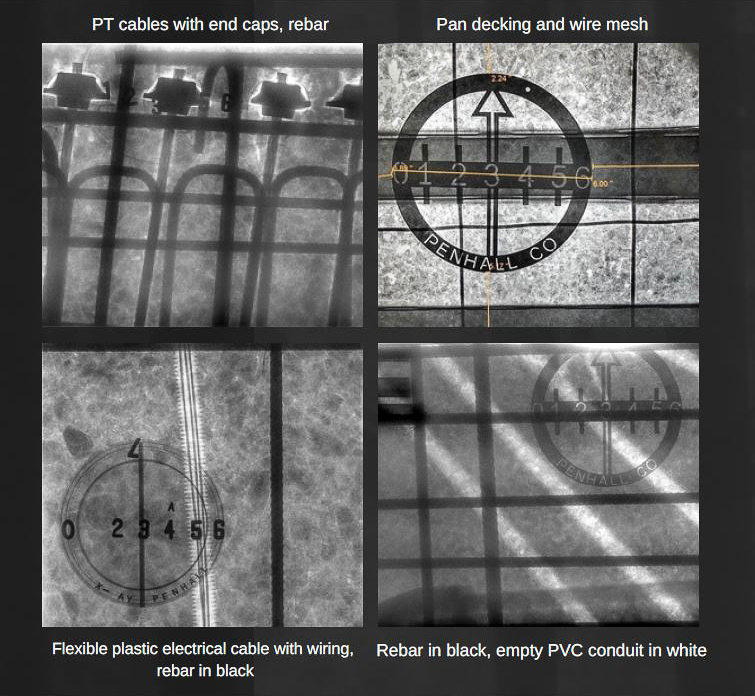
- X-ray imaging can identify the exact location, size, and type of embedded features, including reinforcing steel (rebar), post-tension cables, electrical conduits, pipes, and wire mesh.
- Unlike GPR scanning, X-ray requires access to both sides of the concrete, meaning it cannot be used on slab-on-grade applications.
- X-ray is the preferred method for highly congested slabs where GPR data becomes too difficult to interpret, providing definitive clarity where radar falls short.
- Radiation exposure from concrete X-ray imaging is minimal and well below state-mandated safety thresholds. Certified radiographers follow strict safety protocols on every scan.
- Penhall Technologies offers digital concrete X-ray imaging services performed by trained and certified radiographers, backed by over 65 years of concrete industry expertise.
Why You Need to See Inside Concrete Before Cutting or Coring
Every concrete slab, wall, and beam contains hidden features. Reinforcing steel (rebar), post-tension cables, electrical conduits, pipes, and wire mesh are all commonly embedded within concrete structures. Striking any of these during cutting, coring, or breaking operations can have serious consequences: structural damage, electrical hazards, costly repairs, project delays, and in the case of post-tension cables, an immediate threat to worker safety.
That is why identifying the location and type of subsurface features before commencing any concrete work is not optional. It is a critical safety and planning step. And while ground penetrating radar (GPR) is the most commonly used scanning method, there are situations where GPR alone is not enough. Highly congested slabs, areas where GPR data is too cluttered to interpret, and projects that demand absolute certainty about what lies within the concrete all call for a more definitive imaging solution.
That solution is concrete X-ray imaging. In this comprehensive guide, we will explain exactly how concrete X-ray works, when it is the right choice over GPR, what it can and cannot detect, and how it fits into a safe, efficient concrete cutting workflow.
How Concrete X-Ray Imaging Works
Concrete X-ray imaging works on the same fundamental principle as a medical X-ray. Electromagnetic radiation is passed through a material, and the resulting image reveals the internal features based on how different materials absorb or transmit the radiation. Dense materials like steel rebar absorb more radiation and appear as bright, clearly defined shapes on the image, while the surrounding concrete allows more radiation to pass through.
The Digital Advantage: Real-Time Results
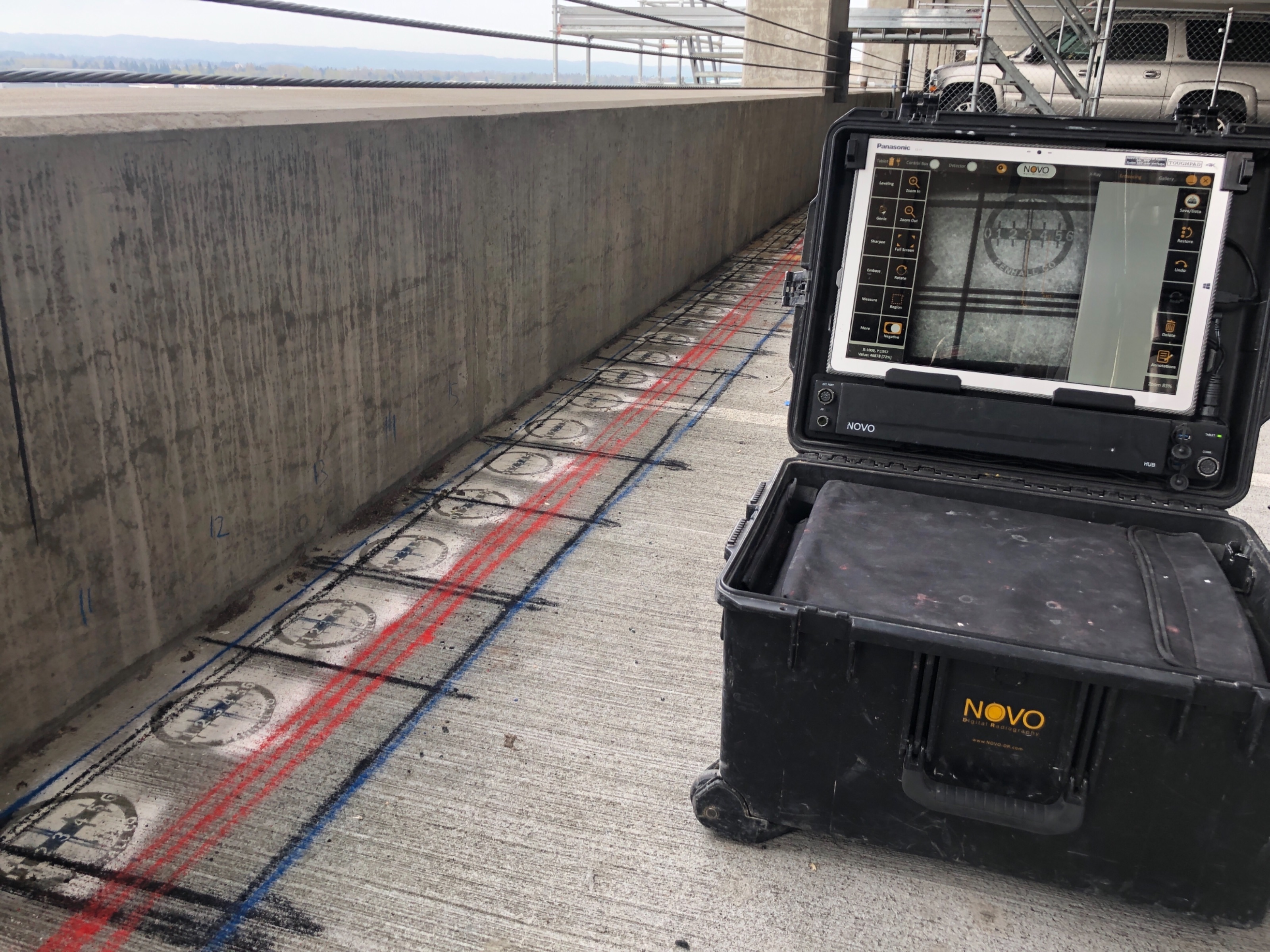
Traditional film-based X-ray imaging required the exposed film to be sent to a lab for chemical processing, a step that could take hours or even days. This made X-ray imaging impractical for most construction timelines. Digital X-ray technology has changed that entirely. With digital radiography, the X-ray image is captured electronically and displayed on a screen in as little as 5 to 10 seconds. The radiographer can examine the image immediately on site, identify all embedded features, and mark their locations directly on the concrete surface. There is no film to develop, no waiting for lab results, and no ambiguity about what the image shows.
The Setup: Access to Both Sides
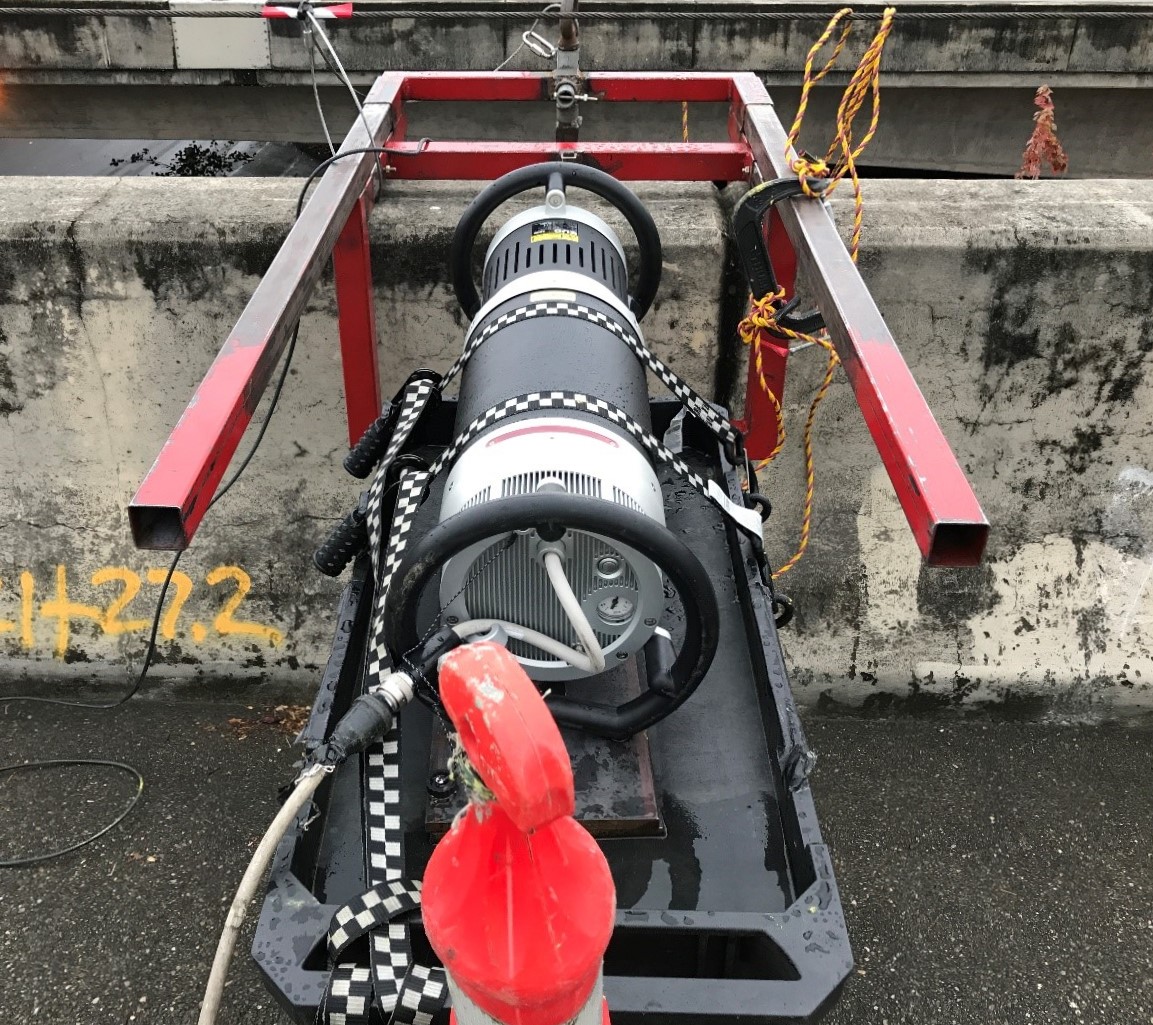
Unlike GPR, which only requires access to one side of the concrete, X-ray imaging requires access to both sides of the element being scanned. The X-ray source is placed on one side of the slab, wall, or beam, and the digital detector (or imaging plate) is placed on the opposite side. The radiation passes through the concrete, and the detector captures the resulting image. This two-sided access requirement is the primary limitation of concrete X-ray: it cannot be used to scan slab-on-grade concrete (where the bottom of the slab sits directly on the ground) because there is no way to place a detector underneath.
What X-Ray Can Detect
Concrete X-ray imaging can precisely identify a wide range of embedded features. These include reinforcing steel (rebar) and wire mesh, which are the structural backbone of most concrete elements. X-ray clearly shows rebar spacing, diameter, and orientation, allowing crews to plan cuts that avoid structural reinforcement. Post-tension cables are another critical detection target. These cables are under extremely high tension, and cutting one can cause catastrophic structural failure and pose an immediate danger to workers. X-ray provides a clear, unambiguous image of cable locations. Beyond reinforcement, X-ray can also locate electrical conduits and wiring, plumbing pipes, fiber optic lines, and other utilities embedded in the concrete.
Concrete X-Ray vs. GPR Scanning: When to Use Each Method
Both X-ray imaging and GPR (ground penetrating radar) scanning are valuable tools for locating subsurface features in concrete, and Penhall provides both services. However, they work differently and excel in different situations. Understanding when to use each method (or both together) is key to getting the safest and most efficient results on your project.
How GPR Differs from X-Ray
GPR works by emitting radio waves into the concrete and recording the reflected signals. A trained analyst interprets the resulting radargram to determine the location, depth, and approximate type of subsurface features. GPR only requires access to one side of the concrete, making it suitable for slab-on-grade and many other situations where two-sided access is not available. It can also detect voids and areas of deterioration within the concrete itself, which X-ray cannot do.
However, GPR does not produce a photographic image. The data must be interpreted by a qualified analyst, and in highly congested areas (where rebar, cables, and conduits overlap densely), the GPR data can become extremely difficult to read. This is the scenario where X-ray becomes essential. As Penhall notes, highly congested slabs are ideally suited for the application of digital X-ray, because X-ray produces a clear, definitive image that eliminates the interpretation challenges of GPR in those conditions.
Choose X-Ray When...
X-ray is the right choice when you have access to both sides of the concrete and need a definitive, unambiguous image of what lies inside. It is also the preferred method when the slab is known or suspected to be highly congested with reinforcement, when GPR results have come back inconclusive due to congestion, when you are working with green (freshly poured) concrete where residual moisture reduces GPR effectiveness, and when absolute certainty is required before making a critical cut near post-tension cables or high-voltage conduits.
Choose GPR When...
GPR is the better fit when you only have access to one side of the concrete (such as slab-on-grade), when you need to determine the depth of embedded features (X-ray shows location and type, but not depth), when you need to scan large surface areas quickly, when people will be present in the area during scanning (GPR emits no radiation), and when you need to detect voids or deterioration within the concrete. In many projects, the two methods work best in combination. A GPR scan covers a large area quickly and identifies most embedded features, and then digital X-ray is used to get definitive clarity on specific spots where the GPR data is congested or ambiguous.
Safety and Radiation: What You Need to Know
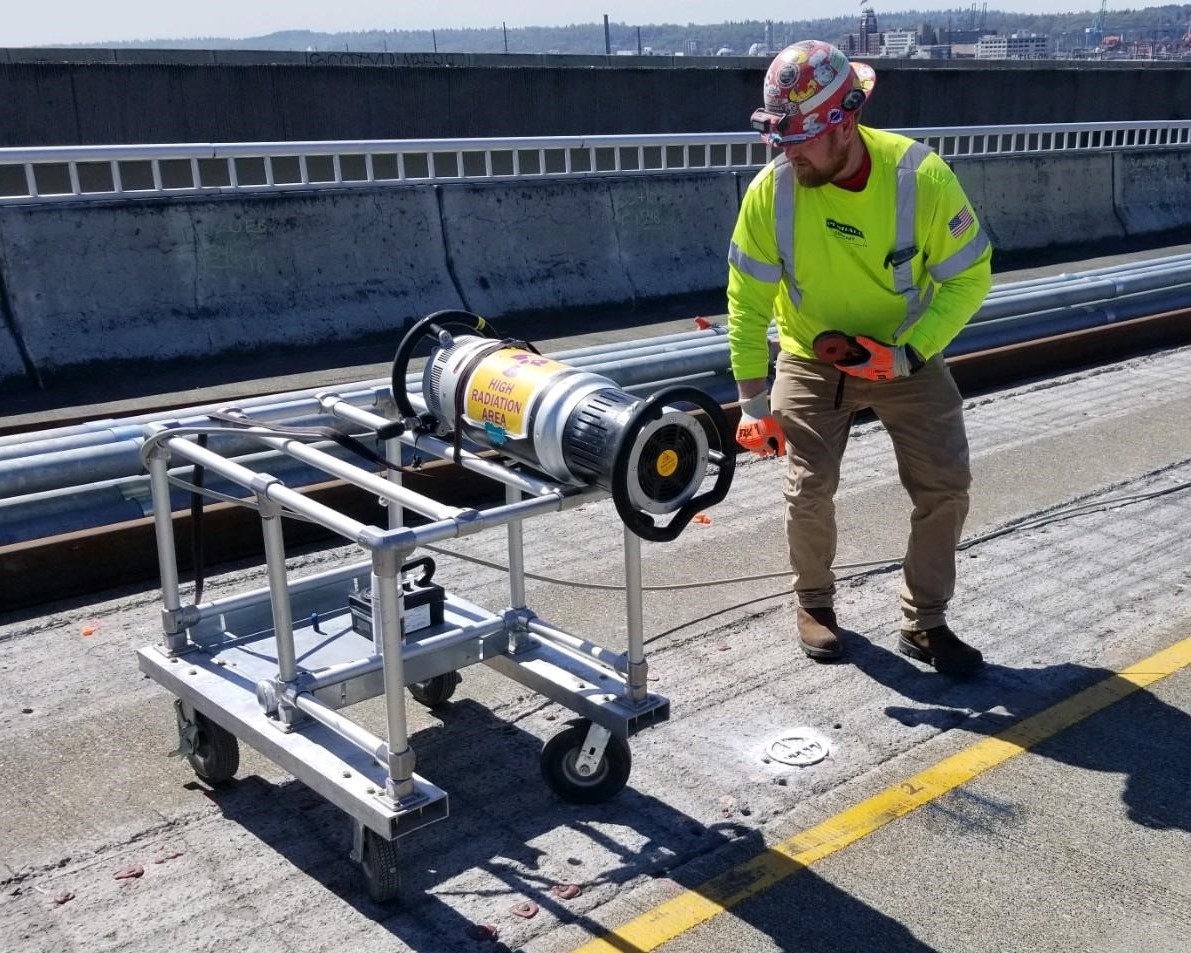
One of the most common concerns about concrete X-ray imaging is radiation exposure. It is a reasonable question, and the answer is reassuring. The radiation emitted during concrete X-ray imaging is minimal and falls well below state-mandated safety levels. Penhall's X-ray operators are trained and certified radiographers who follow strict safety protocols on every job. They wear appropriate personal protective equipment and use established exclusion zones to ensure that no one on the job site is exposed to unsafe levels of radiation.
It is worth noting that GPR scanning does not involve any radiation at all, which is one reason GPR is preferred for scans in occupied buildings like hospitals, hotels, and offices where people are present during normal business hours. When X-ray is required in these settings, the radiographer coordinates with site management to establish a brief exclusion zone during the scan, which typically takes only seconds to complete.
Common Applications for Concrete X-Ray Imaging
Concrete X-ray imaging is used across a wide range of project types and industries. Any time a clear image of the concrete's interior is needed before cutting, coring, or breaking, X-ray can provide the definitive answer.
Pre-Cut and Pre-Core Scanning
The most common application is scanning concrete immediately before cutting or coring operations. By X-raying the exact location where a core hole, wall opening, or trench will be cut, the contractor can verify that the path is clear of rebar, post-tension cables, and conduits. This prevents costly accidental strikes, structural damage, and safety incidents.
Post-Tension Slab Evaluation
Post-tension concrete slabs present unique challenges because the embedded cables are under tremendous force. Cutting a post-tension cable can cause the cable to whip violently or the surrounding concrete to fail catastrophically. X-ray imaging provides the clearest possible picture of cable locations and trajectories, giving contractors the confidence to plan safe cut paths around these critical elements.
Renovation and Tenant Improvement Projects
Commercial renovation projects frequently require new openings in existing concrete for HVAC, plumbing, electrical, and structural modifications. In older buildings where as-built drawings may be inaccurate or unavailable, X-ray imaging gives the project team reliable information about what is actually inside the concrete before any demolition or modification work begins.
Data Centers and Critical Facilities
In data centers and other mission-critical facilities, an accidental conduit strike can take down power or communication systems with enormous financial consequences. X-ray imaging eliminates the guesswork, ensuring that every penetration through concrete is planned with full knowledge of what lies within.
Quality Assurance and Structural Assessment
Beyond pre-cut scanning, X-ray imaging can also be used to verify that rebar and other reinforcement was placed correctly during new construction. If there are concerns about whether the as-built conditions match the structural drawings, X-ray provides a non-destructive way to inspect the interior of the concrete without taking cores or performing destructive testing.
Digital vs. Film-Based X-Ray: Why Digital Has Replaced Film
The shift from film-based to digital X-ray imaging has transformed the practicality of concrete radiography. With film-based systems, the exposed film had to be transported to a darkroom or lab for chemical development, a process that could take hours or days. This made X-ray imaging a bottleneck in the construction schedule and limited its use to situations where no other option existed.
Digital X-ray has eliminated that bottleneck entirely. The image is captured on an electronic detector and displayed on screen in seconds. The radiographer can evaluate the results immediately, mark the concrete surface, and give the crew clearance to proceed, all within minutes. This speed advantage makes digital X-ray practical as a routine scanning tool rather than a last resort. It also improves image quality: digital images can be enhanced, zoomed, adjusted for contrast, and stored electronically for project documentation, none of which is possible with film.
Penhall Technologies: Concrete X-Ray Imaging Services
Penhall Technologies' digital X-ray imaging services are performed by radiographers who undergo specialized training and certification. As a division of Penhall Company, the nation's largest provider of concrete cutting, coring, and demolition services, Penhall Technologies brings a unique advantage: their X-ray technicians understand common and uncommon on-the-job hazards because they work alongside the concrete cutting crews who depend on accurate scan results every day.
Penhall offers both digital X-ray imaging and GPR scanning, which means they can recommend and deploy the best scanning method (or combination of methods) for your specific project. This integrated approach, combined with Penhall's full range of concrete cutting, coring, demolition, and structural repair services, means the scanning and cutting can be managed under one provider, reducing coordination overhead and keeping your project moving.
With branch locations nationwide, Penhall can dispatch a certified radiographer to your job site quickly, minimizing delays and keeping your project on schedule.