At a Glance
- What It Is: Selective demolition removes targeted walls, slabs, foundations, or structural sections while the rest of a facility stays fully operational as opposed to full-structure teardown.
- Scheduling Discipline: Work is sequenced around production shifts, maintenance windows, and shutdown days so the demolition scope never dictates the facility's operating calendar.
- Containment First: Dust, noise, and vibration are physically isolated from live production, warehouse, or refinery zones using containment barriers, negative-air systems, and vibration-controlled equipment.
- Trade Coordination: Electrical, mechanical, fire protection, and process piping trades are sequenced into the demolition schedule through lockout/tagout (LOTO) coordination and shared logistics planning.
- Single-Source Scope: Pairing selective demolition with concrete breaking, removal, and interior demolition services under one contractor reduces schedule risk and eliminates finger-pointing between subs.
- Integrated Single-Source Execution: Combining subsurface GPR scanning, mechanical scarification, robotic hydrodemolition, perimeter saw-cutting, and structural concrete repair under one contract eliminates trade hand-off delays during tight lane closure windows.
What Is Selective Demolition?
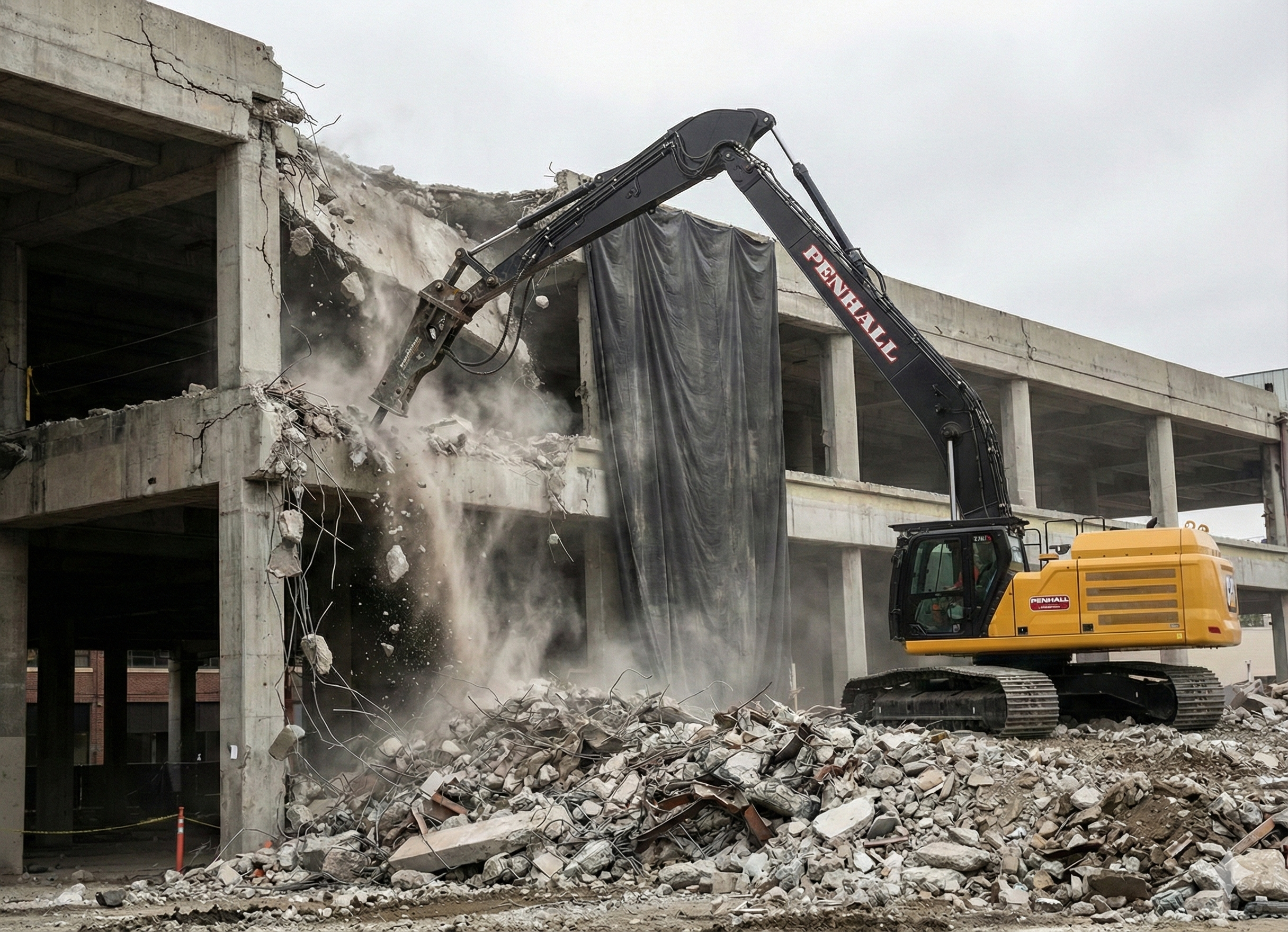
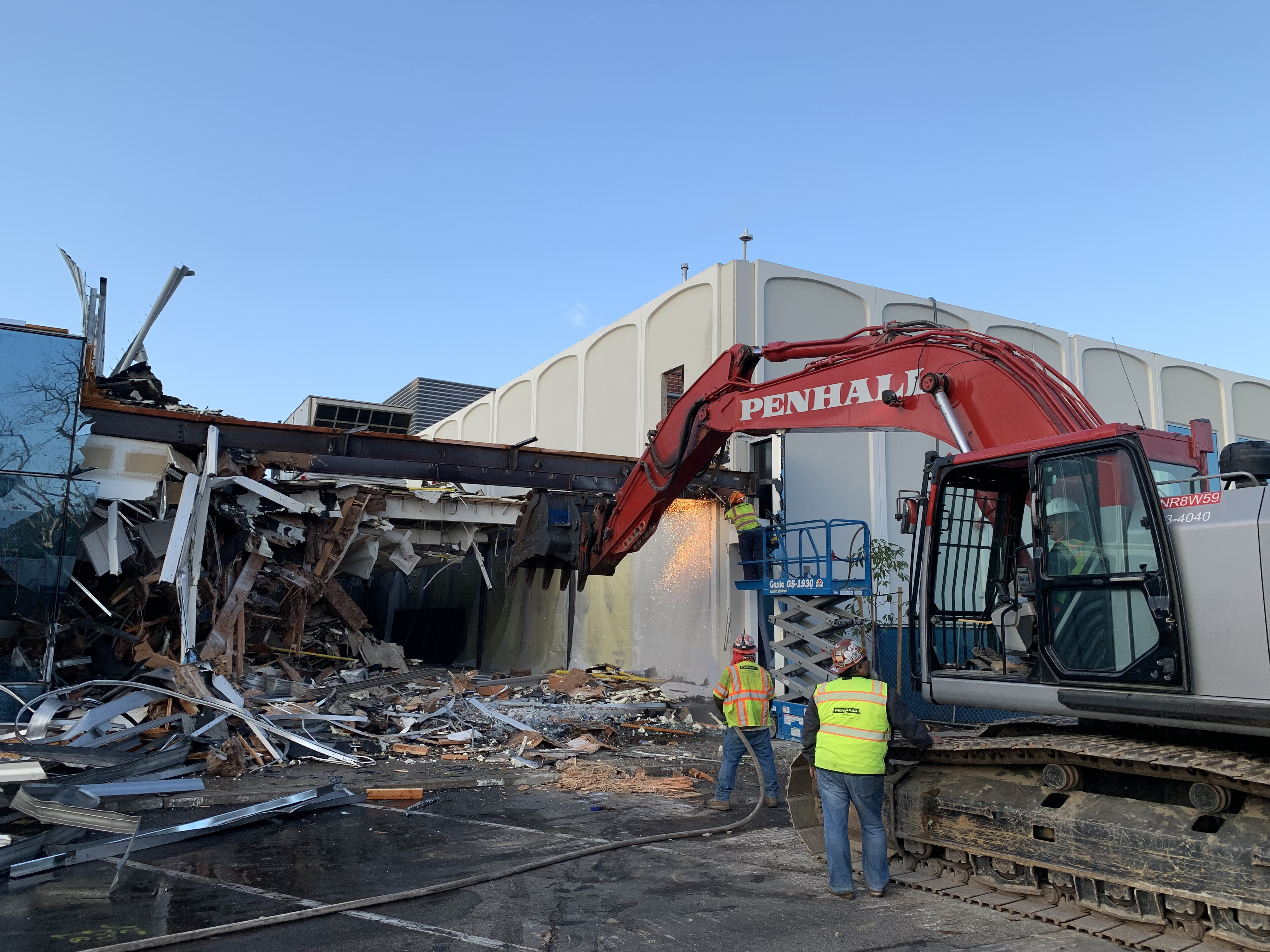
Selective demolition is the removal of specific building components like interior walls, floor slabs, foundations, mezzanines, or structural sections without taking down the surrounding structure or shutting down the rest of the facility. It's the standard approach for any project where a plant, warehouse, distribution center, or refinery needs to modify part of its footprint while operations continue everywhere else.
Unlike full-building demolition, selective demolition is defined by precision and sequencing: cutting and removing only what's scoped, protecting everything adjacent to it, and doing the work in a sequence that fits around the facility's operating schedule instead of forcing a full shutdown.
For GCs and owners, that makes selective demolition less of a "how do we tear this down" problem and more of a "how do we do this without stopping the business" problem. This is where scheduling, containment, and trade coordination become the real scope of work.
The Challenge: Operations Can't Stop
Manufacturing plants, warehouses, and refineries rarely have downtime built into their calendars. A production line stopping for even a few hours can cost far more than the demolition scope itself, and most facilities have zero appetite for an open-ended shutdown while a contractor figures out logistics on the fly.
That reality creates a specific set of constraints GCs and owners have to plan around:
- No full shutdown available. Demolition has to happen around production shifts, not instead of them.
- Adjacent operations are sensitive. Dust migrating onto a production line, vibration reaching calibrated equipment, or noise disrupting a warehouse pick schedule can create problems well beyond the demo zone itself.
- Live utilities and process lines run through or near the work area. Electrical conduit, compressed air, process piping, and fire suppression lines are frequently routed through the exact walls, slabs, or foundations being removed.
- Other trades are on-site at the same time. Electrical, mechanical, and structural crews often need access to the same area before, during, or immediately after demolition — and scheduling conflicts between trades are one of the most common sources of project delay.
Solving for these constraints is what separates a selective demolition plan that protects the schedule from one that quietly extends it.
Scheduling: Building the Sequence Around Production
Phased teardown work starts with a sequencing plan built around the facility's actual operating calendar. That typically means:
- Shift and shutdown alignment. Demolition activities are scheduled into planned maintenance windows, off-shift hours, or weekend shutdowns to avoid touching active production time.
- Zone-by-zone phasing. Rather than opening the entire scope at once, work is broken into phases that isolate one section at a time, letting the rest of the facility continue operating around it.
- Milestone-based hand-offs. Each phase is scoped with a clear completion point so structural, mechanical, or electrical trades can move in immediately behind demolition without waiting on the full scope to finish.
- Contingency built into the sequence. Unexpected conditions are accounted for in the schedule logic up front, rather than treated as change orders that blow up the timeline later.
A sequencing plan that accounts for all of this up front is what keeps a phased teardown from turning into an open-ended disruption to the facility's operations.
Containment: Keeping Demolition From Becoming an Operations Problem
In an occupied facility, containment is what keeps demolition from becoming a production, safety, or environmental problem somewhere else in the building. Effective containment strategy typically covers:
- Physical isolation. Floor-to-ceiling containment barriers separate the work zone from adjacent production floors, warehouse aisles, or process areas.
- Dust and air quality control. Negative-air systems with HEPA filtration keep airborne dust from migrating into occupied or sensitive zones, which matters as much for OSHA respirable silica compliance as it does for protecting product or equipment nearby.
- Vibration and noise management. Equipment selection — sawing versus breaking, hydraulic versus pneumatic — is chosen based on how much vibration and noise the adjacent operation can tolerate, not just how fast the demolition crew can move.
- Housekeeping and debris logistics. Debris routing is planned to avoid crossing active aisles, dock doors, or production paths, so demolition traffic doesn't collide with the facility's day-to-day material flow.
For teams handling the concrete removal piece of a phased teardown, coordinated containment and debris handling is also core to how Penhall's concrete breaking & removal crews approach occupied-site work.
Coordination With Other Trades
Selective demolition rarely happens in isolation. In an active plant, warehouse, or refinery, electrical, mechanical, fire protection, and structural trades are usually staged in around the same footprint — and poor coordination between trades is one of the most common causes of schedule slip on occupied-facility projects.
Getting this right generally means:
- Utility lockout/tagout (LOTO) coordination. Before any cutting or breaking starts, electrical, mechanical, and process utilities serving the work area are identified, verified, and locked out in coordination with facility maintenance staff.
- Sequenced trade hand-offs. Structural shoring, electrical rough-in, and mechanical rework are scheduled to follow demolition phases in order, so trades aren't waiting on each other or working in the same footprint simultaneously.
- Shared site logistics. Laydown areas, access routes, and crane or lift usage are planned jointly across trades to avoid the kind of on-site conflicts that stall multiple crews at once.
- Single point of communication. A clear line of accountability between the demolition contractor, other trades, and facility operations staff keeps schedule and safety information from getting lost between subcontractors.
Interior Demolition Services for Live Facilities
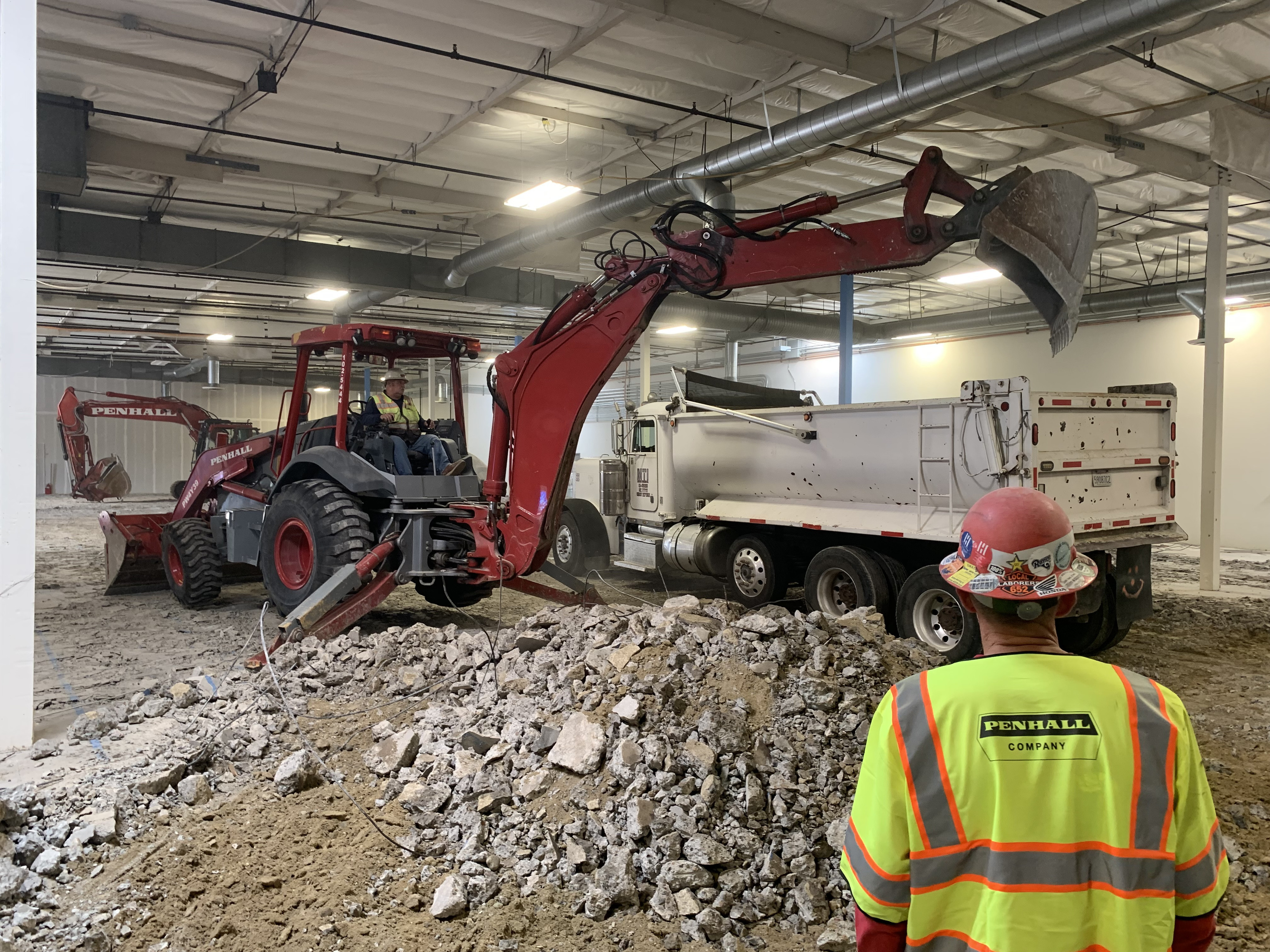
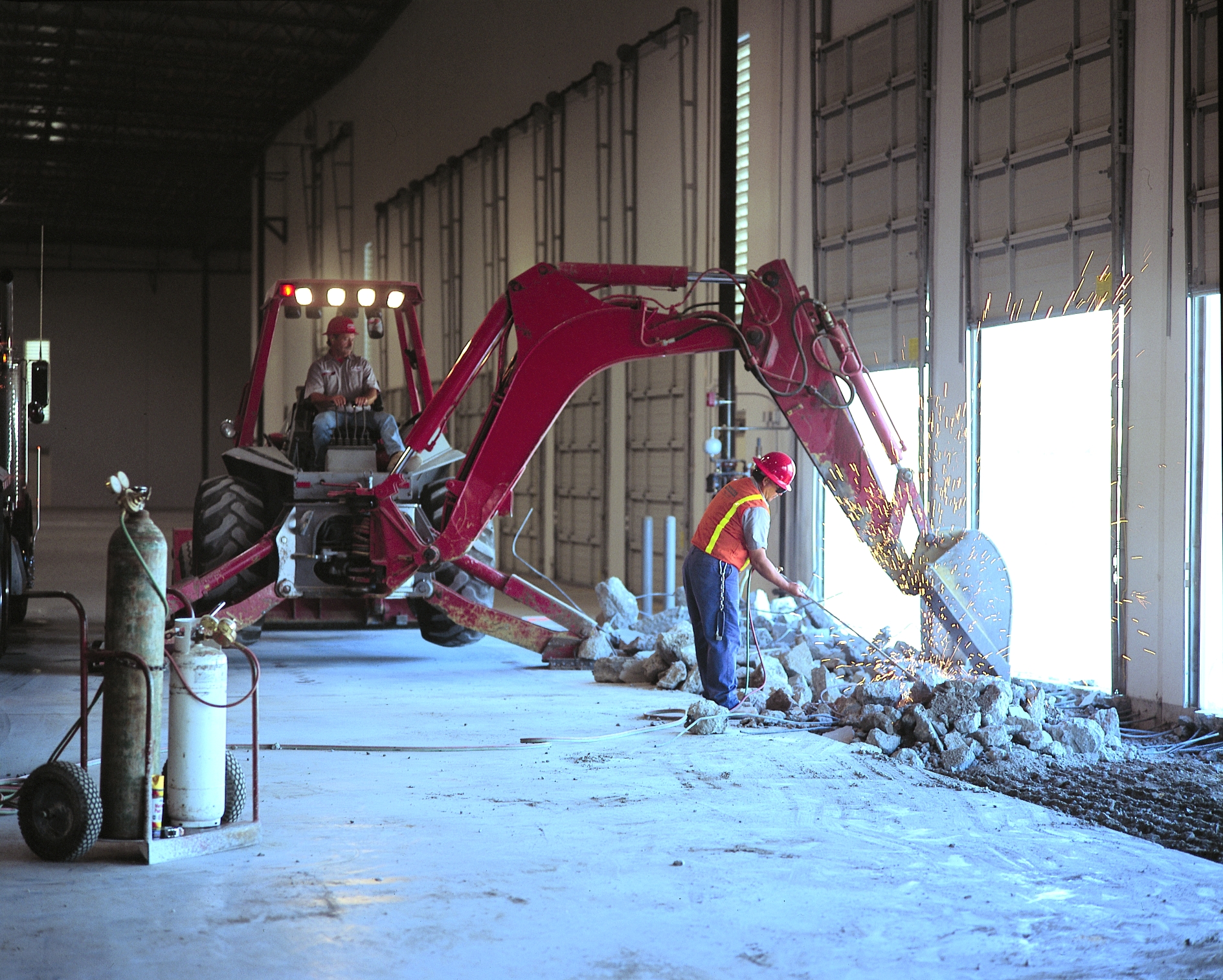
Much of this phased work falls under interior demolition which includes removing walls, mezzanines, interior slabs, or equipment pads inside a facility that's still operating around the work zone. Interior demolition services carry their own set of constraints beyond structural teardown:
- Confined work areas. Interior spaces often mean tighter access, lower ceiling clearance, and less room for large equipment.
- Finish protection. Adjacent flooring, ceilings, and finishes outside the demo scope need to be protected from dust, debris, and incidental damage during removal.
- Floor load limits. Interior work has to respect the building's live-load and point-load ratings, which can rule out heavier equipment in favor of smaller units.
- Multi-trade footprint. Interior scopes frequently overlap with MEP rework, making the trade coordination piece above just as relevant indoors as it is on a slab-on-grade teardown.
Application Snapshots
Manufacturing Plants: Selective demolition around production lines is typically phased into scheduled maintenance shutdowns, with equipment foundations and slab sections removed in sequence to avoid disrupting adjacent lines still running.
Warehouses and Distribution Centers: Teardown of racking foundations, dock areas, or interior walls is scheduled around pick/pack cycles and inventory flow, with containment planned to keep dust and debris away from active aisles.
Refineries: Selective demolition near process units requires strict LOTO coordination, hot work permitting, and containment planning to work safely around live piping and process equipment without interrupting adjacent operations.
Why a Single-Source Scope Reduces Risk
Splitting selective demolition, concrete cutting, and concrete removal across multiple subcontractors creates exactly the kind of coordination gaps this article has been describing — different schedules, different site logistics, and no single point of accountability if something goes wrong.
Penhall handles selective demolition alongside demolition and concrete breaking & removal scopes under one contract, which means:
- One schedule to manage instead of several overlapping ones.
- One point of contact for facility operations, other trades, and project management.
- Consistent containment, safety, and site logistics standards across every phase of the teardown.
Planning a Phased Teardown in an Active Facility?
Contact Penhall's team to walk through scheduling, containment, and trade coordination for your next occupied-facility demolition project. Reach our 24/7 national dispatch hotline at 1-800-736-4255, or request a quote to get started.