
At a Glance
- Private utility locating identifies underground utilities on private property, picking up where 811's free public utility locating services leave off.
- Utility flags and paint markings follow the APWA Uniform Color Code: white (proposed excavation), pink (survey markings), red (electric), yellow (gas/oil/steam), orange (communication/telecom), blue (potable water), green (sewer/drain), and purple (reclaimed water/irrigation).
- According to the Common Ground Alliance, every dollar spent on utility locating saves an average of $4.62, contributing to an estimated $1 billion saved nationwide each year.
- Ground penetrating radar (GPR) is the primary technology used for private utility detection, capable of locating gas lines, power lines, communication lines, sewer lines, underground storage tanks, and pipes.
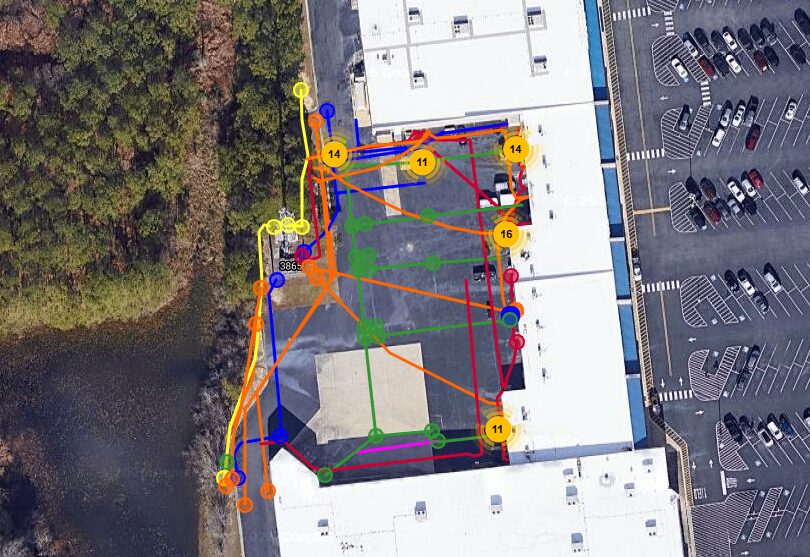
- GPS utility mapping creates permanent, detailed digital maps of underground utilities (exportable as KMZ, KML, or SHP files), accurate to within 6 inches, eliminating the need for repeated locating.
- Utility location markings are typically valid for 14 to 21 calendar days, depending on your state. Do not remove flags until excavation is complete or the locate ticket has expired.
- Penhall Technologies provides private utility locating and GPS utility mapping services nationwide for construction and demolition projects of all scales.
Why Private Utility Locating Matters
Before any shovel, drill, or excavator breaks ground, one critical step must come first: knowing exactly what lies beneath the surface. Underground utility lines, including gas, electric, water, sewer, and telecommunications, are buried throughout residential, commercial, and industrial properties. Striking one of these lines during excavation can result in serious injuries, service outages, environmental damage, and project delays that cost thousands of dollars or more.
Most people are familiar with 811, the national "Call Before You Dig" number that arranges for public utilities to be marked from the street to the meter. But 811 only covers public utility lines. On private property, there is an entire network of private utility lines (water lines, natural gas connections, septic systems, irrigation, communication cables, and more) that 811 does not locate. That is where private utility locating services come in.
In this guide, we will cover how to read utility markings and flag colors, what private utility locating involves, how GPS utility mapping creates a permanent record of your site, and when it is safe to remove utility flags from your yard. Whether you are a contractor planning an excavation, a facility manager overseeing a renovation, or a homeowner who just noticed colored flags in your lawn, this guide will help you understand what those markings mean and why they matter.
What We Locate: Where 811 Ends and Private Utility Locating Begins
The 811 system is an essential first step, but it has a clearly defined boundary: it locates public utilities from the street to the meter or point of connection. Everything beyond that point, on private property, is outside of 811's scope. Private utility locating companies like Penhall Technologies fill that gap, locating the full range of underground utilities that exist on private land.
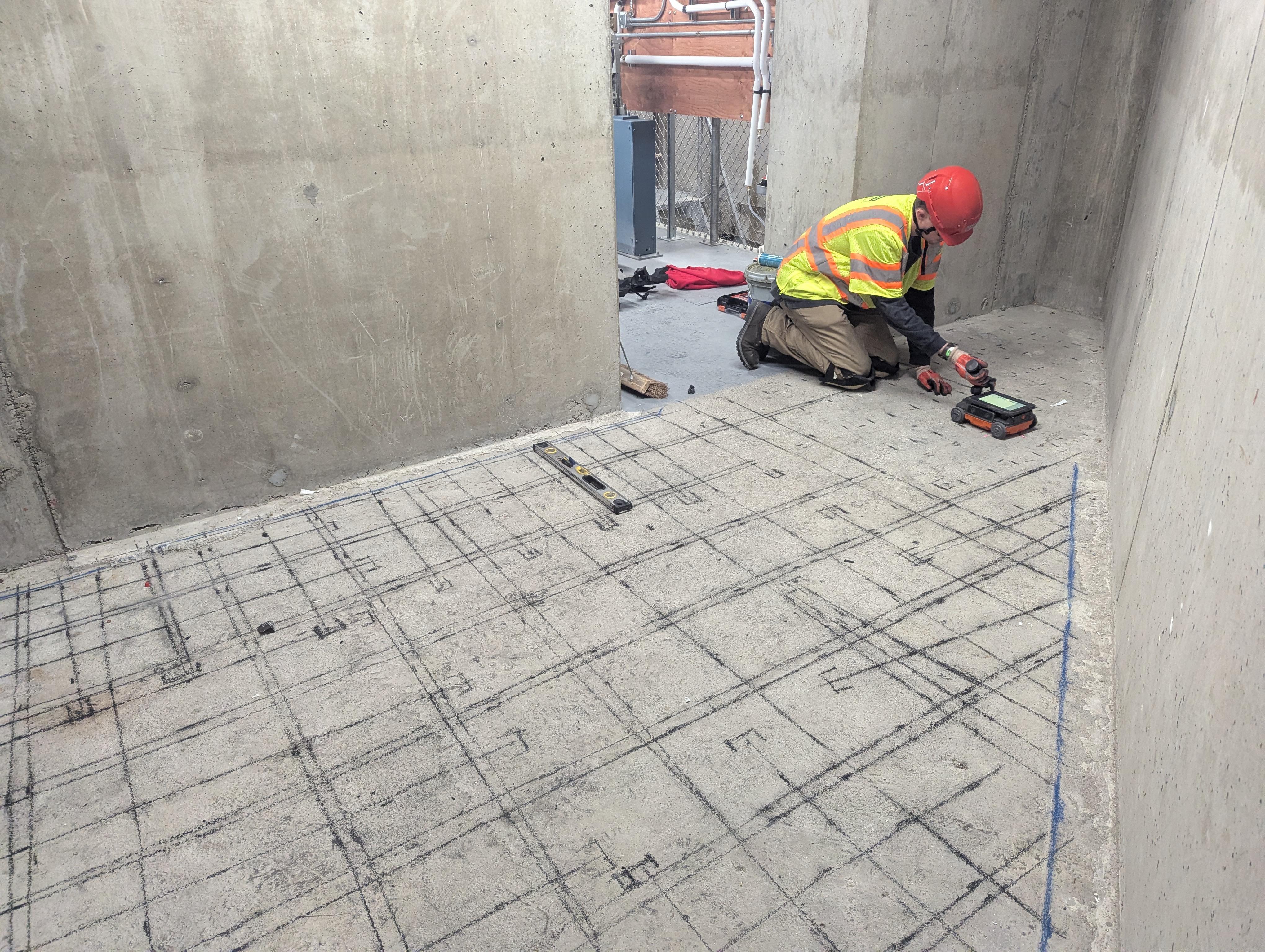
Penhall's experts locate gas lines, power lines, communication lines, sewer lines, cable lines, underground storage tanks, and underground pipes. Identifying these private utility lines before excavation prevents leaks, costly repairs, service interruptions, and dangerous accidents. Using advanced ground penetrating radar (GPR) technology, Penhall's experienced analysts detect, identify, and label underground utility lines, tanks, and pipes with high accuracy.
How to Read Utility Markings: The APWA Color Code Explained
If you have ever noticed colored flags, spray paint lines, or chalk marks on a sidewalk, street, or lawn, you have seen utility markings in action. These markings follow a standardized system established by the American Public Works Association (APWA) called the Uniform Color Code. Each color corresponds to a specific type of underground utility, making it possible for excavators, contractors, and property owners to quickly understand what is buried below.
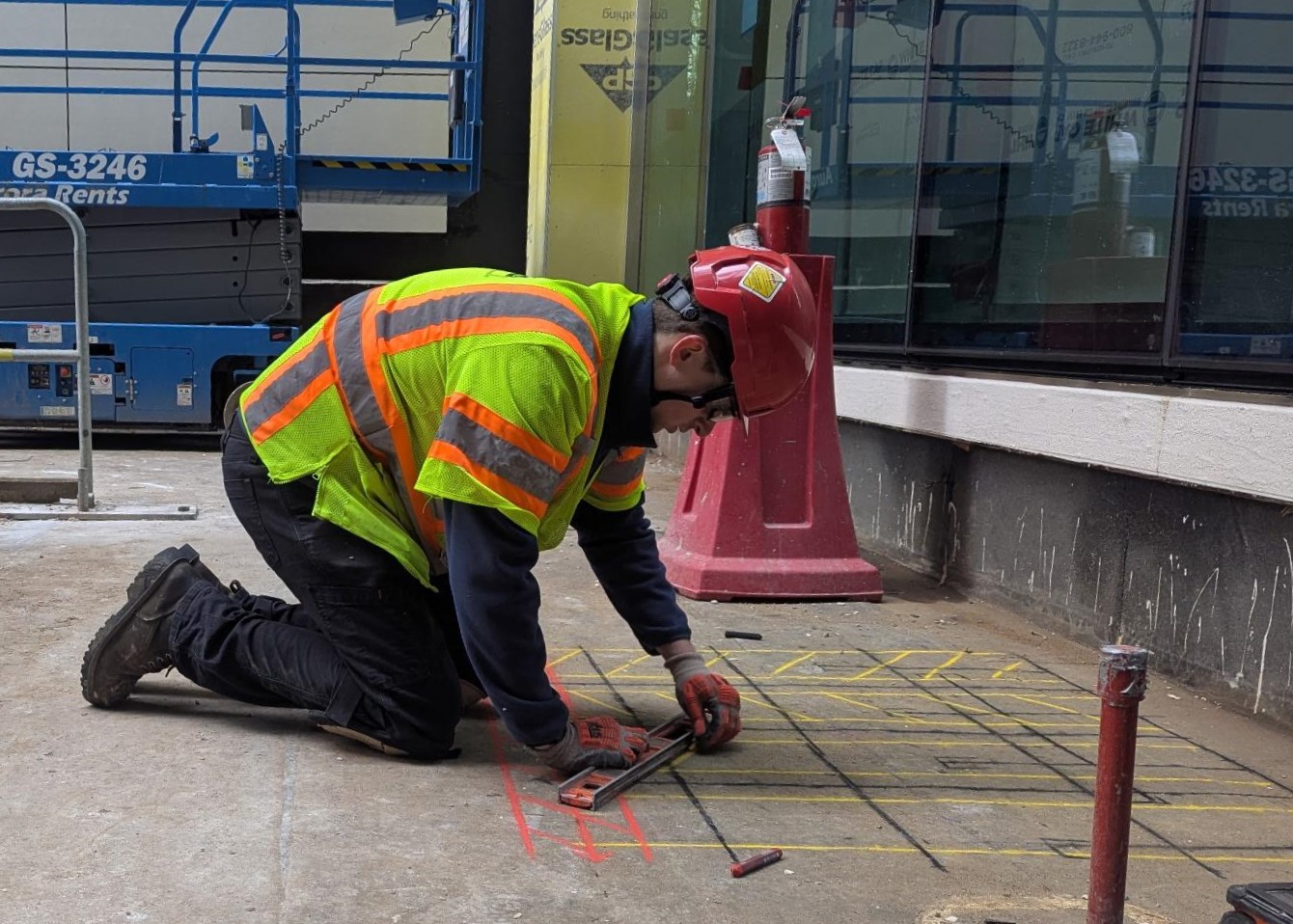
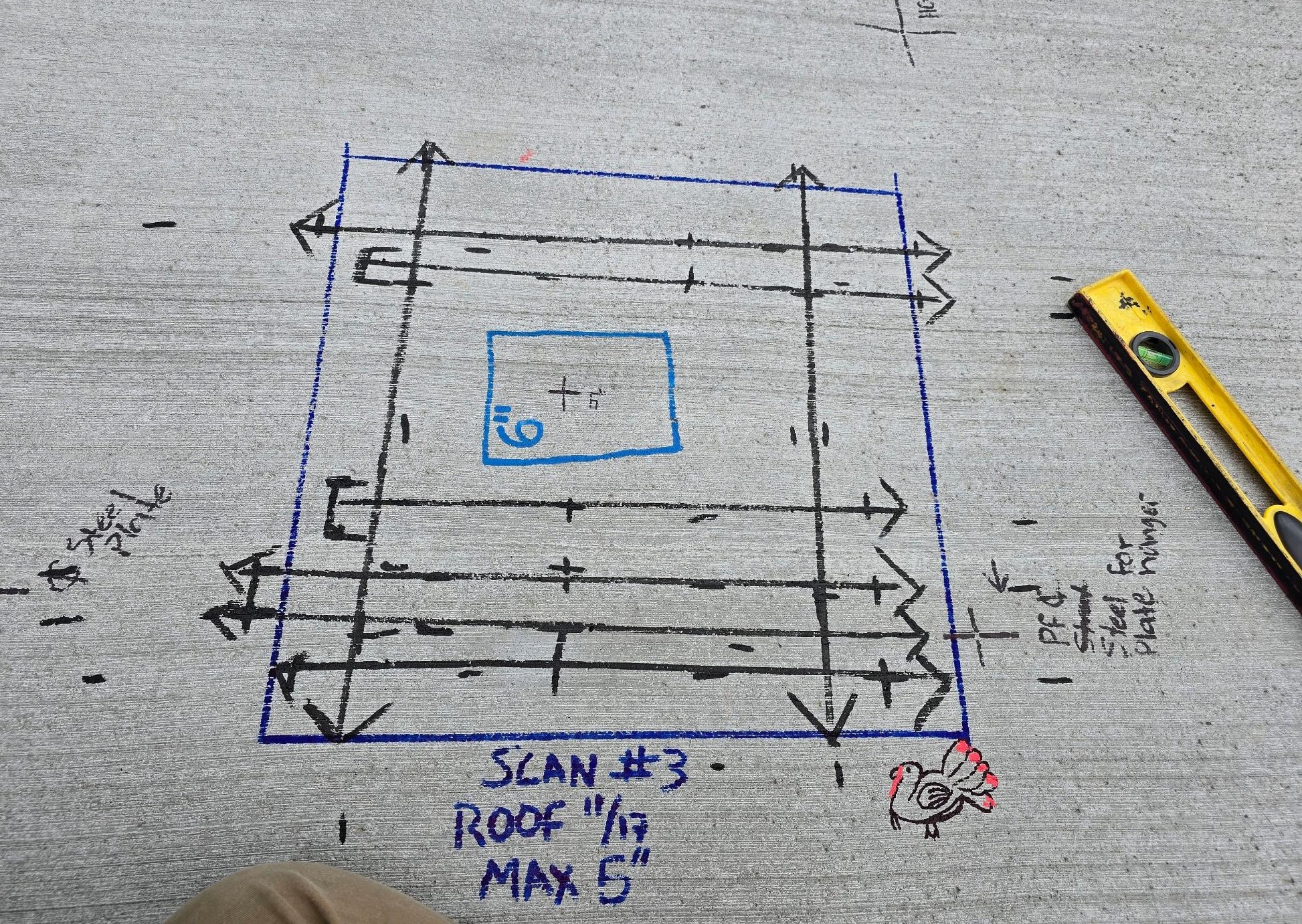
Markings typically consist of color-coded surface paint (spray paint or chalk) to indicate the route of buried lines, supplemented by color-coded vertical markers (temporary stakes or flags) for increased visibility. All marks should include the name, initials, or logo of the company that owns or operates the line. If the buried facility is wider than 2 inches, the marking should also indicate the width.
What Do White Utility Flags Mean?
White flags or paint markings indicate a proposed excavation. They outline the boundaries of where digging, trenching, or other ground-disturbing work is planned. White markings are placed by the excavator (the person or company planning to dig) to show utility locators exactly where the work will take place. When you see white flags in a yard or along a street, it means someone has submitted a dig plan for that area. The white markings help utility locators focus their work on the relevant zone.
What Do Blue Utility Flags Mean?
Blue flags or paint markings indicate potable water lines. These are the drinking water supply lines that deliver clean water to buildings and homes. Blue markings are among the most common you will see in residential areas, because water lines run to virtually every structure. Accidentally striking a water main during excavation can cause flooding, property damage, and a loss of water service to surrounding properties.
The Complete APWA Color Code
Here is the full APWA Uniform Color Code for underground utility markings:
| Red | Electric power lines, cables, conduit, and lighting cables | |
| Orange | Communication, alarm, or signal lines, cables, or conduit (including telecom and fiber) | |
| Yellow | Gas, oil, steam, petroleum, or other gaseous/flammable materials | |
| Green | Sewer and drain lines | |
| Blue | Potable (drinking) water lines | |
| Purple | Reclaimed water, irrigation, and slurry lines | |
| Pink | Temporary survey markings or unknown/unidentified facilities | |
| White | Proposed excavation boundaries (placed by the excavator) |
After locating your utilities, Penhall's analysts mark each line with paint or flags in the designated APWA color. This standardized approach ensures clear, consistent communication on every job site.
How to Read Utility Pole Markings
Utility poles carry their own set of markings that communicate important information to utility workers and contractors. While these markings vary by utility company and region, there are some common elements you will find on most poles.
Most utility poles have an identification tag or stamp that includes a sequence number (a unique identifier for that specific pole), the year of manufacture or installation, the height and class of the pole (which indicates its load-bearing capacity), and the treatment type (how the wood was preserved). You may also see colored tags or bands attached to the pole by different utility companies (electric, telephone, cable) to indicate which lines on the pole belong to which provider.
Colored markers on utility poles sometimes follow the same APWA color conventions (red for electric, orange for telecom, etc.), but this is not universally standardized the way underground markings are. If you need to identify which lines are attached to a specific utility pole, the best approach is to contact the utility company directly or consult with a private utility locating service that can trace lines from the pole to their underground connection points.
Detect Hazards: How Private Utility Locating Works
Penhall Technologies uses advanced ground penetrating radar (GPR) as the primary technology for private utility locating. GPR works by emitting radio waves into the ground and recording the reflected signals. Different materials (metal pipes, plastic conduits, soil, voids) reflect the radar waves differently, allowing trained analysts to identify the location, depth, and approximate type of each buried utility.
Safety is the primary reason for utility locating, but it also protects your budget and timeline. Striking a subsurface hazard can lead to severe injuries, costly repairs, regulatory fines, and significant project delays. By investing in utility locating before breaking ground, you prevent these outcomes and keep your project moving. According to the Common Ground Alliance, every dollar spent on utility locating saves an average of $4.62.
Penhall's cutting-edge GPR equipment provides real-time data, enabling analysts to make accurate assessments quickly. Whether you are dealing with complex urban environments with dense utility networks or straightforward residential properties, Penhall's technology ensures that no subsurface hazard goes undetected. For situations where GPR data is congested or ambiguous, Penhall also offers digital X-ray imaging for definitive subsurface identification.
GPS Utility Mapping: A Permanent Record of What Lies Below
Traditional utility locating with flags and paint marks is essential for active excavation, but those markings are temporary. Paint fades, flags get pulled, and the information is lost. GPS utility mapping solves this problem by creating a permanent, detailed digital record of all underground utilities on your site.
Penhall Technologies' GPS utility mapping service takes the location data gathered during the utility locating process and uses it to create comprehensive maps of underground utilities. These maps are color-coded following APWA standards, tagged with essential metadata (utility type, depth, owner), and exportable as KMZ, KML, or SHP files for integration with GIS systems, CAD software, and project management platforms.
The maps are accurate to within 6 inches, which is more precise than most underground work requires. This accuracy means you can reference the map for future projects, renovations, or maintenance work without needing to call for a new locate every time. Penhall provides digital and PDF utility maps of all site utilities, both public and private, including depths. The maps support seamless project collaboration and communication, helping save money by providing accurate, up-to-date information and avoiding costly mistakes.
When Can I Remove Utility Flags in My Yard?
This is one of the most commonly asked questions by homeowners, and the answer depends on your state's regulations. Here is the general guidance: Do not remove utility flags while excavation work is active or planned in your area. The flags mark the locations of buried utilities, and removing them before work is complete can result in accidental utility strikes, which can cause dangerous situations (gas leaks, electrical hazards, water main breaks) and lead to expensive damage claims.
Locate markings are typically valid for a set period after the locate request is filed, usually between 14 and 21 calendar days depending on your state. (Some states use shorter windows of 10 to 15 working days.) If excavation has not started within the validity window, a new locate request must be filed and the lines re-marked.
If flags have been in your yard for more than 14 days with no visible excavation activity, it is generally acceptable to remove them, as the locate ticket has likely expired. However, the safest approach is to call 811 first and ask about the status of the locate request for your property before pulling any flags. Paint markings are not permanent and will fade over time on their own.
Some important points to keep in mind: never try to replant flags by memory if they get knocked over, because even a few inches of error can lead to a utility strike. If flags are displaced by weather, mowing, or other activity, call 811 to request a re-mark. The excavator (the company doing the digging) is generally responsible for removing flags once their work is complete.
Benefits: How Private Utility Locating Keeps Projects Safe, On Schedule, and On Budget
Investing in private utility locating before excavation delivers measurable returns. The Common Ground Alliance estimates that every dollar spent on utility locating saves an average of $4.62, contributing to an estimated $1 billion saved nationwide each year. Here is how those savings break down:
Safety: Accurate utility locating prevents accidental strikes that can cause gas leaks, electrical shocks, water main breaks, and structural damage. Protecting your crew from these hazards is the single most important reason to invest in locating services.
Cost avoidance: Repairing a damaged utility line can cost tens of thousands of dollars, plus the cost of project delays, emergency response, and potential regulatory fines. A utility locate is a fraction of that cost.
Schedule protection: Utility strikes cause immediate work stoppages. The repair process, regulatory reporting, and re-marking can set a project back days or weeks. Locating before you dig keeps the schedule intact.
Permanent documentation: GPS utility mapping provides a lasting digital record that eliminates the need for repeated locating on the same site, saving time and money on future projects.
Why Choose Penhall Technologies for Private Utility Locating
Penhall Technologies, a division of Penhall Company, brings over 65 years of concrete and construction industry expertise to every utility locating project. As the nation's largest provider of concrete cutting, coring, and scanning services, Penhall's utility locating analysts understand the real-world context of why accurate locating matters: they work alongside the crews who depend on that data to cut, core, and excavate safely.
Penhall provides both GPR scanning and digital X-ray imaging, giving you access to the right technology for every situation. Their GPS utility mapping service creates permanent, detailed records that support long-term site management. And with branch locations nationwide, Penhall can respond quickly to projects of any scale, from residential properties to complex commercial and industrial sites.