At a Glance
GPR stands for Ground Penetrating Radar. It is a non-destructive method that uses high-frequency radio waves to image the interior of concrete, pavement, soil, and other materials without drilling, coring, or excavation.
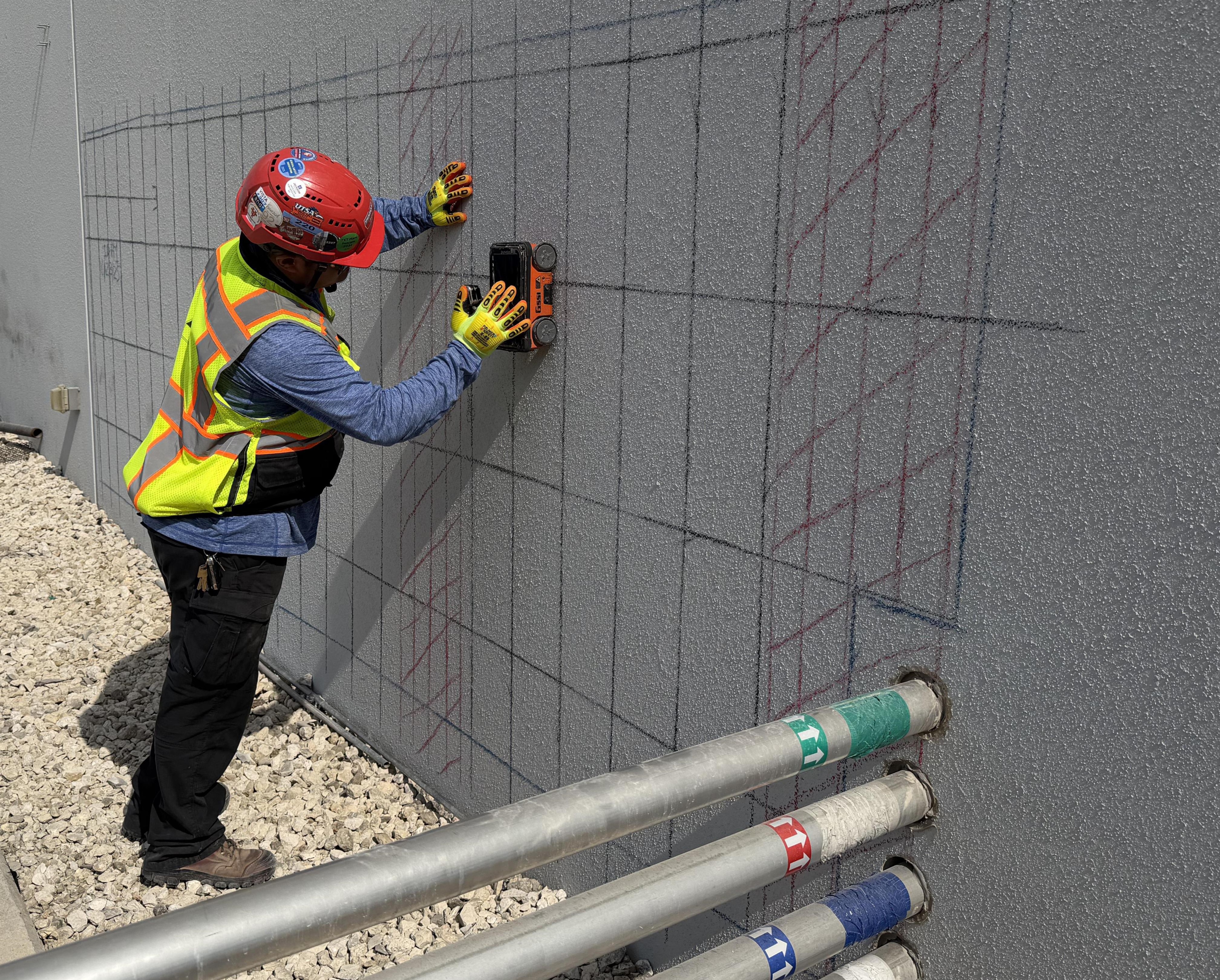
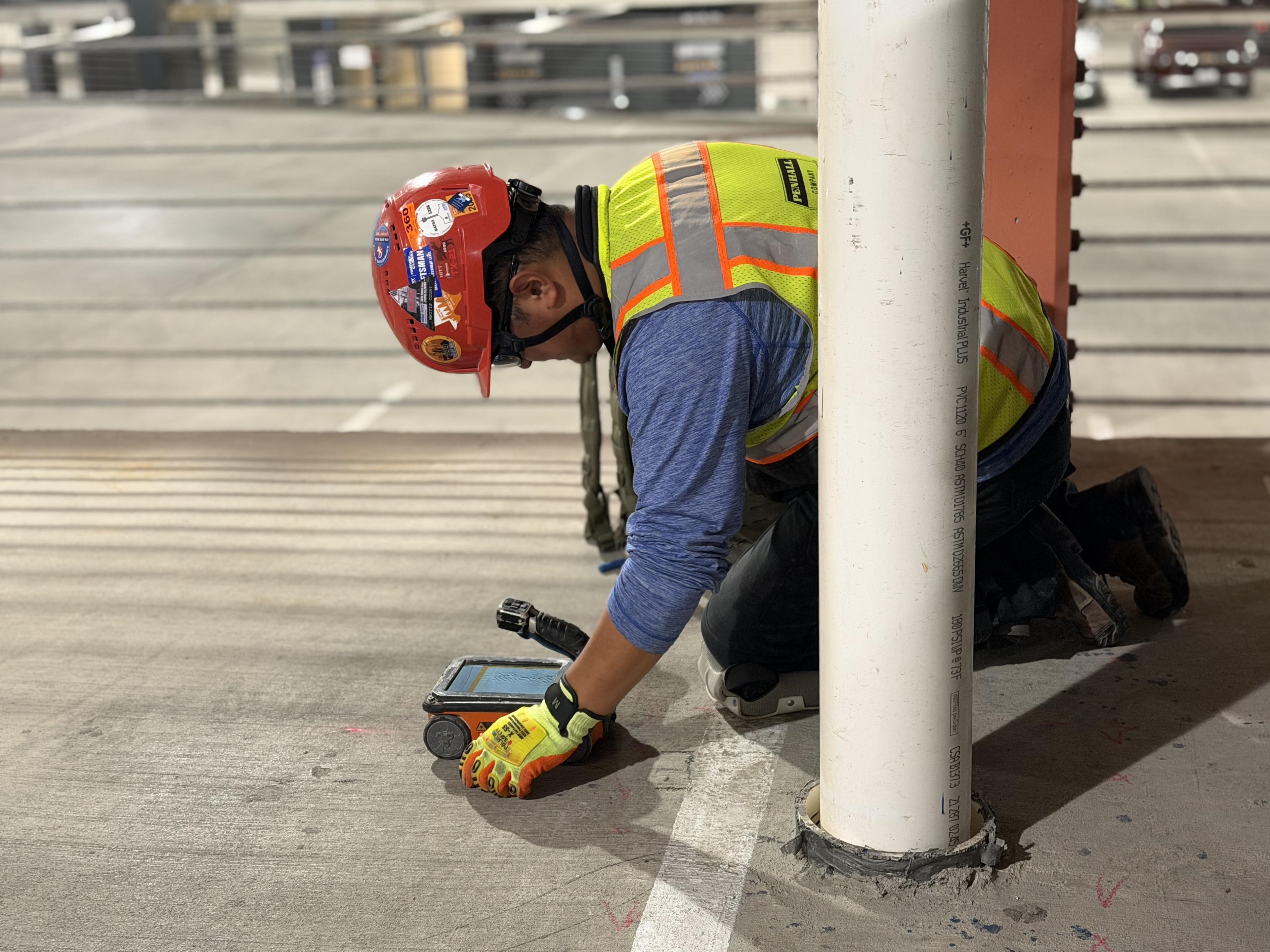
How GPR works: a handheld or cart-mounted antenna transmits short pulses of electromagnetic energy into the material. Those pulses reflect off embedded objects, rebar, PT cables, conduit, voids, and return to the antenna, where the reflections are recorded and displayed as a cross-sectional image called a radargram.
GPR scanning can locate rebar, post-tension cables, welded wire reinforcement, electrical conduit, plumbing pipes, voids, delamination zones, and changes in material thickness, all in real time, from the surface, without damaging the structure.
GPR has limitations: signal depth decreases in conductive materials, dense rebar can shadow deeper objects, and non-metallic materials like GFRP rebar and plain plastic conduit may not be reliably detected.
GPR scanning is the essential pre-work step before any concrete cutting or coring in post-tensioned structures or wherever embedded utilities may be present. Striking an undetected PT cable or live electrical conduit is a life-safety event.
GPR is used across construction, infrastructure assessment, utility locating, geotechnical investigation, environmental remediation, and archaeological surveying.
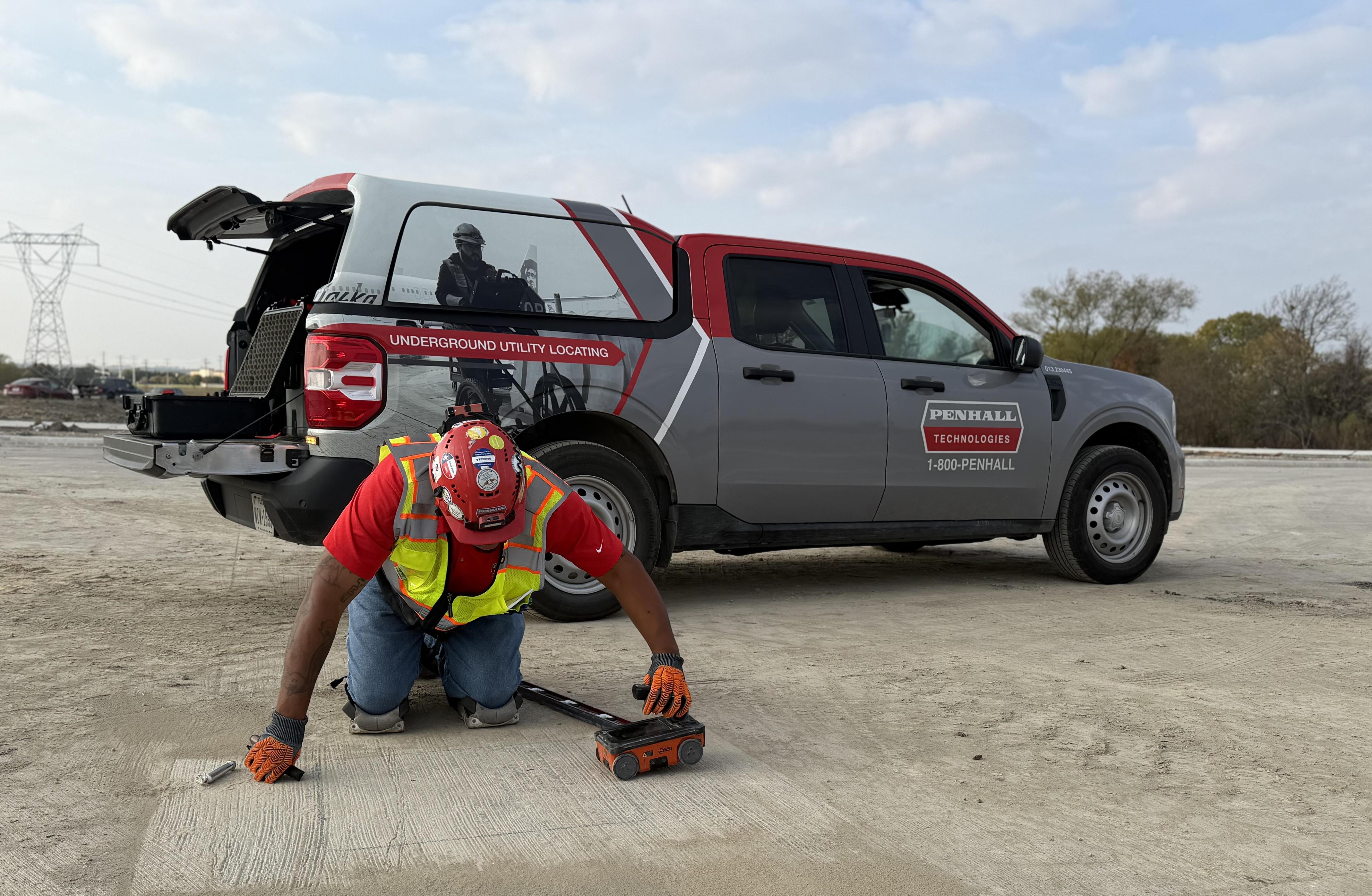
Penhall Company provides professional GPR concrete scanning services nationwide as a standard pre-work step before concrete cutting, coring, and demolition projects.
What Is GPR?
GPR, Ground Penetrating Radar, is a geophysical imaging method that uses pulses of electromagnetic energy in the radio frequency range to create subsurface images without disturbing the material being examined. It works on the same fundamental principle as radar used in aviation and weather forecasting: transmit a signal, measure what reflects back, and use the characteristics of those reflections to infer what is below the surface.
Unlike X-ray or gamma-ray methods, GPR uses non-ionizing radiation at very low power levels, making it safe for operators and bystanders and practical for use in occupied buildings, on active construction sites, and in sensitive environments. Unlike core drilling or excavation, it does not damage the structure being investigated. And unlike many other subsurface investigation methods, it can be performed quickly, a typical scan of a concrete slab or wall section takes minutes and delivers results in real time.
The range of materials GPR can image is broad: concrete, asphalt, soil, rock, ice, wood, masonry, and more. Within those materials, it can detect metallic reinforcement, plastic conduit, pipes, cables, voids, moisture zones, delamination, layer boundaries, and other anomalies. This versatility has made GPR one of the most widely used non-destructive testing (NDT) methods across the construction, infrastructure, environmental, and geotechnical industries.
In the concrete industry specifically, GPR scanning has become the standard method for understanding what is inside a slab, wall, or structural member before cutting, coring, or demolition work begins. The alternative, proceeding without knowing what is inside, carries risks that range from costly blade and bit damage to life-threatening PT cable strikes to electrocution from undetected live conduit.
How Does GPR Work?
Understanding how ground penetrating radar works requires a brief look at the physics of electromagnetic wave propagation, but the core concept is more intuitive than it might sound.
The Basic Principle: Transmit, Reflect, Record
A GPR system consists of three main components: a transmitting antenna, a receiving antenna (often combined in a single unit), and a control unit that records and displays data. Here is the sequence of events during a scan:
- The transmitting antenna emits a short, high-frequency pulse of electromagnetic energy, typically in the range of 100 MHz to 2.6 GHz, depending on the antenna, directed into the material below.
- That pulse travels through the material at a speed determined by the material’s dielectric properties. As long as the material is uniform, the pulse continues traveling downward.
- When the pulse encounters a boundary between two materials with different dielectric properties, for example, where steel rebar meets concrete, or where concrete meets an air-filled void, part of the energy is reflected back toward the surface and part continues deeper.
- The receiving antenna captures the reflected energy and records its amplitude and the time elapsed since the original pulse was transmitted. This two-way travel time directly corresponds to the depth of the reflecting boundary: the longer the travel time, the deeper the object.
- The control unit processes thousands of these transmit-reflect-record cycles per second as the antenna is moved across the surface, building up a continuous cross-sectional profile of the subsurface.
The result is a radargram: a two-dimensional image in which the horizontal axis represents position along the scan line and the vertical axis represents depth (or two-way travel time). Embedded objects appear as characteristic hyperbolic reflections in the radargram, the familiar “arch” shape that experienced GPR technicians recognize immediately as a point reflector such as a rebar bar or a pipe.
Dielectric Properties and Signal Velocity
The speed at which a GPR signal travels through a material is determined by that material’s dielectric constant (also called relative permittivity). A higher dielectric constant means slower signal propagation. Air has a dielectric constant of 1 (the reference). Dry concrete typically ranges from 4 to 8. Wet or saturated concrete can be 10 to 20 or higher. Water has a dielectric constant of approximately 80.
This matters for two reasons. First, the dielectric constant determines how quickly the signal attenuates (loses energy) as it penetrates deeper. Higher dielectric materials, especially those containing water or salt, absorb signal energy more rapidly and reduce the effective depth range of the scan. Second, accurate depth calculations require knowing the dielectric constant of the material, or calibrating it against a known depth reference point. When the dielectric constant is unknown or variable (as in aged concrete with varying moisture content), depth estimates carry a margin of uncertainty.
Antenna Frequency and the Depth-Resolution Trade-off
GPR antenna frequency is the most important hardware variable in scan planning. It governs a fundamental trade-off between depth penetration and resolution:
- Lower frequency antennas (100 MHz to 400 MHz) penetrate deeper, up to 15 to 30 feet in favorable soil conditions, or several feet in concrete, but at lower resolution. Features smaller than approximately 6 to 12 inches may not be clearly imaged.
- Higher frequency antennas (900 MHz to 2.6 GHz) provide excellent resolution, capable of resolving objects as small as 1/4 to 1/2 inch, but have limited penetration depth, typically 12 to 24 inches in concrete or a few feet in soil.
For concrete scanning in typical construction applications, locating rebar, PT cables, and conduit in slabs 4 to 24 inches thick, high-frequency antennas in the 1.5 GHz to 2.6 GHz range are standard. For deeper subsurface investigation in soil or thick concrete structures, lower frequencies are used. Many GPR systems support multiple antennas to address different depth and resolution requirements on the same project.
What the Radargram Shows
The radargram is the primary output of a GPR scan, the image that the technician interprets to identify embedded objects and subsurface features. Several characteristics of radargram reflections help a trained interpreter distinguish between object types:
- Hyperbolic (arch-shaped) reflections are the signature of discrete point reflectors, individual rebar bars, pipes, or conduit. The arch shape occurs because the GPR begins receiving the reflection before the antenna is directly above the object and continues receiving it after the antenna has passed.
- Flat, continuous reflections typically indicate layer boundaries, the interface between the concrete slab and the subbase, or between multiple poured lifts.
- Broken or irregular reflections can indicate delamination, cracking, or void zones where the concrete has separated from itself or from an underlying material.
- Signal loss or shadowing below a strong reflector is common where a dense rebar mat or metallic surface absorbs most of the signal energy before it can penetrate deeper.
- Amplitude and polarity of reflections carry information about the relative dielectric properties of the reflecting boundary. A reflection from a high-dielectric material (such as a water-filled pipe) has the opposite polarity from a reflection from a low-dielectric material (such as an air void). Experienced interpreters use polarity to help distinguish object types.
Real-Time Interpretation and Post-Processing
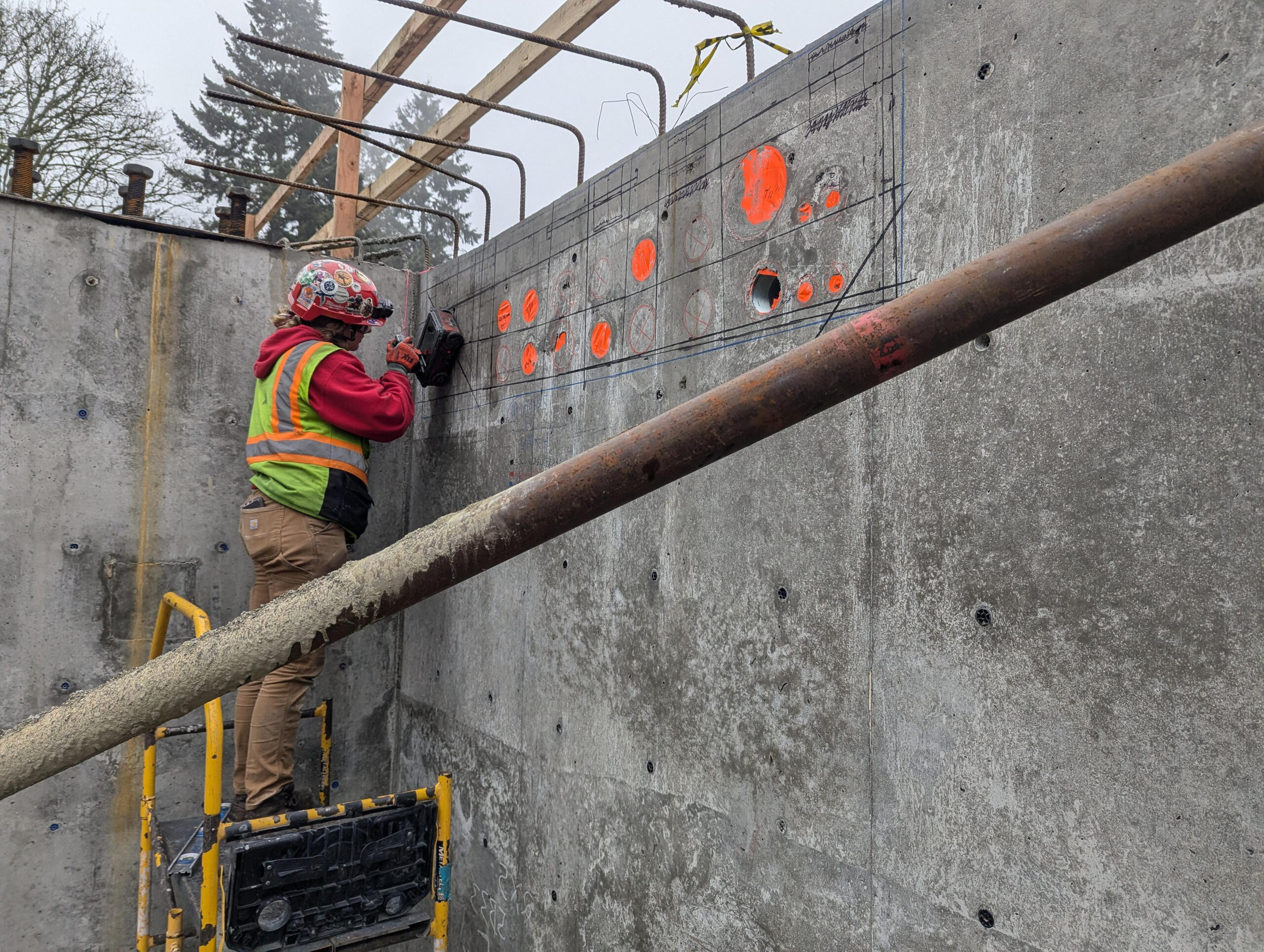
Modern GPR equipment displays the radargram in real time on a screen as the operator scans, allowing immediate identification of embedded objects. For concrete scanning, this means a technician can scan a proposed cut or core location, observe the reflections, and mark the position of rebar and utilities on the surface with spray paint or chalk within minutes.
For more complex applications, structural assessments, condition surveys, 3D grid scans, data can be recorded and processed using dedicated GPR software. Post-processing tools include depth slice mapping (horizontal slices through the data at a specific depth, showing the plan-view distribution of reflectors), 3D volume rendering, and migration algorithms that sharpen hyperbolic reflections into point images for more precise object location.
What Can GPR Detect?
GPR is remarkably versatile in what it can image. The following categories represent the most common targets in construction and infrastructure applications:
In Concrete
- Rebar and welded wire reinforcement: the most commonly imaged target in concrete scanning. Rebar produces strong, easily recognized hyperbolic reflections and can be located horizontally within 1–2 inches in well-conditioned concrete.
- Post-tension cables and tendons: PT cables are critical targets in any concrete structure where cutting or coring is planned. They produce strong reflections similar to rebar but with characteristic spacing and layout patterns that differ from conventional reinforcement.
- Electrical conduit and wiring: metallic conduit produces strong reflections; plastic conduit is detectable if it contains a metallic tracer wire or if there is sufficient dielectric contrast with the surrounding concrete.
- Plumbing pipes: metallic and, in some conditions, plastic pipes. Detection depends on pipe diameter, depth, and the dielectric contrast between pipe contents and surrounding concrete.
- Voids and delamination: air-filled voids and delamination zones produce strong reflections because of the large dielectric contrast between concrete and air. These are critical targets in bridge deck and parking structure condition assessments.
- Moisture zones: areas of elevated moisture content produce distinctive signal attenuation and reflection character, useful in identifying water infiltration pathways and corrosion-active zones.
- Slab thickness: GPR can measure slab thickness non-destructively by detecting the reflection from the bottom surface of the slab, useful when construction drawings are unavailable or unreliable.
In Soil and Pavement
- Buried utilities: pipes, conduit, tanks, and cables at depths from a few inches to 15–20 feet depending on soil conditions and antenna frequency.
- Layer boundaries: interfaces between pavement layers, soil strata, and bedrock.
- Voids and sinkholes: subsurface air voids beneath pavement or in karst terrain that indicate instability or imminent collapse.
- Underground storage tanks: metallic and fiberglass tanks, including detecting leaks through surrounding soil anomalies.
- Archaeological features: buried structures, walls, artifact concentrations, and soil disturbances from historical activity.
What Are the Limitations of GPR?
Understanding GPR’s limitations is as important as understanding its capabilities. A GPR scan is a powerful tool, but it is not infallible, and its results are only as reliable as the conditions allow and the interpreter’s skill enables.
Signal Attenuation in Conductive Materials
GPR signal penetrates well in resistive materials like dry concrete, asphalt, and sandy soil. It attenuates rapidly in conductive materials. Saltwater-saturated concrete, common in bridge decks and parking structures exposed to deicing chemicals, can limit effective scan depth to just a few inches. Saturated clay soils present the same problem for ground-surface scanning. When conductivity is high, low-frequency antennas and adjusted scan parameters can help, but there are physical limits that cannot be overcome.
Rebar Shadowing in Densely Reinforced Concrete
A dense upper rebar mat can reflect a large fraction of the signal energy, leaving insufficient energy to image objects deeper in the slab. In heavily reinforced concrete, multiple layers of large-diameter rebar at tight spacing, objects below the uppermost reinforcement layer may not be reliably detected. This is an important limitation in post-tensioned concrete with top-mat conventional rebar, where the PT cables run beneath the top mat: the rebar may shadow the PT tendons that are the primary safety concern.
Non-Metallic Objects
GPR detects objects based on dielectric contrast with the surrounding material. Metallic objects, steel rebar, copper pipe, metallic conduit, produce strong, easily interpreted reflections because metal has very different dielectric and conductive properties than concrete. Non-metallic objects are more challenging:
- GFRP (fiberglass) rebar has a dielectric constant similar to concrete and may not be reliably detected by GPR.
- Plain plastic conduit without a metallic tracer wire may produce only a subtle reflection or none at all, depending on whether it is air-filled, water-filled, or encased in grout.
- Plastic water supply lines are detectable when full of pressurized water (because water has a much higher dielectric constant than concrete) but harder to detect when empty.
This limitation is particularly relevant in newer construction where GFRP rebar is being used more widely for corrosion resistance. In structures where GFRP may be present, GPR results should be supplemented by a review of construction drawings and, where critical, physical verification.
Interpretation Requires Expertise
A radargram is not a photograph. It is a complex signal dataset that requires training and experience to interpret accurately. The same feature can produce different-looking reflections depending on antenna frequency, scan direction relative to the object orientation, concrete condition, and signal noise. Misinterpreting a PT cable as a conduit, or missing a shallow utility because it overlaps with a surface reflection artifact, are real risks when scans are performed or interpreted by undertrained personnel.
The quality of a GPR scan result is directly proportional to the skill of the technician performing it. Penhall’s GPR scanning technicians are trained specifically for concrete and infrastructure applications and provide interpreted, marked results that crews can act on with confidence, not raw radargram data that leaves interpretation to the operator.
GPR Does Not Identify, It Locates
GPR tells you where something is. It does not always tell you definitively what that something is. A metallic object at 4 inches depth could be a rebar bar, a conduit, a PT cable, or a wire. In most cases, the context, the known type of structure, the pattern of reflections, the depth relative to the slab thickness, provides enough information to make a confident identification. But in ambiguous situations, physical verification at a test location, review of structural drawings, or consultation with a structural engineer may be warranted before proceeding with cutting or coring.
GPR Scanning Applications
GPR is used across a wide range of industries and applications. The following table summarizes the most common uses in construction and infrastructure:
| Application | What GPR Locates | Why It Matters |
|---|---|---|
| Concrete cutting & coring | Rebar, PT cables, conduit, voids | Prevents blade/bit damage, PT cable strike, utility hazards |
| Utility locating | Buried pipes, conduit, tanks, cables | Avoids strikes during excavation or directional drilling |
| Bridge deck assessment | Delamination, rebar corrosion, moisture zones | Targets repair scope; avoids unnecessary removal |
| Parking structure evaluation | Rebar corrosion, voids, delamination | Prioritizes repair areas and extends structure life |
| Sinkhole & void detection | Subsurface voids, soft zones, soil anomalies | Identifies instability before surface failure |
| Forensic investigation | Anomalies inconsistent with design drawings | Supports litigation, insurance, and structural assessment |
| Archaeological survey | Subsurface features, artifacts, structures | Non-destructive site investigation before excavation |
Why GPR Scanning Is Required Before Concrete Cutting and Coring
Of all GPR’s applications, its role as a pre-work safety and planning step before concrete cutting and coring is the most directly relevant to Penhall’s work, and the one where the consequences of skipping it are most severe.
H3: Post-Tension Cable Safety
Post-tensioned concrete is present in a large proportion of commercial, institutional, and infrastructure structures built in the past 40 years, parking structures, high-rise floors, podium decks, bridge girders, transfer beams, and large-span industrial slabs. PT cables are under 150,000 to 270,000 PSI of tensile stress. A single 0.5-inch strand carries approximately 30,000 to 33,000 pounds of load.
Cutting through a PT cable with a concrete saw releases that stored energy instantaneously. The cable retracts violently, destroying the concrete around it and potentially causing a cascade of structural damage. Workers in the area are at risk from the cable itself, from concrete fragments, and from the structural instability that can result. There are documented fatalities associated with undetected PT cable strikes.
GPR scanning before cutting or coring in any concrete structure that may be post-tensioned is not a precaution, it is a professional obligation. Penhall’s concrete scanning services are specifically designed to identify PT tendons before cutting or coring begins, and Penhall’s field crews are trained to recognize the visual indicators of PT construction and escalate for a scan when any uncertainty exists.
Embedded Utility Safety
Electrical conduit, plumbing, gas lines, and data cables are routinely embedded in concrete during construction and frequently undocumented in older buildings. Striking a live electrical circuit with a diamond blade is an electrocution and fire hazard. Severing a pressurized water line causes immediate flooding. Cutting a gas line creates an explosion and fire risk. Severing a fiber optic backbone in a hospital or data center causes operational disruption that can cost far more to remedy than the cutting project itself.
GPR scanning systematically identifies these hazards before the blade or bit enters the concrete. For any project where the concrete’s interior is unknown, which in practice means the vast majority of commercial and industrial cutting and coring projects, GPR scanning is the first step, not an optional line item.
Cost and Production Planning
Beyond safety, GPR scanning provides information that directly affects project cost and production planning. Knowing the rebar size, spacing, and depth before cutting or coring begins allows the contractor to select the right tooling, estimate blade and bit consumption accurately, plan cut and core locations to minimize reinforcement encounters, and avoid change orders driven by unexpected subsurface conditions.
A GPR scan that takes 30 minutes and costs a fraction of the overall project budget can prevent days of delay, thousands of dollars in unplanned tooling costs, and, in the case of PT cables or embedded utilities, incidents that stop the project entirely.
What to Expect from a GPR Scanning Service
For contractors and project owners who have not worked with GPR before, understanding what the scanning process looks like helps set expectations and facilitates smooth project coordination.
Pre-Scan Preparation
The GPR technician will need access to the surfaces to be scanned. For concrete scanning, this means the slab, wall, or structural member should be reasonably clear of heavy equipment or material stacked on the scan area. Surface coatings, tiles, carpet, and other floor coverings do not generally prevent GPR scanning, the signal penetrates most common floor finishes, but thick metallic coatings or metallic foil-backed insulation can interfere.
If available, provide the technician with structural drawings, original construction documents, or any prior scanning data. This context helps the technician calibrate expectations, identify likely reinforcement patterns, and recognize anomalies that depart from the designed layout.
The Scan Itself
The GPR antenna is moved across the surface in a systematic grid or along specific scan lines corresponding to proposed cut and core locations. Scan speed is typically 1 to 3 feet per second. The antenna must maintain consistent contact with the surface, gaps due to surface irregularities can introduce noise into the data.
For a standard pre-cut or pre-core location scan, the technician scans in two perpendicular directions across each proposed work location to capture both the along-axis and cross-axis reflections from embedded objects. The entire process for a typical proposed cut or core location, scan, interpret, mark, takes 5 to 15 minutes.
Results and Markings
The primary deliverable of a concrete GPR scan is the marked surface. The technician uses spray paint, chalk, or marking flags to indicate the location and depth of detected objects directly on the concrete, providing the cutting or coring crew with an immediate, actionable guide to where reinforcement and utilities are present.
For condition surveys and structural assessments, the deliverable is typically a written report with radargram images, depth maps, annotated findings, and recommendations. For 3D grid scans, a plan-view depth slice map showing the spatial distribution of reinforcement and anomalies is standard output.
Penhall’s GPR Concrete Scanning Services
Penhall Company’s GPR concrete scanning services are performed by trained technicians using professional-grade GPR equipment calibrated for construction and infrastructure applications. Penhall provides GPR scanning as a standard pre-work service before concrete cutting, coring, and demolition projects, and as a standalone service for structural assessments, condition surveys, and pre-renovation investigations.
Penhall’s integrated service model means that scanning and the subsequent concrete work are coordinated under a single contract: the same company that scans the slab cuts or cores it, eliminating the coordination gap between the scan results and the field crew executing the work. Penhall’s technicians brief the cutting and coring crew directly, ensuring that scan findings are understood and acted on.
Penhall’s broader service offering, covering the full project lifecycle from pre-work scanning through concrete removal, structural repair, and restoration, includes:
Concrete cutting: flat sawing, wall sawing, wire sawing, and hand sawing.
Concrete coring: 1-inch to 60-inch diameter cores in any orientation and reinforcement condition.
Hydrodemolition: high-pressure water concrete removal for bridge deck rehabilitation, parking structure repair, and other large-scale concrete removal where saw cutting is not the optimal method.
Selective demolition: controlled removal of reinforced and post-tensioned concrete with full structural coordination.
Structural repair: concrete restoration, FRP strengthening, and repair following cutting, coring, or demolition.
With locations across the country, Penhall can mobilize quickly for GPR scanning and concrete work in any region.