
At a Glance
- Hydrodemolition (also called hydroblasting or water jetting) uses high-pressure water jets, typically 15,000 to 40,000+ PSI, to selectively remove deteriorated or sound concrete.
- Unlike jackhammering, hydrodemolition does not cause microfractures in the remaining structure, resulting in stronger, longer-lasting repairs.
- A single hydrodemolition robot can replace up to 25 jackhammer operators, making the process more than 25 times faster than mechanical methods.
- The process preserves embedded rebar, cleans it of rust and corrosion, and creates an ideal rough-textured bonding surface for new concrete overlays.
- Common applications include bridge deck rehabilitation, parking structure repair, dam and spillway maintenance, highway resurfacing, and nuclear decommissioning.
- Hydrodemolition produces no silica dust, significantly reduces noise, and allows operators to work from a safe distance via robotic controls.
- Penhall Company offers hydrodemolition services nationwide, backed by over 65 years of concrete expertise and an industry-leading safety program.
Why Hydrodemolition Is Changing the Concrete Industry
Concrete is the backbone of modern infrastructure. Bridges, highways, parking garages, dams, and power plants all rely on it. But concrete doesn’t last forever. Over time, exposure to weather, de-icing chemicals, heavy traffic loads, and chloride intrusion causes concrete to crack, delaminate, and deteriorate. When that happens, the damaged material needs to be removed so the structure can be repaired and returned to service.
For decades, the standard approach was mechanical demolition, jackhammers, pneumatic breakers, and milling machines. These methods get the job done, but they come with significant drawbacks: they create microfractures in the sound concrete that remains, they can damage embedded rebar, they generate hazardous silica dust, and they’re slow and labor-intensive.
Hydrodemolition offers a fundamentally better approach. By using high-pressure water jets instead of mechanical impact, hydrodemolition removes concrete precisely and efficiently, without the structural damage, safety hazards, and inefficiencies of traditional methods. In this guide, we’ll cover everything you need to know about how hydrodemolition works, where it’s used, and why it’s becoming the preferred concrete removal method for infrastructure projects across North America.
How Hydrodemolition Works: The Process Explained
At its core, hydrodemolition is straightforward: high-pressure water is directed at a concrete surface to break it apart and remove it. But the science behind why it works so well is what sets it apart from every other concrete removal method.
The Science of Water Jet Concrete Removal
Concrete is a porous material. When ultra-high-pressure water, typically ranging from 15,000 to 40,000+ PSI, is directed at a concrete surface, the water penetrates the material’s natural micropores and pre-existing cracks. This creates internal overpressure that fractures the concrete from within, breaking it apart along its natural weaknesses. The result is selective removal: weaker, deteriorated concrete is broken apart while sound, higher-strength concrete remains intact.
This is fundamentally different from how jackhammers work. Mechanical impact tools use compressive force that doesn’t discriminate between sound and deteriorated concrete. The vibrations from jackhammering travel through the entire structure, creating microfractures in the concrete that’s supposed to remain. These microfractures weaken the bonding surface and can lead to premature delamination of repair materials down the line.
Equipment and Operation
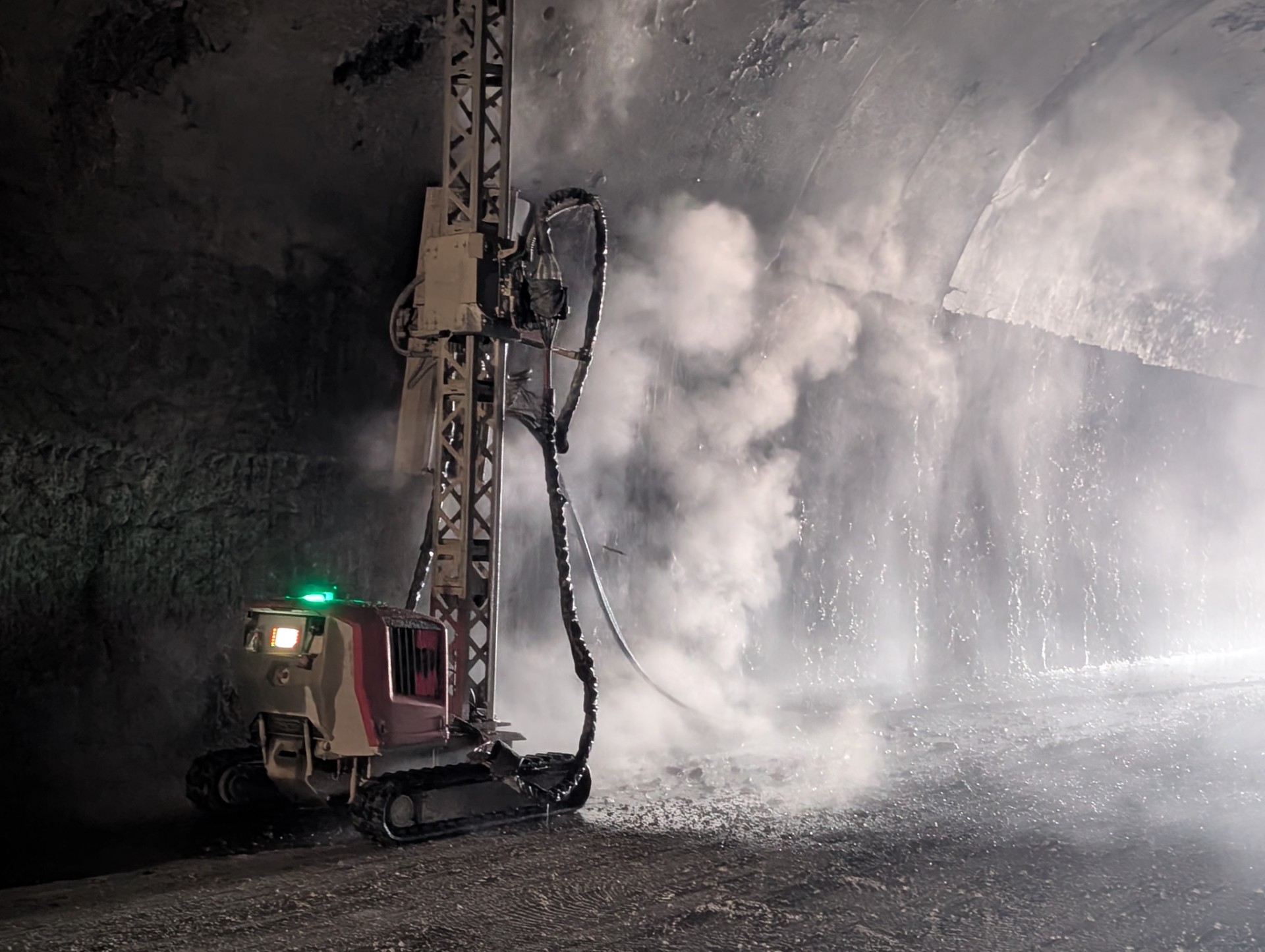
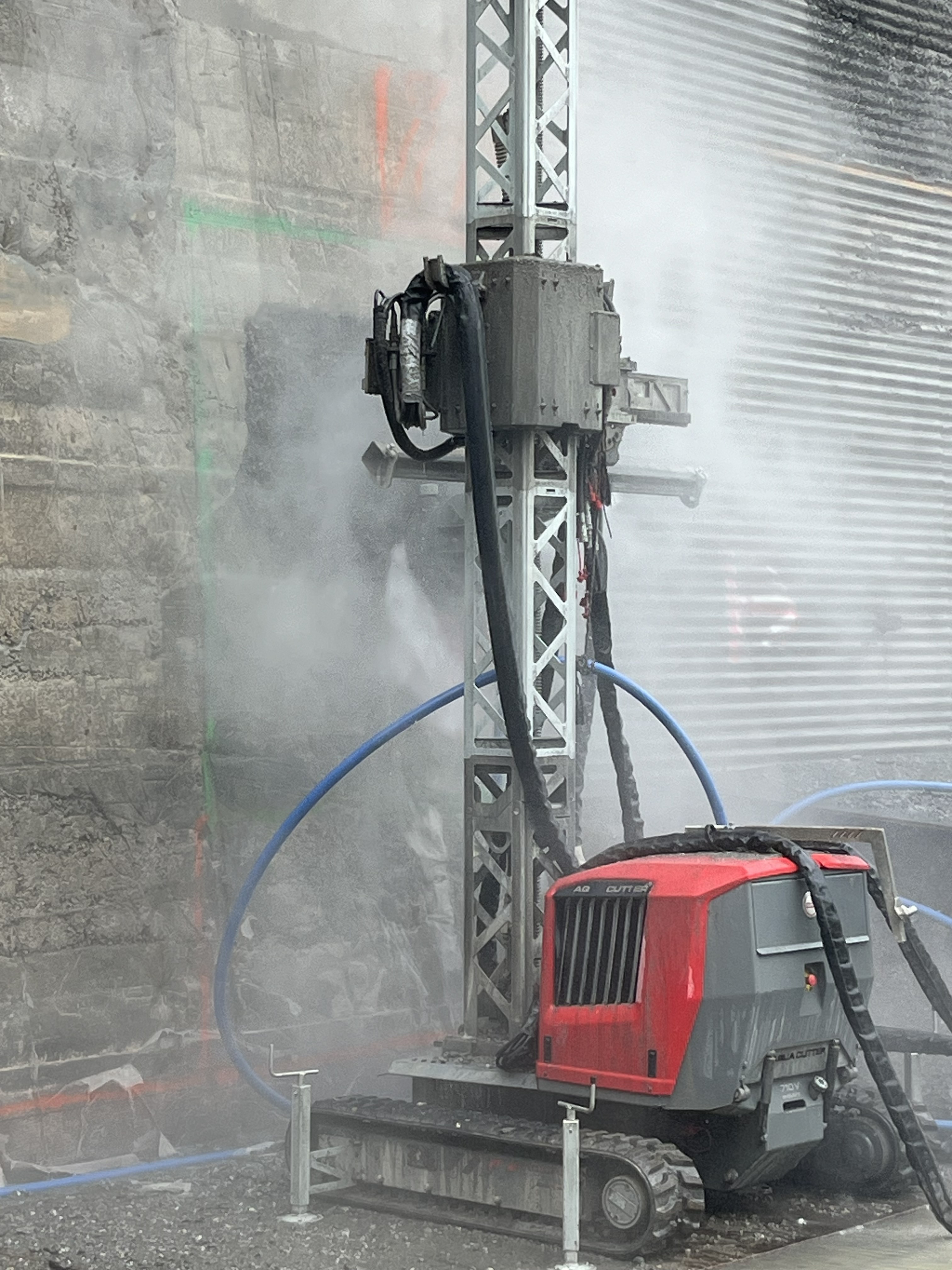
Modern hydrodemolition is typically performed using robotic equipment. A hydrodemolition robot, essentially an automated cutting tractor, moves across the concrete surface on a track or rail system, directing the water jet in controlled, overlapping passes. High-pressure water pumps generate the necessary pressure, while support trailers manage water supply, wastewater collection, and fuel.
Operators control the robot from a safe distance, adjusting water pressure, flow rate, and traverse speed to achieve the desired depth of removal. This level of precision allows contractors to remove concrete to exact specifications, whether that’s a shallow surface scarification of 1/4 inch or a full-depth removal down to or past the rebar layer.
Three Types of Hydrodemolition Removal
Hydrodemolition can be calibrated for three distinct removal depths, depending on the project’s requirements. Hydroscarification is the shallowest application, typically removing just 1/4 to 3/4 inch of surface concrete to create a clean, rough-textured bonding surface for overlays. Partial-depth removal goes deeper, selectively extracting 3/4 inch or more of deteriorated concrete while leaving the sound material and rebar in place. Full-depth removal takes out the entire concrete section when the deterioration is too severe to preserve, often used when an entire bridge deck needs to be replaced while the structural beams below are retained.
Hydrodemolition vs. Jackhammering: Key Advantages
The advantages of hydrodemolition over traditional mechanical methods are significant and well-documented. Understanding these differences is essential for anyone specifying or managing a concrete removal or rehabilitation project.
No Microfractures
This is the single most important advantage. Because hydrodemolition uses water pressure rather than mechanical impact, the remaining concrete is left free of microfractures. Independent laboratory testing has shown that bond strengths on a hydrodemolished surface can be up to 300% higher than on a jackhammered surface. This means repairs last longer, delamination risk is dramatically reduced, and the overall lifecycle cost of the structure is lower. As Penhall notes on their hydrodemolition service page, the absence of microfractures ensures that repair work is built upon a foundation of structural integrity and durability.
Rebar Preservation and Cleaning
Hydrodemolition excels at working around embedded reinforcement. The high-pressure water removes concrete from around rebar without damaging it, and simultaneously cleans the steel of rust, scale, and corrosion. This is a major advantage because it eliminates the need for a separate sandblasting or cleaning step before new concrete is placed. With mechanical methods, rebar is often nicked, bent, or loosened by the impact forces, requiring repair or replacement before the structure can be restored.
Superior Bonding Surface
The rough, irregular surface profile left by hydrodemolition is ideal for bonding with new concrete overlays and repair materials. Unlike the relatively smooth surface left by milling or the fractured surface left by jackhammering, the hydrodemolished surface provides maximum mechanical interlock between old and new concrete. This is why bridge deck rehabilitation projects increasingly specify hydrodemolition as the removal method, the superior bonding surface translates directly to longer-lasting repairs.
Dramatically Higher Productivity
A single hydrodemolition robot can do the work of up to 25 jackhammer operators. That’s not a marginal improvement, it’s an order-of-magnitude leap in productivity. For large-scale projects like bridge deck removals or parking structure rehabilitation, this translates to significantly shorter project timelines, reduced labor costs, and less disruption to traffic or facility operations.
Improved Safety
Hydrodemolition eliminates silica dust exposure, a serious occupational health hazard associated with mechanical concrete removal that can lead to silicosis, a chronic and potentially fatal lung disease. The process also significantly reduces noise levels compared to jackhammering. And because operators control the robotic equipment from a safe distance rather than standing over a pneumatic breaker, the risk of musculoskeletal injuries and hand-arm vibration syndrome (HAVS) is virtually eliminated.
Selective Removal
Because water pressure naturally seeks out weaker concrete while leaving stronger material intact, hydrodemolition provides inherently selective removal. By calibrating the water pressure relative to the concrete’s compressive strength, operators can precisely control which concrete is removed and which stays. A general industry guideline is that it takes approximately 3.5 times the water pressure relative to the concrete’s compressive strength to achieve selective removal. So for 5,000 PSI concrete, roughly 17,500 PSI of water pressure will selectively remove deteriorated material while preserving sound concrete at that strength.
Common Applications for Hydrodemolition
Hydrodemolition is versatile and can be deployed on a wide range of structure types and project scenarios. Here are the most common applications:
Bridge Deck Rehabilitation
This is the most prominent application for hydrodemolition in North America. State departments of transportation increasingly specify hydrodemolition for bridge deck concrete removal because of the superior bonding surface it creates and the absence of microfractures. Studies have shown that bridge deck repairs performed with hydrodemolition methods last roughly twice as long as repairs where demolition was done with impact tools. Whether the scope calls for shallow scarification before a thin overlay or full-depth removal of a compromised deck, hydrodemolition delivers better long-term outcomes than any mechanical alternative.
Parking Structure Repair
Parking garages are subjected to constant exposure to water, de-icing salts, and vehicle loads. Over time, chloride intrusion corrodes the embedded rebar, causing the concrete above to delaminate and spall. Hydrodemolition is ideal for parking structure rehabilitation because it can selectively remove only the deteriorated concrete, clean the rebar, and leave a perfect bonding surface, all with minimal noise disruption to adjacent occupied spaces.
Dams and Spillways
Hydrodemolition is well-suited for dam and spillway repair work, where removing deteriorated concrete without damaging the underlying mass concrete structure is critical. The ability to work on horizontal, vertical, and even overhead surfaces makes hydrodemolition robots especially valuable in the confined and complex geometries typical of dam infrastructure.
Highway and Pavement Rehabilitation
For highway rehabilitation projects, hydrodemolition can remove deteriorated surface layers at high speed, allowing roads to be resurfaced without full reconstruction. The speed advantage of robotic hydrodemolition is especially valuable in highway work, where lane closures are expensive and every hour of delay has a real cost to the traveling public and the project budget.
Nuclear and Power Plant Decommissioning
Hydrodemolition is used in the decommissioning of nuclear power plants and other sensitive energy facilities where dust suppression, vibration control, and precision removal are non-negotiable requirements. The ability to remove concrete remotely via robotic operation is a significant safety advantage in radiologically contaminated environments.
Water and Wastewater Treatment Facilities
Treatment plant structures are constantly exposed to water and chemical processes that degrade concrete over time. Hydrodemolition allows these facilities to be repaired with minimal downtime and without introducing microfractures that could compromise the repair’s longevity.
Environmental and Sustainability Considerations
Hydrodemolition aligns well with growing environmental and sustainability requirements in construction. The process produces no silica dust, which eliminates a major airborne pollutant associated with mechanical concrete removal. Wastewater generated during hydrodemolition can be collected, treated, and recycled rather than discharged into storm drains or waterways, a practice that meets EPA effluent guidelines and supports LEED and other green building certifications.
The concrete debris removed by hydrodemolition is also easier to recycle than mechanically demolished material, because it’s free of the contamination and mixed waste that often accompanies traditional demolition. Combined with the longer lifecycle of repairs made on hydrodemolished surfaces, the overall environmental footprint of a hydrodemolition-based rehabilitation project is significantly lower than one that relies on mechanical methods.
When to Choose Hydrodemolition Over Other Methods
Hydrodemolition isn’t the right choice for every concrete removal scenario, but it’s the superior option in a wide range of situations. It’s the best fit when repair longevity is a priority and microfracture-free surfaces are essential, when rebar needs to be preserved and cleaned in place, when the project involves large surface areas where robotic automation provides significant productivity gains, when dust and noise restrictions apply (such as in occupied buildings, hospitals, or sensitive environments), when working in confined or complex geometries where mechanical equipment can’t easily access, and when environmental compliance requires dust-free operations and wastewater management.
For smaller, localized removals in areas that are inaccessible to robotic equipment, manual methods like handheld jackhammers may still be practical. But for most medium-to-large-scale concrete rehabilitation projects, especially on bridges, parking structures, and industrial facilities, hydrodemolition delivers measurably better results.
Penhall Company’s Hydrodemolition Services
Penhall Company’s hydrodemolition services combine state-of-the-art robotic equipment with over 65 years of concrete industry expertise. As North America’s largest provider of concrete cutting, coring, and demolition services, Penhall brings a level of operational depth and safety commitment that smaller contractors simply can’t match.
Penhall’s hydrodemolition capabilities are part of a comprehensive suite of bridge services and structural repair solutions that include concrete cutting, GPR scanning, demolition, and fiber reinforced polymer (FRP) strengthening. This means Penhall can handle the entire rehabilitation workflow, from pre-project scanning to concrete removal to structural repair, under a single contract, reducing coordination complexity and keeping projects on schedule.
Penhall’s Behavior-Based Safety (BBS) program ensures that every hydrodemolition project is performed with the highest regard for worker and public safety. With branch locations across the country, Penhall can mobilize quickly to support hydrodemolition projects in any region.