• Skip to main content

CONCRETE CORING COMPANY

GRAFF COMPANY

  • About Us

    ABOUT PENHALL

    Penhall has been the United States' and Canada's go-to concrete services partner since 1957.

    • OUR STORY

    • LEADERSHIP TEAM

    • SAFETY

    • CAREERS

    • RESOURCES

    • FREQUENTLY ASKED QUESTIONS

    • SUSTAINABILITY

    CONTACT PENHALL

    Penhall Trucks

    We've handled projects of all types and sizes, with a track record of excellence going back more than 60 years. Contact us about your next project.

    TALK TO US
  • Services

    CONCRETE SERVICES

    Whether it's coring, flat sawing, wall sawing, or breaking and removal, we pride ourselves in our experience, expertise, top-of-the-line equipment, and unwavering commitment to safety.

    • CONCRETE CORING

    • CONCRETE CUTTING

    • DEMOLITION

    • HYDRODEMOLITION

    • STRUCTURAL REPAIR

    • GRINDING & GROOVING

    • BRIDGE SERVICES

    • SCARIFYING & SHAVING

    • BREAKING & REMOVAL

    • OPERATED EQUIPMENT RENTALS

    TECHNOLOGY SERVICES

    Our technology services provide industry-leading solutions in concrete scanning, private utility locating, digital x-ray imaging and fiber reinforced polymer, ensuring precision, safety, and efficiency.

    • CONCRETE GPR SCANNING

    • CONCRETE X-RAY IMAGING

    • PRIVATE UTILITY LOCATING

    • FIBER REINFORCED POLYMER

    LUNCH AND LEARN WITH PENHALL COMPANY

    Lunch & Learn

    We're excited to offer you an engaging and informative session that will introduce you to our range of services, industry expertise, and innovative solutions. As a leading provider in concrete cutting, coring, and demolition, Penhall Company is committed to delivering top-notch service and exceeding your expectations. Grab your seat, enjoy a delicious meal, and discover how partnering with us can benefit your projects.

    SCHEDULE A LUNCH & LEARN
  • Industries

    OUR PROJECTS

    Penhall Company has had the opportunity to work on some of the most challenging and wide-ranging projects in North America.

    • ALL PROJECTS

    • AVIATION

    • CHURCHES

    • COMMERCIAL

    • DOT / INFRASTRUCTURE

    • EDUCATION

    • ELECTRIC VEHICLE CHARGING

    • GRAFF

    • HEALTHCARE / HOSPITAL

    • HOSPITALITY

    • INDUSTRIAL

    • LOCK / DAM

    • POWER / NUCLEAR

    • RESIDENTIAL

    • WATER / WASTEWATER TREATMENT

    LATEST PROJECT

    Penhall Supports I-2/I-69C Interchange with Expert Demolition

    LOCATION: Austin, TX
    SERVICE: Demolition
    READ MORE
  • Locations
penhall menu logo
  • Careers
  • Contact Us
  • QUOTE REQUEST
  • This field is for validation purposes and should be left unchanged.
  • Site Contact Information

  • (XXX) XXX-XXXX
  •  
  • Job Site Location

  • After submitting this form a Penhall Company representative will be in contact with you to confirm your request. If this request is urgent, please call 1-800-PENHALL to be connected with the nearest Penhall branch. Upon submitting this form you will also receive occasional updates about our services and company announcements. You may unsubscribe from these e-mails at anytime. Grinding and grooving services are conducted by Emery Sapp & Sons, Inc. For specific inquiries related to grinding and grooving, click here or reach out to Chris Fitzpatrick at chris.fitzpatrick@emerysapp.com

  • About Us
    • Our Story
    • Leadership Team
    • Sustainability
  • Safety
  • Services
    • Concrete Services
      • Concrete Coring
      • Concrete Cutting
      • Demolition
      • Hydrodemolition
      • Structural Repair
      • Grinding & Grooving
      • Bridge Services
      • Scarifying & Shaving
      • Breaking & Removal
      • Operated Equipment Rentals
    • Technology Services
      • Concrete GPR Scanning
      • X-Ray Imaging
      • Private Utility Locating
      • Fiber Reinforced Polymer
  • Industries
  • Resources
    • Articles
    • Frequently Asked Questions
  • Contact Us
  • Find a Branch
  • Request a Quote
  • JOIN PENHALL COMPANY
  • Concrete Coring Company
  • Graff Company
×
  • About Us
    • Our Story
    • Leadership Team
    • Sustainability
  • Safety
  • Services
    • Concrete Services
      • Concrete Coring
      • Concrete Cutting
      • Demolition
      • Hydrodemolition
      • Structural Repair
      • Grinding & Grooving
      • Bridge Services
      • Scarifying & Shaving
      • Breaking & Removal
      • Operated Equipment Rentals
    • Technology Services
      • Concrete GPR Scanning
      • X-Ray Imaging
      • Private Utility Locating
      • Fiber Reinforced Polymer
  • Industries
  • Resources
    • Articles
    • Frequently Asked Questions
  • Contact Us
  • Find a Branch
  • Request a Quote
  • JOIN PENHALL COMPANY
  • Concrete Coring Company
  • Graff Company
penhall menu logo

What to Expect – Concrete Scanning for Your Construction Project

concrete scanning

Deciding to scan concrete for your project was a smart decision for many reasons. It saves you time by knowing where to exactly cut, drill, or core. It saves money by preventing damages. And, most importantly, it keeps your project safe. Now that you want to move forward with our scanning services, here is what you should expect.

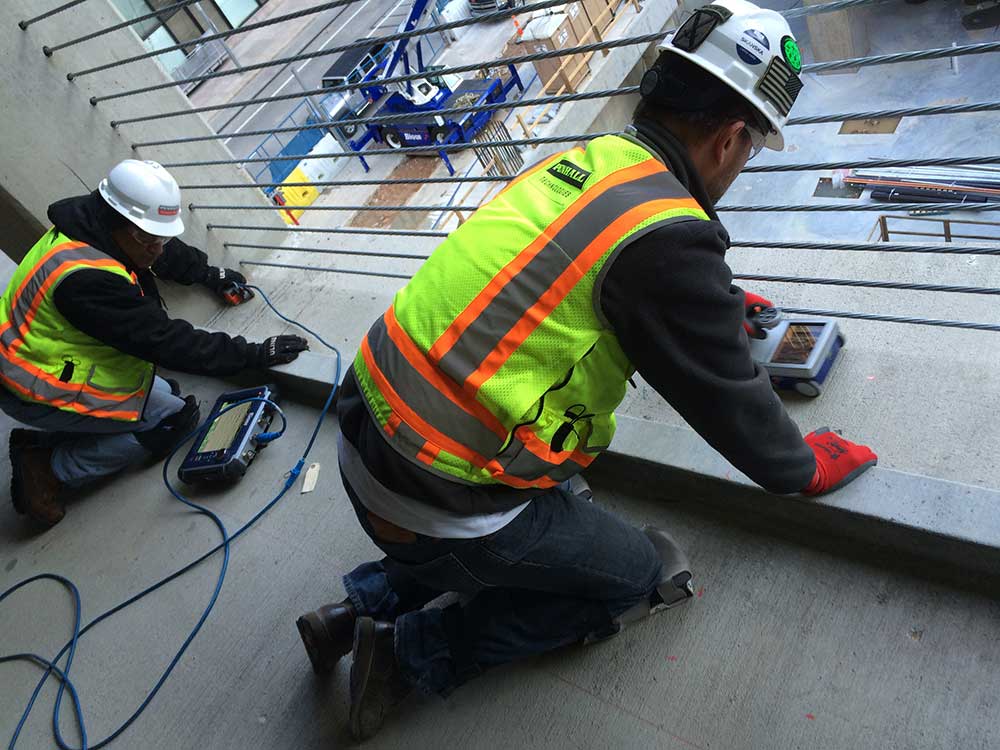
One of our expertly trained GPR analysts will arrive at the jobsite. Before they start scanning, they will meet with you to discuss the areas that you want scanned. You would need to provide a layout for the analyst to scan.

After this, the analyst is ready to scan. GPR (Ground Penetrating Radar) is safe to use during regular business hours. This means that any trades on the jobsite can continue with their job while the scanning takes place.

The analyst might use different types of equipment depending on the job itself. Our analysts carry the GSSI Mini XT. This equipment is ideal for locating rebar, conduits, post-tension cables, voids, and real time determination of concrete slab thickness. They also use the GSSI 2000 MHz palm antenna. This equipment works in small spaces, approximately 2” from the wall. In addition to the GPR equipment used, all analysts are also equipped with an RD 7100 unit. This unit is ideal for locating live conduits within walls, slabs, or ceilings.

concrete scanning marks

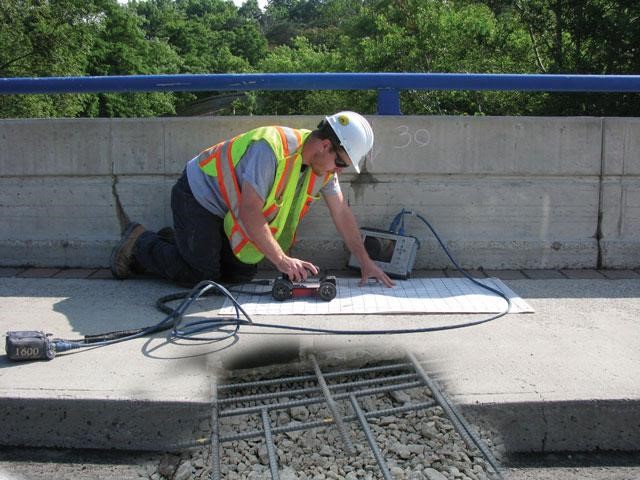
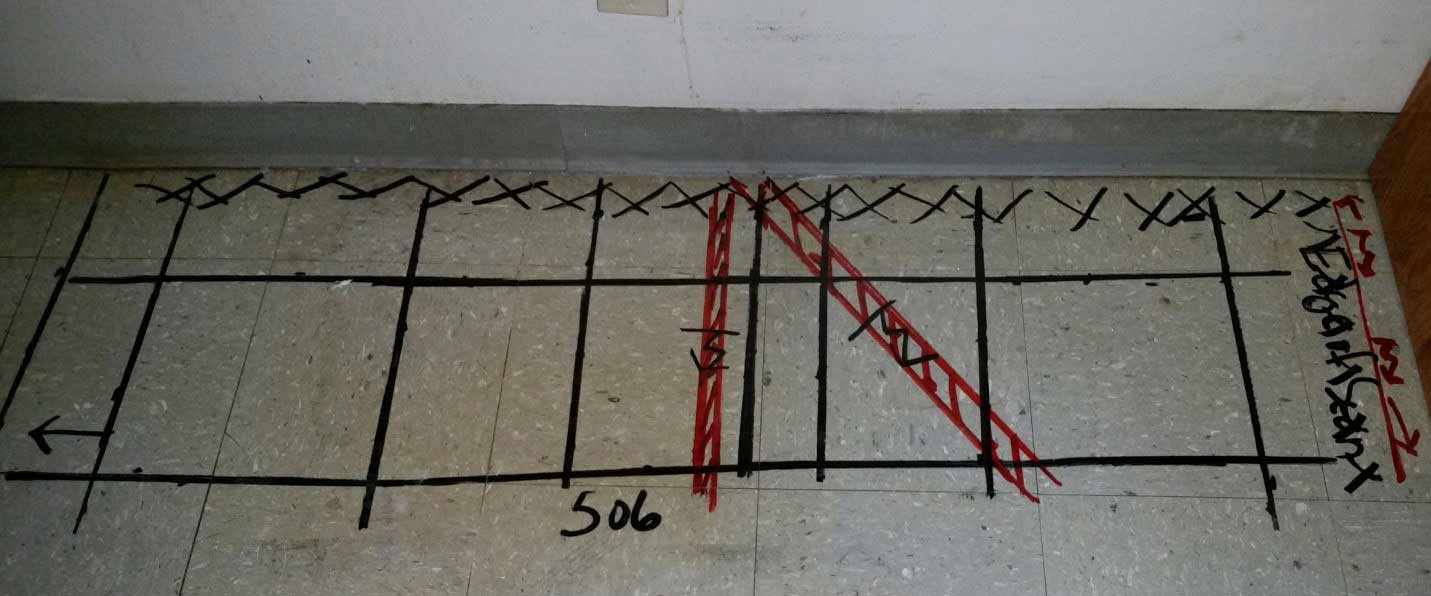
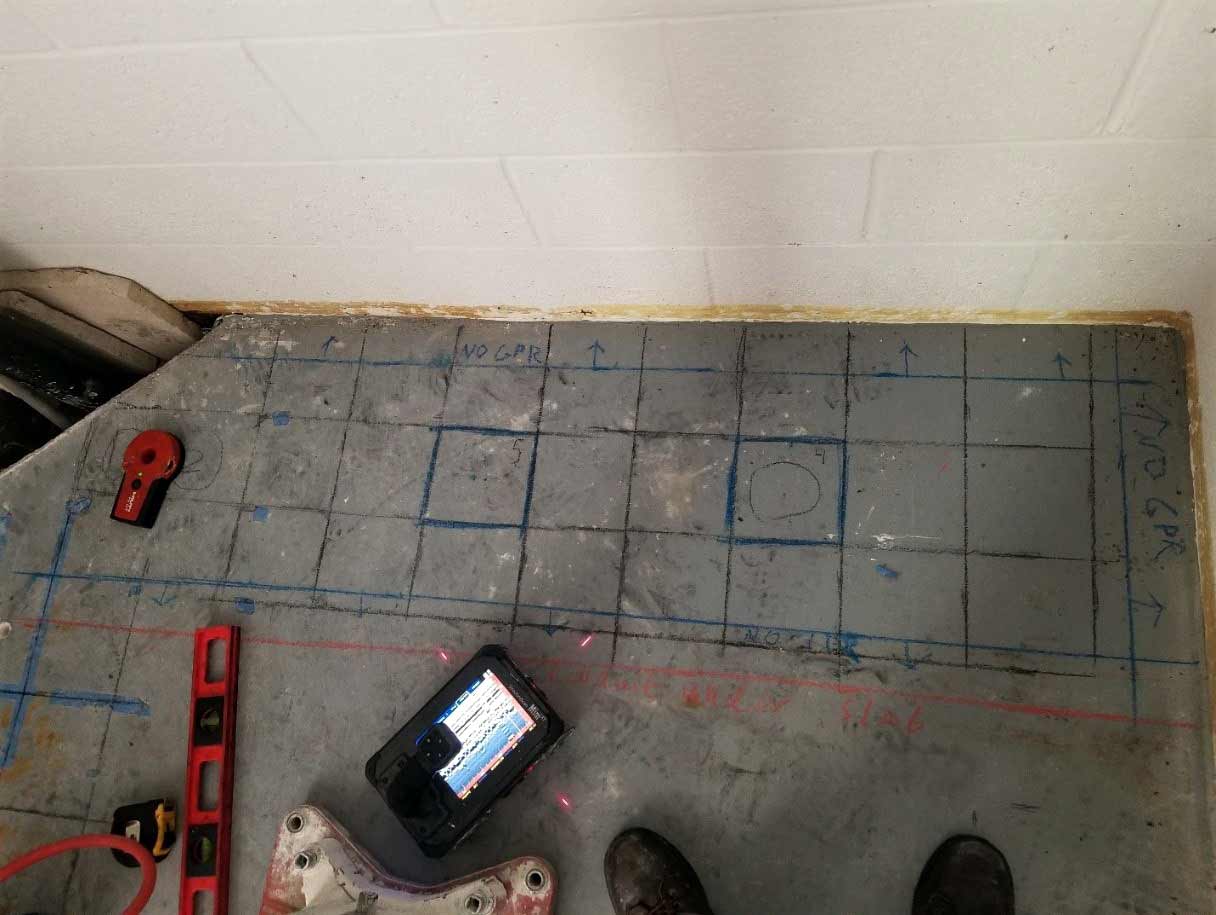
While the scan takes place, the data shows up in real time. Our analysts can interpret the data and from there he/she can mark any objects directly on the concrete surface with tape, chalk, keel, or markers (as pictured above). Then, the analyst would communicate their findings with you.

Sometimes, the proposed layouts are clear and ready for coring or drilling. Some other times, the analyst finds post tension cable, rebar, or other objects in the area where the coring or drilling is proposed. If this is the case for your project, you can propose a second layout location. The analyst will then proceed to scan that area to make sure that it is clear and safe.

After the scanning, a summarized written field report of the findings will be provided you. With this piece of information, in addition to your field markings, you can make decisions as to where to cut, core, or drill. Additional electronic reports are also available upon request, including pictures and 3D scans. These reports take additional time and will be completed off-site and will be emailed to you.

Now you know what to expect when hiring Penhall Technologies for our concrete scanning services. When our analysts arrive on site, you will find that you have gained a trusted partner who will undoubtedly add value to your project. Regardless of the project scale, our analysts always come prepared and ready.

private utility locator
GPR analyst using the RD-7000 for utility locating

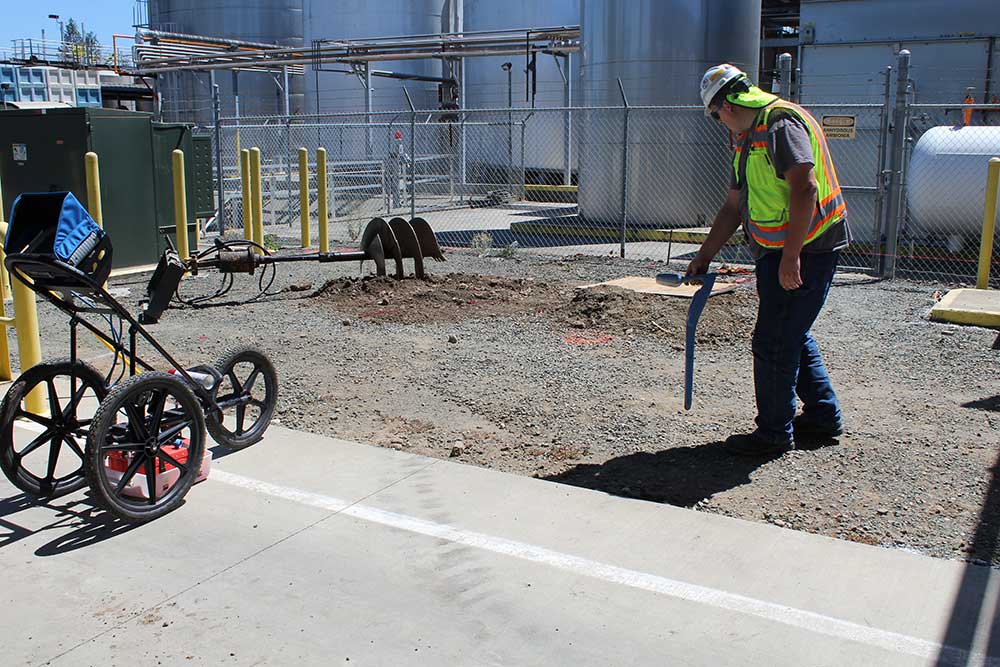
When conducting underground utility locating services, Penhall Technologies uses two types of technology: Ground penetrating radar (GPR) and electromagnetic detection (EM). Both of these are great resources for locating underground utilities.

GPR locates underground utilities by emitting radar waves into the ground. These waves pass through the substrate and reflect off of objects that vary in dielectric from that of the surrounding earth. Ground penetrating radar works best when you need to locate: buried pipes, cables, underground storage tanks, etc.

On the other hand, electromagnetic induction detects electromagnetic fields. A magnetic field occurs when a current is running through a transmitting line such as an electrical cable or communication line. The EM unit can detect both passive and active signals.

A passive signal is when a utility, such as an electrical line, is currently turned on and is generating an electromagnetic field. An active signal is when a line is not turned on, and a temporary tone is induced into it. This creates a temporary electromagnetic field. The, the EM unit can detect this field.

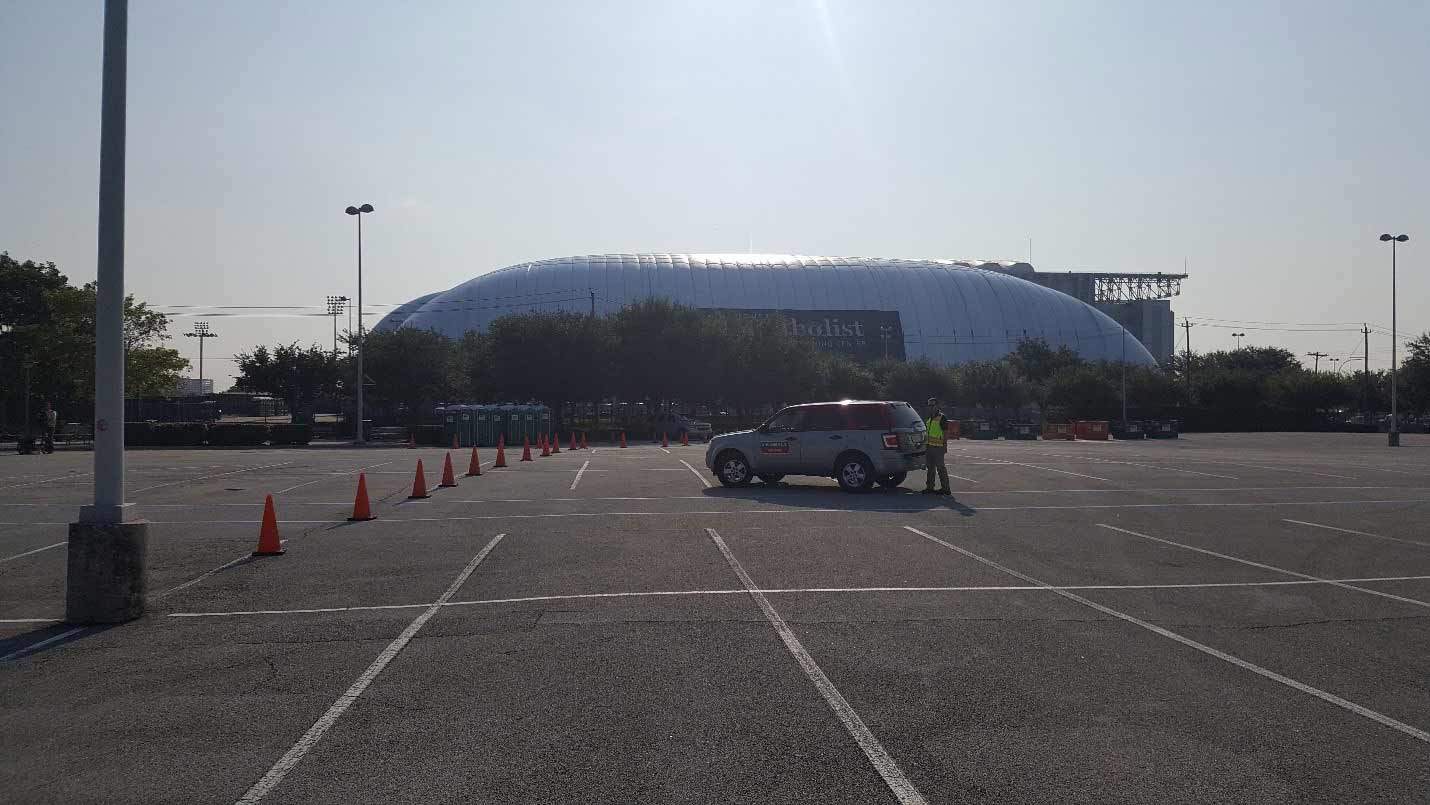
Recently, our analyst put to use both technologies for a utility locating job. An electrical company contacted us for a project at a medical facility in the city of Seattle, Washington. The electrical company was in charge of rerouting electrical lines through the parking lot of the medical facility.

utility locating
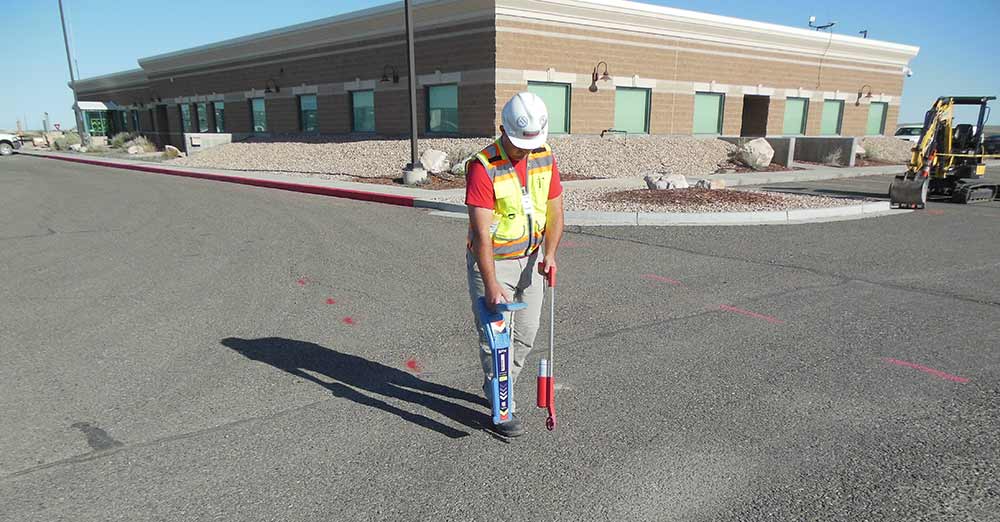
Analyst marking underground utilities

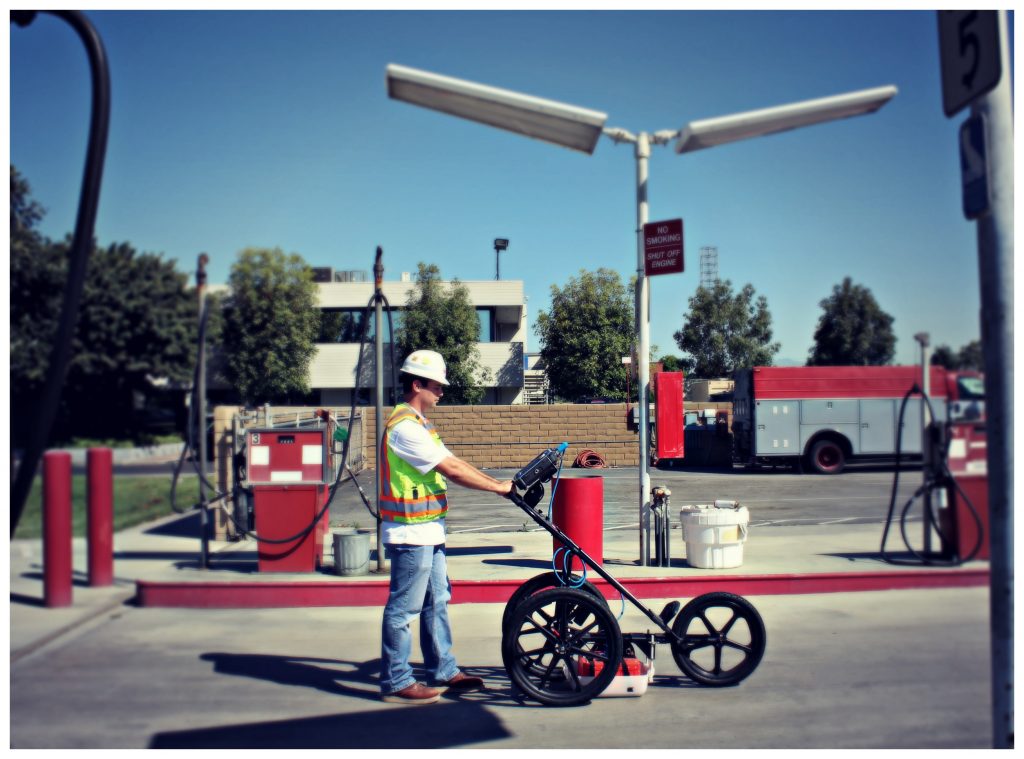
The analyst initiated the scanning and set a dielectric based on the known soil conditions of the area. He conducted GPR first, utilizing the GSSI SIR3000/400MHz antenna combo. The analyst knew that once he completed the locate , the cut and excavation performed by Penhall Company would not go any deeper than three feet. The survey covered not only the requested area, but a much larger area as well to confirm the location of all subsurface hazards.

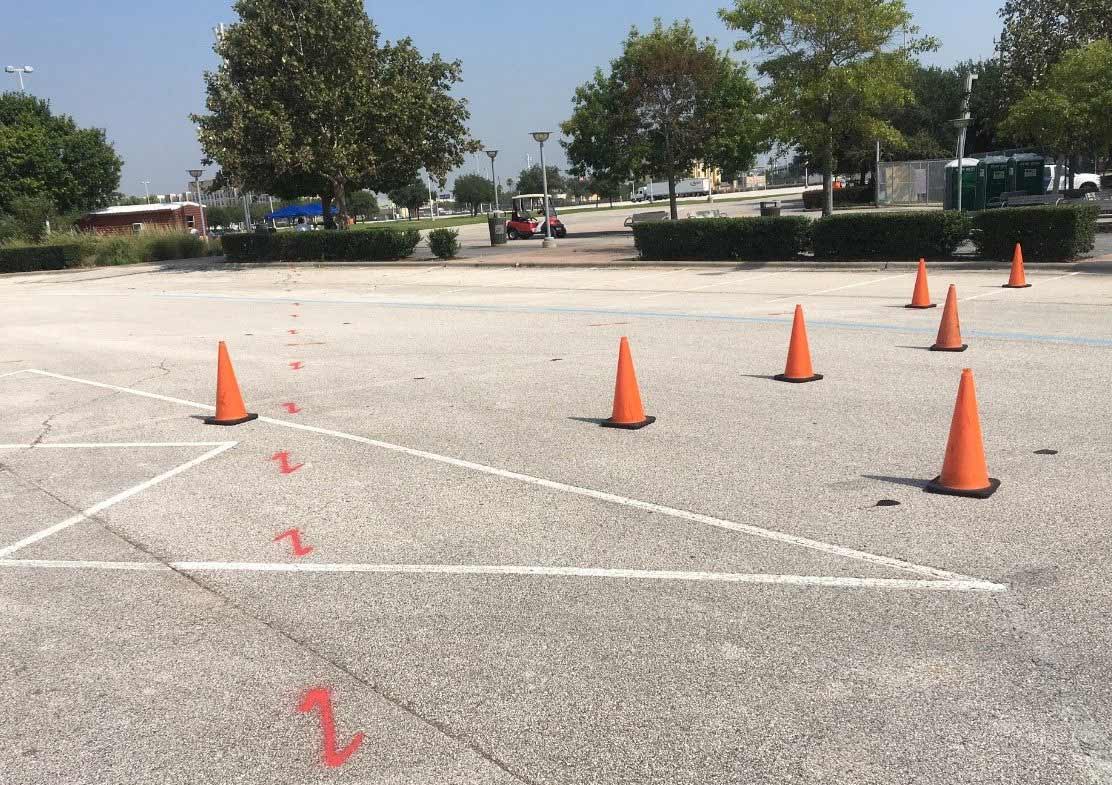
The analyst marked out several suspected utilities and an area of shallow root systems, despite needing to work around parked vehicles, tight quarters, and raised landscaping beds.

The analyst used electromagnetic detection equipment after the scan. He swept the area with the RD-7000 to ensure maximum accuracy. From this, the analyst located one additional electrical utility. This particular utility was either too small or too deep to see with the GPR equipment. This is why we provide our analysts with both technologies. It makes us the ideal private utility locator.

Penhall Technologies employs multiple technologies for your utility locating needs, making sure that you finish your projects safely and on time.

Additional Links:
https://electricalschool.org/
GPR - ground penetrating radar service
GPR analyst on a concrete scanning job


Now that you have decided to scan first, you might be wondering what suits your project’s needs: Ground Penetrating Radar (GPR) or digital X-Ray? Penhall Technologies offers GPR services nationwide, and X-Ray services in Seattle, San Diego, and Los Angeles. Both concrete scanning methods help you locate subsurface objects and hazards. However, they are both unique, and have different uses.

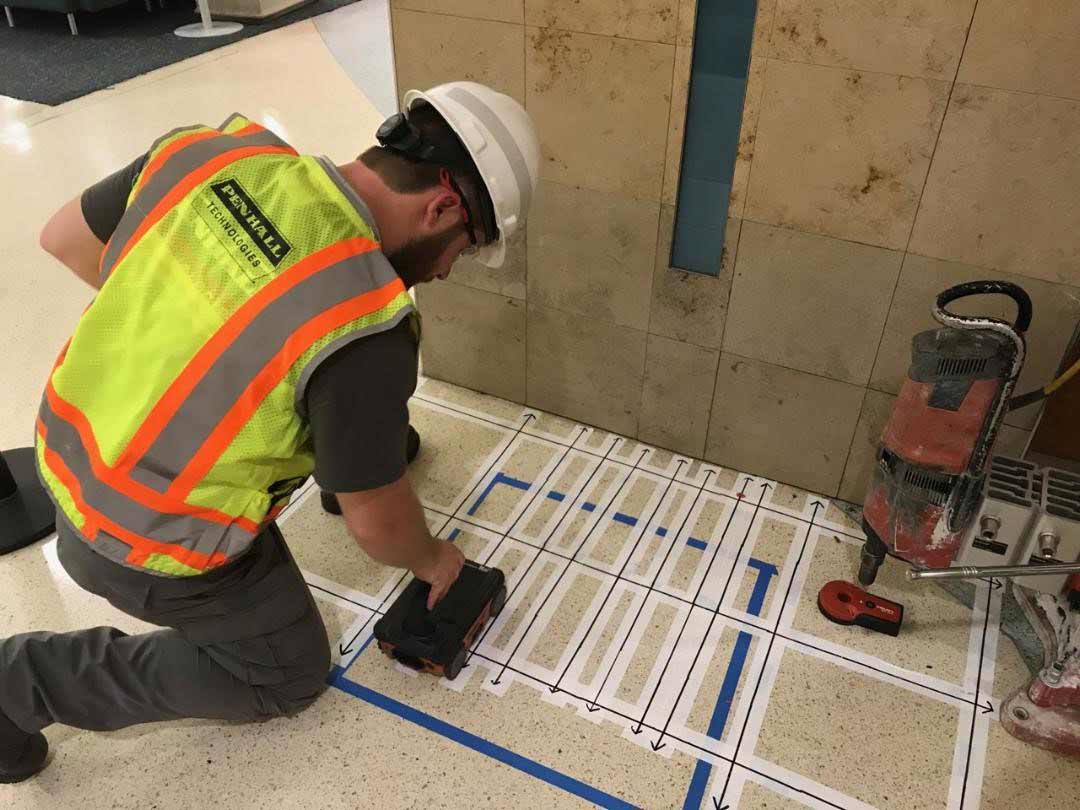
More often than not, GPR would be the first step to locate any subsurface objects in concrete. GPR analysts start by marking the desired area, which the customer provides a layout of. Then, the analyst proceeds to scan with a handheld device (see picture above). Based on the collected and analyzed data, the analyst would mark the objects found with chalk, keel, or tape. This process goes smoothly under ideal concrete circumstances.

There are a few factors to consider when seeking GPR or digital X-ray services. First, what concrete structure or structural components are being scanned. Digital x-ray is not an adequate option for your project when you are looking to identify objects or hazards in a slab on grade. Digital X-ray requires both sides of the location in question, such as a slab, column, or beam.

The second factor to consider is the location of the project.  If patrons, occupants, or employees are present at the jobsite, GPR scanning can be done during regular business hours. People don’t need to vacate the area. This is ideal for projects and renovations in sites such as hospitals or hotels, where people may be regularly coming and going.

Penhall's GPR analysts
Penhall Technologies’ analysts demonstrating digital x-ray

Sometimes, after completing GPR concrete scanning, the results may show a highly congested area. This means that the analyst collected data that may be extremely difficult to interpret. This leads to inconclusive labels for field markings. This is when digital X-Ray comes in.

Digital X-ray shows a clearer depiction when it comes to imaging the interior contents of an area that’s congested. For this reason, this method is preferred under these circumstances.

Digital X-Ray is not always a service that follows GPR concrete scanning. We recommend pursing digital x-ray as an option when the jobsite in question is highly congested with structural components such as rebar, wire mesh, and tension cables. Or when you simply want a clear precise image of the area.

Both GPR and X-ray can provide valuable information prior to cutting, sawing, or drilling. It will also keep your project on time, on budget, and most importantly- safe! For more information regarding GPR and digital x-ray scanning services, give us a call at 844-211-5300.

worker running ground penetrating radar rig
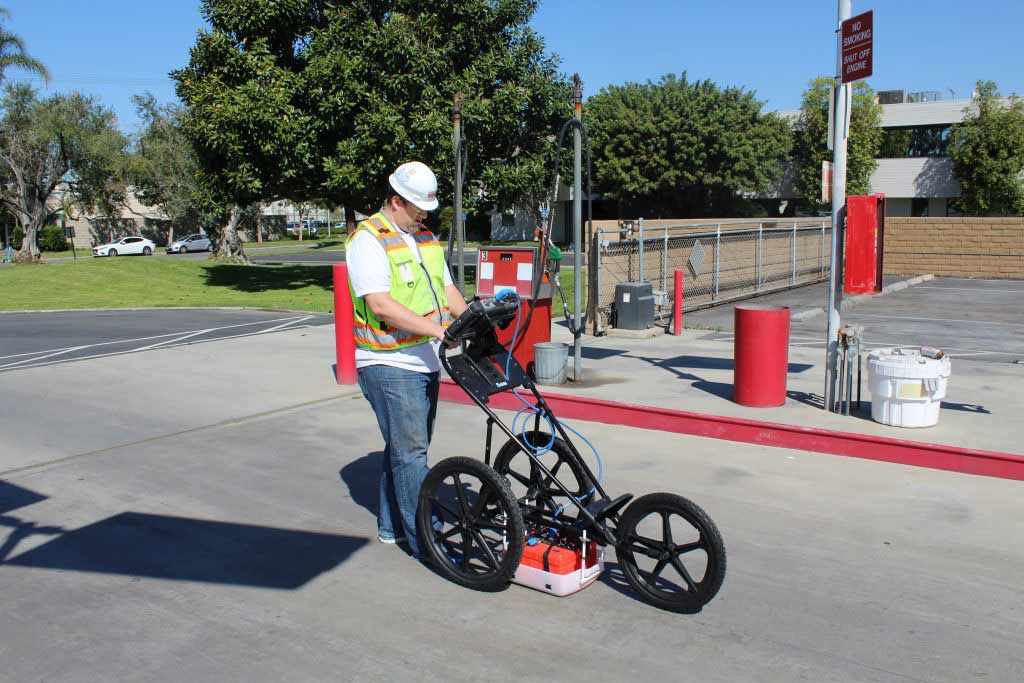
Our analyst performing underground utility locating services

When you started your home project, you didn’t imagine that you would need our private underground utility locating services. To ensure that you don’t hit any utility lines, it is important to scan the area first. Damaging utility lines can result in loss of that particular utility. It can also cause injuries for you or the workers hired to do the cutting, trenching, or digging.

Homeowners need private utility locating where 811’s utility locating services don’t apply.

For home owners, utility locating can be a first and only experience. This means that it can be hard to know exactly how to proceed. The first step would be to contact 811‘s Call Before You Dig service, the nationwide public utility locating service. They can locate all public utility lines, from the street to the meter only. If they can’t locate what you need, that’s when we, a private utility locator, come in.

Other reasons for needing private utility location include:

  • Already hit a utility. 811 is a public utility locator. They can locate all utilities from the street to the meter. Any utilities in your private property would need to be located by a private utility locator.
  • Previous scan attempt was unsuccessful. This scenario goes hand in hand with the reason previously mentioned. Sometimes our clients do scan. However, the company they selected didn’t provide accurate markings and the client struck a utility as a result. Our analysts complete extensive utility locating training. They are trained to properly mark your site, provide written reports, and to provide you with the best service.
  • Home improvements. It is always important to locate all utilities before doing any projects that require digging or excavating. This includes, but is not limited to: landscaping, fencing, pool installation, installing a mailbox, deck installation, among others.
  • Water leaks. A lot of our clients suspect that they are dealing with a water leak. While we can’t locate the water leak itself, we can help you locate the water line and look for signals of wet soil that may indicate the location of the leak.

What should you expect when you call a private utility location service?

When you call Penhall Technologies or request to quote, it is best to be prepared with essential information regarding the project. This will allow us to provide the best service and accurate pricing. It is important to know the measurements of the area, the type of surface (dirt, asphalt, concrete), and the location (indoors or outdoors). If possible, provide the utilities we may be looking for (water, gas, electrical, sewer) and how many utilities may be running through the area. We will also ask how many locations you need scanned, and what is the private line locating in preparation for.

North Carolina GPR project
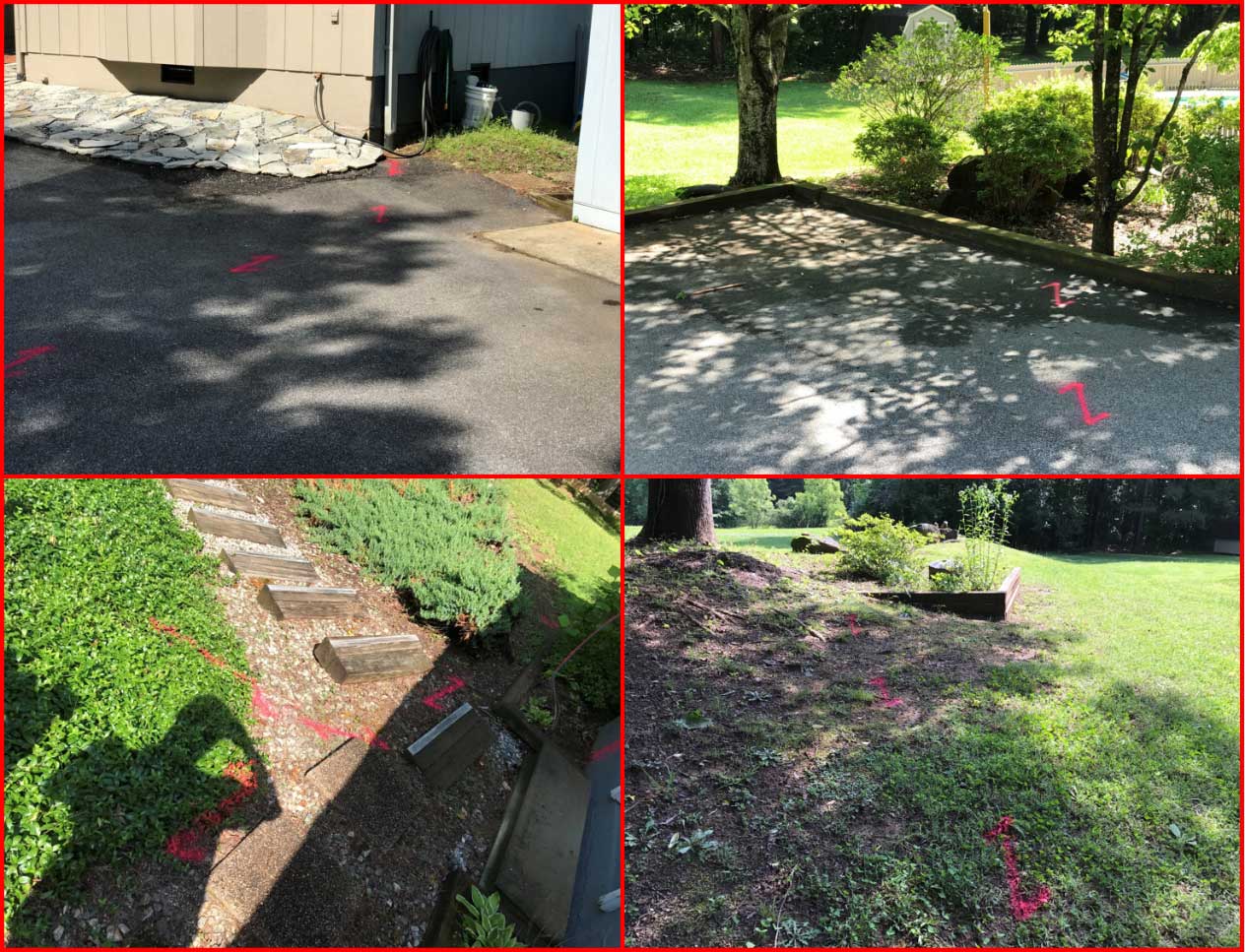
Example of utility markings at a home

Once the analyst arrives at your home, they will be up to date with the needs and specifications of your project. They will bring two types of equipment to offer you the most accurate reading. A benefit of choosing Penhall Technologies as your private utility locator is that we carry various types of equipment. This is in case one method is not enough to find underground lines. In rare cases, the reading can be inconclusive and show highly congested results.

After the analyst completes the scan, he/she will mark the approximate utility locations with varying colors of spray paint, flags, or both to highlight that location.

GSSI
Equipment screen showing utility locating data

Before the analyst marks the utilities, the display screen of the equipment won’t mean much to the common eye. Our expert analysts will be able to identify lines and to differentiate between them based on the data and on physical cues, such as a meter. Now with the analyst’s markings and field report, you can make an informed decision of where to cut, trench, or dig. By deciding to scan first, you will safeguard that your home project is completed safely.

GPR equipment

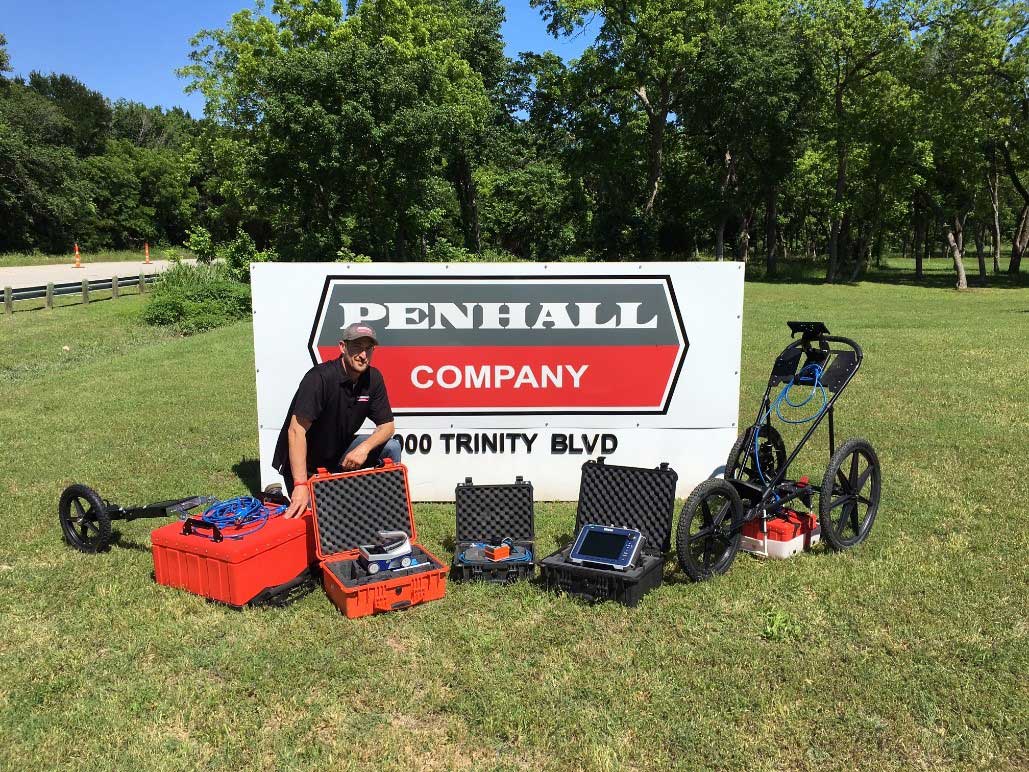
At Penhall Technologies, our analysts use several types of equipment for optimum accuracy for our underground utility locating services.  The following are a couple of the tools that an analyst may use on any given jobsite.


RD 7000 Series – Electromagnetic Detection

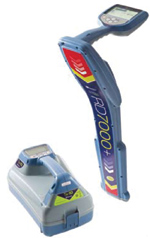
GPR scanner The RD 7000+ Pipe and Utility Locator is the backbone of utility locating services.  It can transmit multiple frequencies, has several power modes, and possesses both passive and active systems.  This makes the RD system the most appropriate tool to start locating underground utilities.

Simply put, the RD system works by sending a signal or electromagnetic frequency through the transmitter to the metal pipe, valve, or tracer wire. Then, the system uses the receiver to trace that signal down the length of the pipe or wire.How Electromagnetic Detection Works

There are several ways to obtain a signal from a line.  The two most common ways are to connect directly to the wire within the line, or to connect the wire or meter of the line to surround it with the signal.  These are the ideal approaches to ensure that we are attaching to the correct line when there are several in the area.


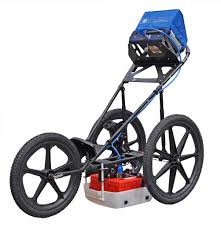
GSSI Cart with 400MHz Antenna – Ground Penetrating Radar

Utility Locating Device with GPR technoloy Unlike traditional technologies such as electromagnetic detection, GPR can detect plastic, concrete, and metal pipes. This makes it an ideal system to locate underground utilities of any kind and more. This is a great partner to our electromagnetic systems to ensure that we are covering all bases in our utility locating services.

GPR technology works by sending a flash of energy into a surface, such as concrete or ground soil, via a special antenna.  Each unit is equipped with both an antenna and a receiver, as well as a computer system. The computer, also known as the brain unit, can register any reflected signal into an image. This is done by measuring the time and strength it takes for the signal to be transmitted and returned.  These reflections are produced by several objects, such as conduit or pipes.


How GPR Helps with Underground Utility Locating

The GSSI utility cart with the 400 MHz antenna can locate utilities to a maximum depth of about 9 feet.  The GPR penetration and resolution of images depends on soil conditions.  To learn more about the factors that affect GPR findings, read here.

Despite the limitations, GPR is often the best way to detect abandoned lines, utilities with no surface valves, PVC, clay pipe, or similar non-metallic utilities.  It is also a good way to determine the approximate depth of the utilities.

Overall, at Penhall Technologies, we stay up to date with the latest and greatest technologies to better serve our customers. Our analysts are not only equipped with top of the line equipment, but have the experience and training necessary to interpret the data methodically and efficiently.


For further questions or to receive a quote:

Call or email us at:

844-211-5300

gpr@penhall.com

Or visit our website:

https://www.penhall.com/utility-locating/

At Penhall, safety is our #1 priority. So we didn’t hesitate to help when a general contractor called us to help out with an investigation of a potentially hazardous project. He suspected of safety issues in the construction of a high rise hotel in the booming city of Austin, TX.

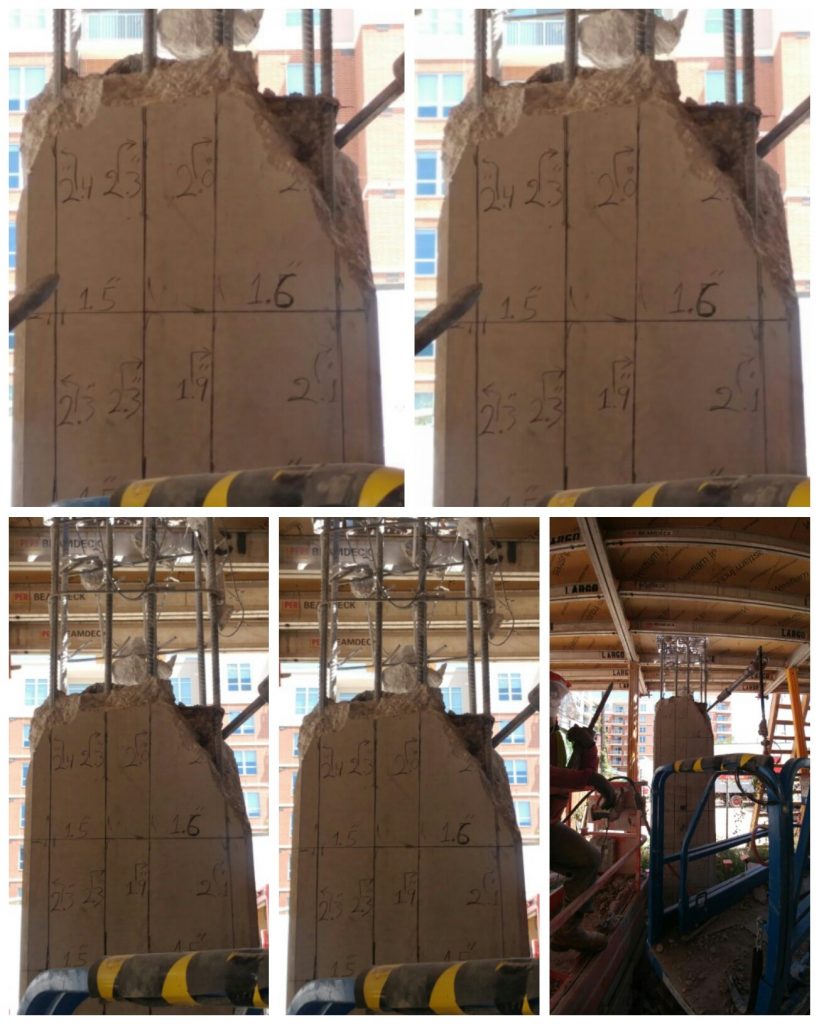
Penhall assisted with locating structural reinforcement in 49 poured-in-place columns on the first floor of the building, which would go up to 30 stories.  The goal of this project was to locate the placement of the vertical pieces of rebar along with the horizontal bands. If columns are not properly poured and installed, it can be detrimental to the integrity of the building as a whole.

gpr identifies improper rebar spacing in concrete columns
Austin GPR Analysts worked diligently to scan and mark the columns to verify the reinforcements.  The results, as you can see in the image sequence above, were very telling.  48 of the 49 columns had improper spacing of the rebar. In other words, they lacked the structural integrity to withstand the weight of a multilevel building.

Following the analysts’ findings, the general contractors made the decision to fix all 48 columns. This allowed the general contractor to resume the project and to complete it safely.  Penhall walked away from this project knowing that our work minimized the threat of a potentially hazardous situation.

For further questions or to receive a quote:

Call or email us at:

844-211-5300

gpr@penhall.com

Or visit our website:

https://www.penhall.com/concrete-scanning/

factors that affect GPR in Utility Locating

When looking for a utility line locator to locate anything from underground water lines, gas lines, electrical/power lines to underground storage tanks, it is a good idea to know the capabilities and limitations of the technologies used in those detection services.

Penhall Technologies uses both GPR (ground penetrating radar) and Electromagnetic Detection. Here, we will dive deep into GPR and what factors affect the capabilities and limitations of this technology.

1. Weather Conditions

Because moisture raises the conductivity of the ground, especially clay soil and silt, deep snow and rain can be a factor in utility locating. Once the radar touches any ground holding moisture, it bounces right back. This makes it tough to read anything past that water table. Therefore, the winter months are not ideal to do any type of locating.

2.  Soil Conditions in Area

Now that you know that moisture plays a role in messing with GPR data, the types of soil conditions that become a factor are those that hold the moisture the most, like clay soil or silt. Interestingly enough, sandy soils, although typically near bodies of water, are more ideal to scan over than clay soils.

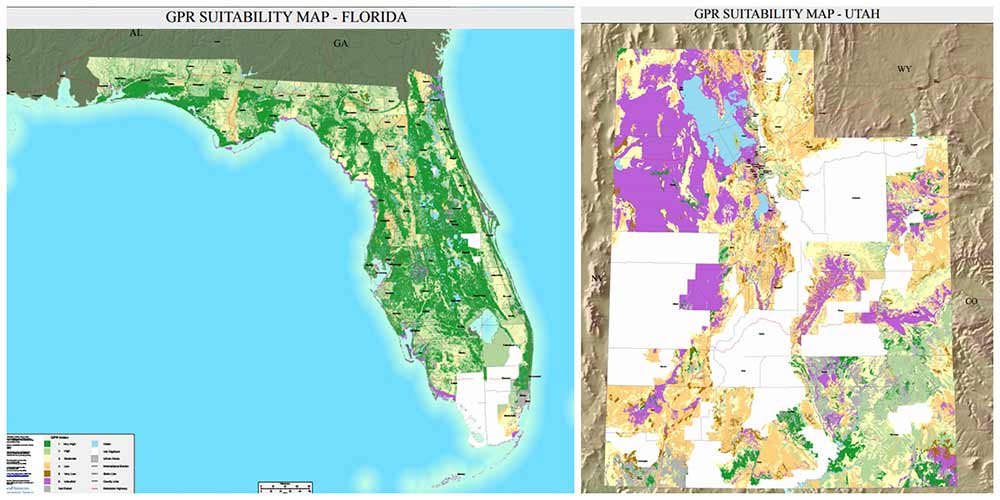
Each area throughout the US have certain types of soils that are native to the area, so it is a good idea to check what the soil conditions are in your area before moving forward. Here is a helpful link to find out the suitability of GPR in your state and area.

Here is a side by side comparison between states, Florida and Utah. Utah has more clay soil vs Florida with more sandy soil.

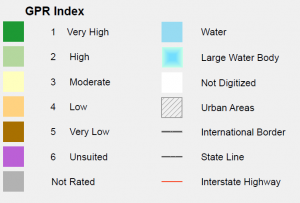
Florida vs. Utah GPR Suitability MapGPR Suitability Index

3.  Surface Area – Clearance and Obstacles

The surface being scanned becomes a factor for GPR data when the terrain is rough enough to cause the equipment to separate from the surface more than 2 to 3 inches. The quality of the data when this happens is then compromised. Ideally, the surface needs to be reasonably flat with a good amount of clearance. Obstacles, like trees and bushes, are mainly factors that can cause a delay in the time.

4.  Limitations of Technology with Certain Materials

GPR is highly successful for locating many types of objects. That said, there are certain materials that are much more conductive and easily located than others. Metal, for example, is highly conductive, and PVC or plastic has no conductivity, which makes it more challenging to locate. PVC and other non-metallic objects do not show a signal, but rather the signal can show something inside the pipe, like air or water. The size of the PVC does impede the ability for the radar to read if it is smaller, like a 1” line. This is because the radar used is for utility locating is typically one that is too large to “see” a line that is that small (See “Radar Frequency – Antenna” below for more info on this). Fisher wire/tape can be used to aide in identification in these cases.

Another factor that can impede on the GPR data is when scanning over a concrete slab with wire mesh. Because the wire mesh is metallic and the frequency of the antenna used is low and large, it inhibits the signal from penetrating clearly.

5.  Radar Frequency – Antenna

The higher the frequency, the smaller the radar, so high frequencies are best for tighter and shallower areas. The lower the frequency, the larger the radar, so these frequencies are best for deeper penetration and larger objects like pipes. In utility locating, the antennas with lower frequencies are best.

The limitation of the antenna becomes a factor mainly when any of the above factors come into play. Also, another factor to consider is when the depth of an object needing to be located surpasses the limit of the antenna’s radar. The strongest antenna commonly used throughout Penhall Technologies can scan to a max depth of 9 feet. We find that most utilities can be found within this range. Antennas that can scan a deeper depth may be available. Please contact us directly if a deeper locate is necessary for your project.

So, there you have it. We hope that this helps to clarify any questions regarding factors that affect GPR in utility locating. When in need of underground utility locating services, and you’re not quite sure about the capabilities of GPR on any given project, the best approach would be to contact us directly. To best serve our customers, we will always be upfront and honest about the capabilities and limitations of our technologies. We can offer any alternative approaches that we may have.

private utility locating

When it comes to our private undergroud utility locating services, we know you have questions, and we have answers!

Why do I need to contact a private locator, like Penhall Technologies, if 811 is available?

It is a good idea to contact both 811 plus a private locator, like Penhall Technologies, because the 811 service will only mark those utilities that are owned by public utility companies, which many times means from the street and up to the meter only. Anything between the meter and the building is owned by the property owner, which is then considered private utilities that 811 will not mark. Learn more about the difference between public and private utility locating here.

How do we determine cost and rates for private utility locating?

Pricing for our private utility locating service is unique for each project. The final cost is dependent on factors such as:

  • Job Location
  • How many utilities are being located
  • Size of the scan area(s)
  • What the surface being scanned is. Ex. Ground/dirt, asphalt, concrete, indoor/outdoor, etc.
  • If there are any obstructions that may impede or slow down the process. Ex. trees, bushes, bodies of water, buildings, etc.
  • Whether or not there is access to utility meters or transformer boxes

Typically, we offer our services at an hourly rate, with each location varying in their rates per hour. The above factors will help determine how much is possible to scan per hour.

Does Penhall Technologies assume liability for any damages involving underground utilities?

Ultimately, the owner of the private utility lines on their property is required to follow their state’s One Call law before beginning any excavation or digging work. Therefore, the liability is in the hands of the property owner. Penhall Technologies will not guarantee the longevity of facility markings due to activities on site that may destroy or otherwise alter any markings placed on the ground by Penhall Technologies.

GPR and Electromagnetic Detection technologies offers the ability to determine the depth of a located object. The depth indications can vary, and there is generally a 15% margin of error.

How accurate is your utility locating?

Unlike most private locators, Penhall Technologies uses state of the art equipment using both GPR (Ground Penetrating Radar) and Electromagnetic Detection technologies. The analyst explains the utility markings to customers. Moreover, the analyst advises that parameters for cutting/trenching/digging should be no closer than 3’ on each side of the center of the utility marker. Although the analyst cant provide exact depths, he/she can discuss approximates with a 10-15% margin of error.

Can you determine the type of utility that is located?

The technologies themselves cannot determine the type of utility that is being located. That said, our expert analysts can determine the type of utilities as long as there are visible marks such as meter box, stub up, drain, manhole or cover within the proximity of the line.

Those lines that can be identified will be marked by the standardized color set by the APWA. See “Utility Locating – What Do the Colors Mean?” for detail on the standardized colors for each utility here.

The analyst would use hot pink to mark those lines that have no visible signs of what type of utility is it.

Are you able to locate non-metallic utilities such as concrete storm drains, fiber optic cables in conduit, or PVC pipes?

Yes. This all depends on the size of the pipe, depth, and soil type.

Can surfaces with accumulated moisture ( clay soil or a ground with a high water table) can result in inaccurate results?

This can be true. Clay soil or soil with high water content can affect the GPR data and output. This is because water is conductive and once the radar picks up the moisture, it makes it tough to “read” beyond the water barrier.

The best approach is to speak to the analyst that is local to the area of the project, to better discuss the conditions of the soil in that area, as well as other options we may have.

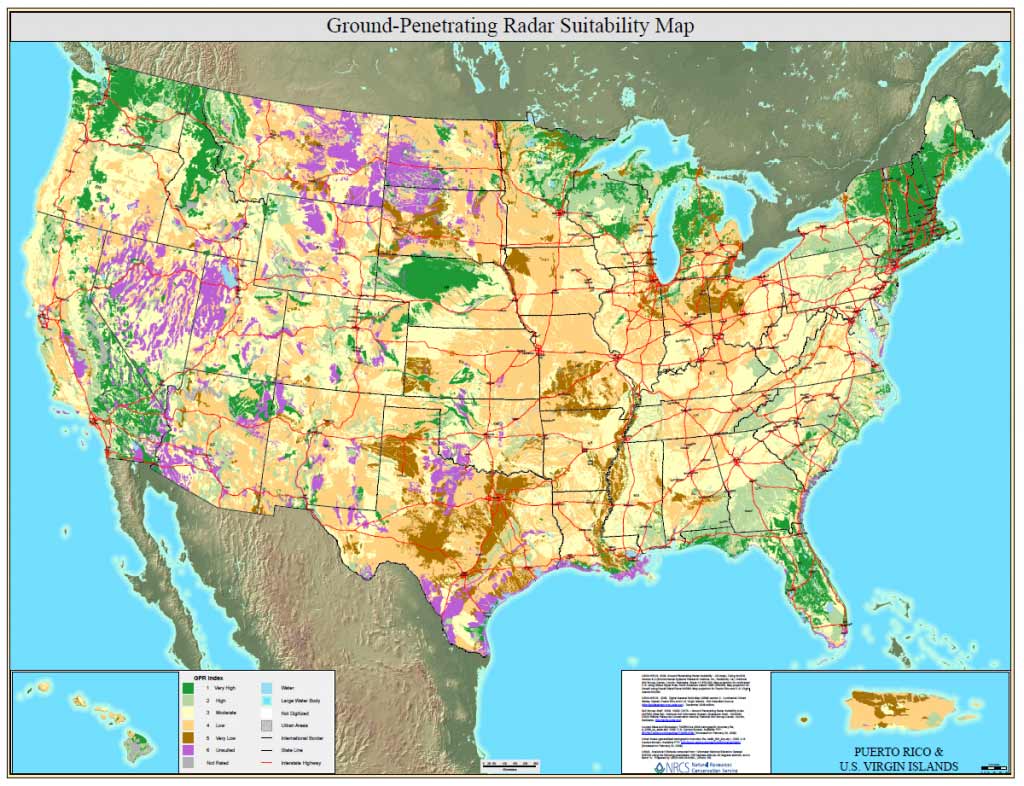
Here is a map to illustrate the suitability of GPR throughout the United States:

GPR Suitability Map

GPR Suitability Index

At Penhall Technologies, our goal is to have our customers truly feel comfortable with choosing us as a partner in their projects. We do hope that these questions and answers are helpful.

We understand there may be more questions, so please, feel free to contact us with any further questions you may have.

Grave site locating services
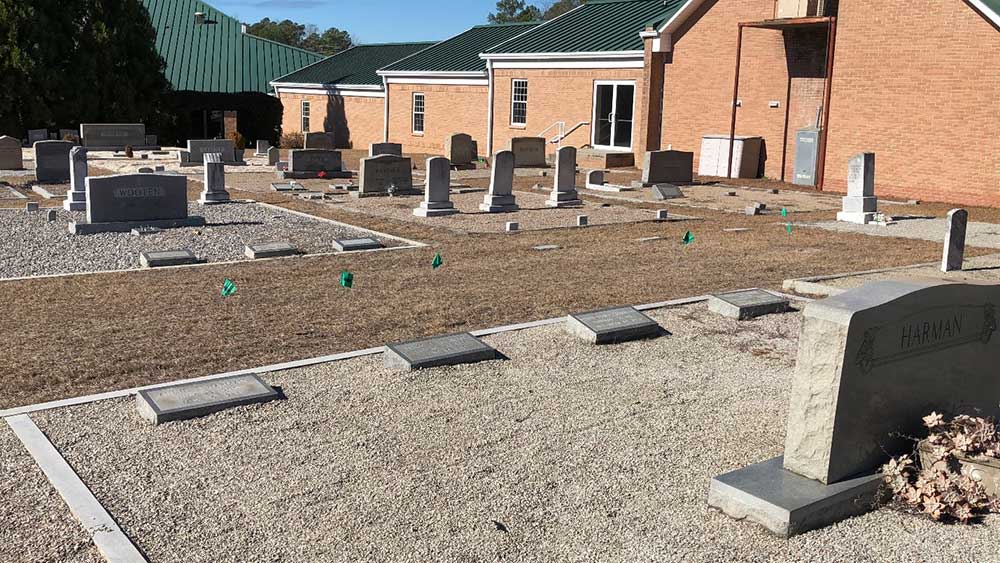
Earlier this year, Penhall Technologies’ GPR Analyst, Elizabeth G., was asked to help identify gravesites for a church in Locust Grove, VA. Church leaders wanted to be sure they would not accidentally disturb any existing gravesites, marked or unmarked, when excavating for future internments. The church was very involved throughout the process and even had a member of the church follow our analyst closely to help map the marked, reserved, empty and unmarked graves.

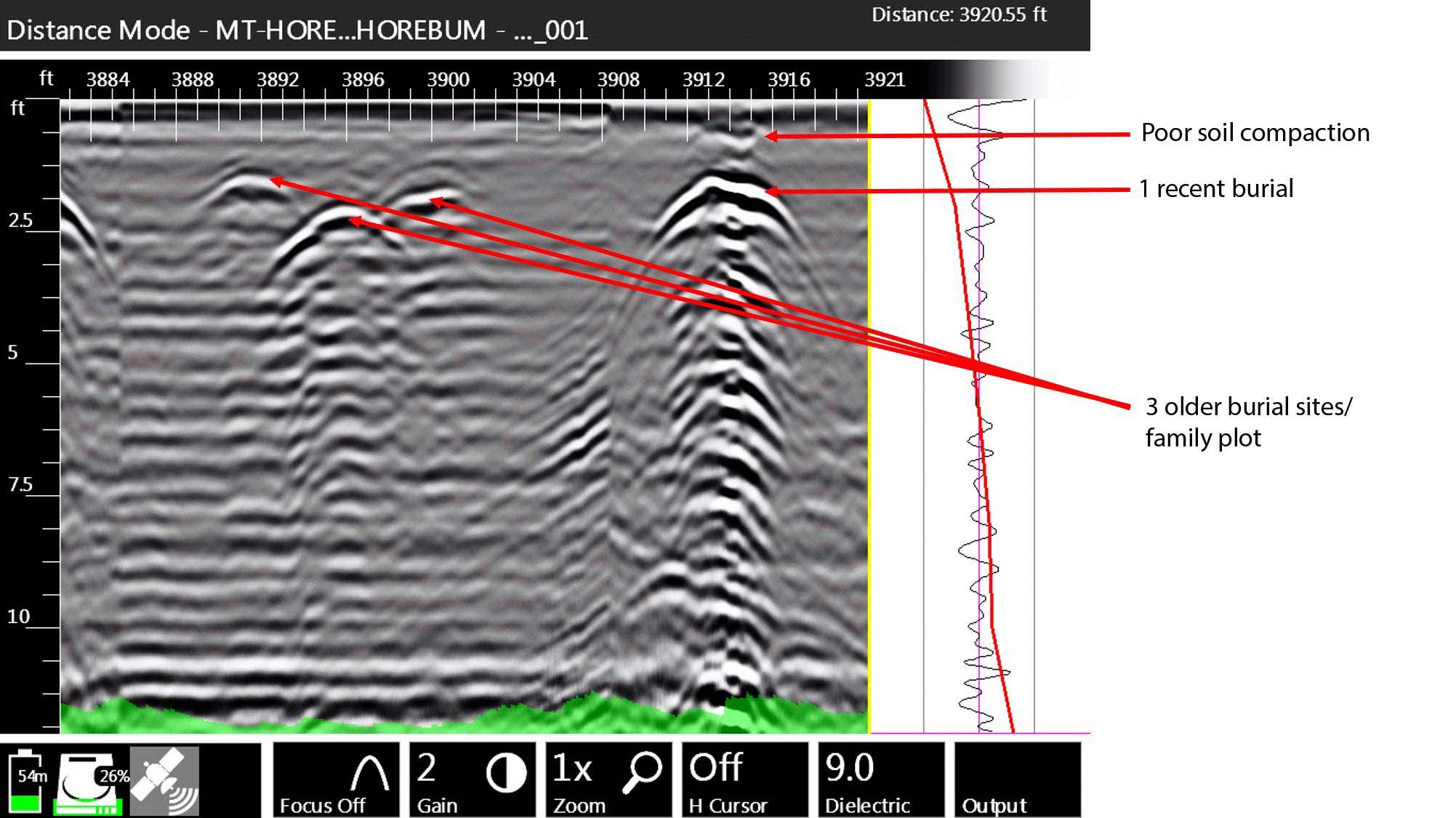
Elizabeth used ground penetrating radar equipment from GSSI to scan an area that was approximately 150’x150’. Penhall uses this same equipment and technology when performing private utility locates for underground water lines, gas lines, sewer pipes, and more. In a case like this, the analyst reviews the GPR data to identify large voids underground created by the coffin that would indicate a gravesite.
Elizabeth was able to confirm the coffins that were underneath the existing headstones. There were also unmarked coffins that were spaced in between the headstones.

In total, Elizabeth located 9 unmarked graves. Six were listed in the church’s database with an unknown location and 3 of which the church did not know existed at all. Some of the unmarked graves listed in their database were not detected. Those sites were dug in the early 1900s and, given the period, the coffins would have been made of wood. Unfortunately, wood deteriorates over time. By now, these coffins have decomposed and blended in with the ground, making it impossible for the GPR to identify because a void no longer exists.

“The church double checked the sites where I found an unmarked grave by pushing a small 5 foot rod into the ground, and it would hit the coffin. But they couldn’t identify their unmarked wooden graves with the rod either because of the deterioration. The graves ranged in date from 1900-2017,” says the analyst of her findings.

This job was an interesting exception from our usual services. “Although a bit morbid at times, it was neat to see how visible most of the graves were in the GPR data,” says Elizabeth. For Penhall Technologies, what we like most about a job like this is that we are allowed the opportunity to uncover a bit of history for the customer as well as give them the peace of mind when allocating proper sites to the members of the church in the future.

This is not the first time Penhall has done work like this. Because we are allowed to play a role in these types of historical findings, it definitely won’t be the last either! We look forward to uncovering more of history in future projects.


For inquiries on our Private Locating Services:

Call:

844-211-5300

Or Visit Us:

www.penhall.com/gpr-technology

risk management for construction project managers


As a project manager, you know that risk management is an important aspect of your job.  When considering the project at hand, your job is to reduce the risks that may come with that particular project, and make sure that in the end- the job is successful and profitable for your company.

When working on a project that involves any amount of concrete cutting or core drilling, concrete scanning can be the key factor to your risk management strategy.

Here are 5 project risks that concrete scanning can help manage:
  • Quality and safety
  • Cost management
  • Time management
  • Scope & change management
  • Information management

If ignored, you may be putting your project at risk for the following:

  • Increased costs
  • Loss or reduction in profit
  • Putting workers’ safety at risk
  • Damage to company reputation

(Source)

Think about the following scenario, and notice exactly how scanning before cutting or drilling will dramatically reduce the above risks:

You’re on a site where a major remodel is occurring.  This job involves a massive amount of core drilling for new electrical.  The cores are needed through a post tension slab, and you don’t want to risk cutting into the tension cables. Drilling blindly will not only put the job at risk of being delayed (time management), but can put workers’ lives at risk as well (safety risk).  Furthermore, the cost of either fixing the tension cables or having to replace the slab altogether can not only reduce your profits, but at worst put you in the negative (cost management).

If you decide to scan first, all of these risks can be greatly reduced. Additionally, when you scan first you are equipped with the information (information management) you need to successfully manage any necessary changes to keep a project in the positive, and under control (scope & change management).

concrete scanning before core drilling

This scenario is only one of many that can benefit from scanning before cutting or drilling. Anytime concrete cutting or drilling is a part of your project, it’s not only a good idea to have the concrete scanned, but a smart investment for a project manager.

Visit https://www.penhall.com/concrete-scanning/ for more information on Penhall Technologies’ concrete scanning services. Call us at 844-211-5300 for a free estimate.

GPR scan in graveyard

Penhall Technologies typically specializes in concrete scanning and utility locating using ground penetrating radar (GPR) to locate rebar, post tension cables, conduit, and utility lines in both concrete and soils. Analyst Mariah Ottersen put her expertise to the test on a new project – cemetery mapping and exploration in Auburn, Washington.

Patricia Cosgrove of the White River Valley Museum contacted us hoping that we could locate existing gravesites at the 156 year old Japanese-American/Buddhist Cemetery. The museum’s goal was to both accurately record the number of existing interments without corresponding headstones. Also, to identify vacant areas of the cemetery to allow for future burials of families.

Weather and soil conditions can dictate the success of a GPR survey. Dry sandy soils with little salt content yield excellent results with GPR. Heavy, wet soils make it more difficult to get clear GPR readings when collecting the data. In a state like Washington, where rainfall is high, much of the soil is heavy and wet.

GPR at shrine

Eight days after the originally scheduled start date, the clouds cleared and there was sunshine in the Northwest. Ottersen arrived at the cemetery to execute phase one of two of the cemetery mapping project. 4Culture, a cultural services agency for King County, funded the three day project through a grant from King County Appropriation. Originally, we expected the project to take three days, but our analyst completed it in just two days.

Our analyst spent day one at the Auburn Cemetery collecting data. The analyst must collect data for these types of projects carefully. In other words, she must pass the equipment in a linear motion and at equal length.

“We wanted to determine the difference between the 130 year old burials and soil disturbances, and the buried glacial/river erratic and root systems from the large vegetation onsite.” explained Ottersen. According to GSSI, GPR can detect the presence of a body, but it usually identifies disturbances in the soil such as those created when a grave is dug and refilled. It was the identification of soil disturbances that led Ottersen to map where bodies were and weren’t.

For day two, she analyzed each file of collected data using GSSI Radar software. Then, she created the final maps and reports for the museum.

Upon completion of the data processing, Ottersen shared her results. She successfully mapped the locations of existing graves. Moreover, she identified potential areas for future burials.

Worker writing GPR report

It is important to note that decomposition and shifting during flooding events can skew the collected data. “Understanding that this cemetery was also part of the flood plan for many years can raise the question of the likelihood of any of the remains being left behind in their original state due to decomposition of the wooden caskets.”  Ottersen concluded.

The Auburn Cemetery can now confidently share the location of vacant land with family members. Penhall Technologies is thrilled to have had the opportunity to be a part of such a historical landmark and the plans for future use.

To find out more about scheduling your project with Penhall Technologies, visit:

https://www.penhall.com/utility-locating/

To read more about the White River Valley Museum’s work at Auburn Pioneer Cemetery, click here: www.wrvmuseum.org

To learn more about 4Culture and the cause they stand for: http://www.4culture.org/

To discover more about GSSI and other GPR facts: http://www.geophysical.com/

By: Ray Dickinson

Penhall demoing the Mulholland Bridge

#TBT to July 16-17, 2011 – CARMAGEDDON

In order to complete a $1,000,000,000 transportation project, to add a north bound carpool lane from Orange County to the San Fernando Valley, the Mulholland Bridge needed to be renovated. The first phase of the project would remove half the bridge and shut down the 405 freeway for a span of 53 hours. This closure was the largest planned shutdown of any Los Angeles freeway in history. Due to anticipated traffic jams of mass proportions, terror ensued and The Mulholland Bridge Project was dubbed by the press and community as “Carmageddon.”

The contract to demo the bridge was won by one of the largest contractors in the world – Kiewit. Kiewit asked Penhall to sub-contract on the job due to our knowledge and expertise in the field of demolition. With a penalty of $6,000 for every 10 minutes the job was late, the stakes were high. A number of key factors needed to fall into place in order to achieve success.

3 Major Factors Contributing to Carmageddon’s Success:

1)      Resources. When taking on such a massive project, it is vital that those involved have the resources necessary to combat all aspects of the job and even unforeseeable ones. Luckily, Kiewit and Penhall had the nationwide resources and strength to deal with whatever the project may have needed. If something went wrong during the project, we had the capability and expertise to pivot if needed.

2)      Team. An important factor of any job is having a strong team behind you. Carmageddon was such a massive undertaking with so many different levels and facets. It was by the talent and teamwork displayed by the Kiewit and Penhall partnership that the project succeeded. From the top execs, to the project management staff, to the engineers, to the guys in the field, everyone worked in perfect unison to make sure that not one last detail was overlooked.

3)      Pre-Task Planning. This was hands down one of the most important factors contributing to the success of Carmageddon. However, it is important to note that pre-task planning is vital for any job, no matter the size. By being able to hold multiple pre-task planning meetings, everyone on the job was able to be on the same page. Multiple meetings were held, and cooperation with Kiewit was essential in making sure that each goal was met by the end of shift. This was crucial because it kept everyone in check with what their job was and how they would ultimately contribute to the success of the finished project.

Through these three important key factors, Penhall Company and Kiewit were able to make sure that Carmageddon was not only finished on time – but was a major success. With vast resources, a great team, and pre-task planning, the job was finished 16 hours ahead of schedule – something that even wowed transportation experts!

Reopening of the Mulholland bridge after partial demolition

To learn more about Carmageddon, check out our video at: http://vimeo.com/42817283

By: Ray Dickinson

It goes without saying that equipment is a vital part of any job. Let’s take a look back in time and see how far equipment has come since Penhall’s start.

The Core Drill

Just recently the core drill has become more advanced due to automation. One of the biggest changes with this piece of equipment is its ability to electronically switch speeds. Before, there were two to four speeds, yet the operator would have to manually change speeds if needed. For example, you could be drilling at the highest speed and then an obstruction comes along and you would then have to turn off the machine, lower the speed, then turn back on the machine and continue with the job – talk about a pain.

Core drillingNow, there is a push button – as you’re drilling and you come to an obstruction, you don’t shut off the machine, you can just switch speeds automatically. This has greatly improved the efficiency of operators because every second on the job counts, and those lost seconds of manually switching speeds add up.

The Wall Saw

This piece of equipment for concrete cutting has improved by leaps and bounds since automation. During the 70’s, there was a lot of hands-on involvement with the operating of the wall saw. Many of these machines were air powered,so they were slow, loud, and there was dust everywhere – not a great combination. And on top of that, due to the lack of horsepower, an operator had to start with a smaller blade first and make a couple passes before reaching the desired depth. Also, there were hand crank drive systems that would then allow the operator a means to travel the saw unit one way or another on the wall.

Wall sawingEventually auto feed emerged where you could crank it and the unit would travel by itself. However, if the operator wanted it to move another direction, they would have to manually crank the unit again.

In the early 80s, saws began to incorporate the new technology of hi-cycle power used by military aircrafts in order to increase horsepower and speed. The decade also saw the introduction of water cooling for saw units. From there emerged the remote control unit to delegate the travel of the unit along the wall. Today, technicians can now stand back and control the path of the blade without being very close to the equipment. This allows for operators to be safer than ever– something that Penhall is always focused on.

The Flat Saw

This piece of equipment has probably seen the most change over the decades. In the 60’s to early 80’s, the flat saw was started with a hand-crank to start the machine. The operator would have to go to the side of the engine, flip a start switch and manually turn a hand crank in order to get the engine started – similar to how they used to start old cars! The engines were small compared to today’s machines. They were air-cooled, not water cooled engines, which just had a gear chain drive and a sprocket andonly had 30 horsepower with one single drive. All these factors meant that the operator had to run a much smaller blade at first and make several passes to go to a certain depth. For example, an old flat saw an operator would use a 14” diameter blade just to get 4” deep to start. Then another pass was needed with an 18” blade just to get 6” deep.

flat sawingCurrently, the flat saw machine is drastically different. Now an operator can use 18” or 20” blades to start and cut 6” deep in one pass. The current flat saws also have a push button starter, 3 speed transmission, hydraulic drive, and diesel engine. Place a car body on them and you could drive that thing!

The rise in technology has led to greater efficiency overall. Before with the old flat saws, you might only be able to cut 3,000 to 4,000 feet of 4 inch deep asphalt in a day. Now with the new equipment, an operator can do twice that amount in the same time!

So what is on the horizon for new technology? Eventually, wall saws will have wireless controls and core drills will be automated and only require operators to dial in dimensions. However, no one knows exactly what type of equipment will be used in the coming decades, but whatever new technology brings to equipment is sure to help make each jobsite more efficient and a safer place – two things that both we and our customers like.

By: Dana Directo

Construction is definitely making a comeback in Hawaii.

One of the many notable projects is the Ewa Expansion at the Ala Moana shopping center in Honolulu, Hawaii (on the island of Oahu).

Ala Moana Center is the largest open-air shopping center in the world and one of the most popular shopping and social-gathering destinations in Honolulu. To meet growing demand, General Growth Properties, Inc., Ala Moana’s owner/manager, determined it was time for a face-lift.

The renovation will include an upgraded food court, customer amenities, pedestrian access from Ala Moana Boulevard and the addition of more than 1,000 parking spaces in the Mauka Ewa parking structure.

ala moana

However, before any of that work could begin, a significant portion of “old” structure needed to be removed.

Working with a long-time contracting partner, Penhall (dba Concrete Coring Company of Hawaii) was brought on to handle the structural demolition of the existing 160,000 square foot parking deck and a three-story building (formerly the Sears Building) that was connected to the mall.

That alone made the project an awesome undertaking, but when the Penhall team learned of the additional complexities associated with the job, things got even more interesting…

  • The Sears Building- a portion of the building was holding up the rest of the mall, so the Sears building had to be removed without weakening the support of the existing mall. Executing this required significant engineering capabilities. The team also had to carefully install shoring before the building could be taken down.
  • Sectional demolition – Usually, demolition starts at one end of a structure and goes to the other. Because of the unique logistics of the project, to stay on schedule, the team had to go around the building and take it down in sections—taking out the back end before taking out the front end.
  • Restrooms – there were two restrooms right at the very edge of the building wreck that had to remain open –and safe – during the demolition process. (Imagine having to use the facilities right next to a 40,000 lb machine on the other side of the wall …)
  • Christmas Season – all of the structural demolition had to take place during the Christmas shopping season, so the mall had to remain open the entire time.

When it was all said and done, 3,000 truckloads of cement, mixed waste, steel, and other materials were removed from the site.  Not only was the Penhall team able to get their end of the project completed on time, but they were able to do it safely, with minimal interruption to the Ala Moan shoppers and employees.

Now that the majority of the demolition has been completed, the Ewa Expansion has been able to progress and is gaining momentum toward its completion in 2015.

ala moana 2

By: Ray Dickinson

Have you ever heard the saying, “You learn something every day if you pay attention?” Well, that concept definitely applies to training safe operators in the field of construction.

You see, every job is different, every location is different, and every day on the job is different. Coming onto a large job can be like entering into a work tornado. Things are constantly moving and there are many things going on.

Plumbers, electricians, carpenters, foremen, crane operators, and iron workers are all buzzing around doing their own thing. What’s more is that different contracting crews usually do not communicate with one another, much less on a daily basis.

So, in order to ensure everyone’s safety, the people working on their job must learn to pay attention. This can be easier said than done, but the following steps can help prepare workers to look two steps ahead and help create a safe work environment.

Health and Safety

New Employee Orientation

First and foremost, training safe operators starts well before they ever step foot on a job site. In addition to familiarizing a new hire to the way the company operates and the people they will be working with, employee orientation is a prime time to stress your company’s commitment to cultivating a safety culture and to ensuring an accident/incident-free workplace.A safety-focused new employee orientation should establish:

  • Guidelines for communication – how to talk productively and effectively about if unsafe conditions and behaviors are recognized, etc.
  • Expectations for professional conduct – interacting professionally with team members, crews on other job sites, customers, etc.
  • Why a zero-injury safety culture is so important – including why it’s critical to embrace the concept that accidents are preventable.
  • Safe driving techniques – learn to identify the best practices of driving behavior, and apply the Smith5Keys®.
  • How to plan safety into work – Pre-Task Planning, inspecting tools, equipment, and personal protective equipment (PPE).
  • How to prevent back and shoulder injuries.
  • How to work safely around utilities and other energy sources.
  • How to recognize hazards on the job.
  • How to report on-the-job injuries and Near Miss incidents.

Safety Training

All workers should receive annual safety training. From there, depending on the degree of hazard and/or client policy, additional safety training might need to be conducted more frequently.Comprehensive, in-depth safety training should be in addition to Occupational Safety & Health Administration (OSHA) safety training. Company-specific training should include:

  • Safety-focused communication skills
  • How to effectively Pre-Task Plan (PTP)
  • How to recognize safe and unsafe conditions and behaviors
  • How to correct unsafe acts
  • How to perform work safely in multiple environments
  • Specialized safety procedures for job-specific tasks
  • Strategies for preventing injury and illness

Initial Introduction to Field Work

By introducing new hires to field work within their first two to three weeks on the job (as both helper and laborer), they are able to experience first-hand what occurs in the field and how safety measures are built into the job.This step is also designed to help management and the other crew members evaluate how well the new hire will respect and foster a safe work environment.

Penhall Mentor Class

Daily Pre-Task Planning By the Entire Crew

To help ensure safety in the field, each operator should be trained on Pre-Task Planning and be responsible for filling out a safety pre-task sheet before they start work each day. By auditing the job site each day on their own, the operator is better able to understand:

    • The task that needs to be completed
    • The potential hazards that could be associated with the completion of the task.
    • The corrective measures that need to be put in to place to eliminate or minimize the hazard.

Typically what happens in the industry is that only one person (usually the Foreman) will conduct a Pre-Task Plan and do a “tool box” safety meeting at the start of the week. However, this process often results in hazards being overlooked – especially as the job changes and evolves.

It is critical that every crew member audits the job site each day and complete their own Pre-Task Plan.

  1. Active divisional safety managers. Having divisional safety managers roam the region, show up unannounced on job sites, observe the operators and ask operators at random to see their Pre-Task Plan (PTP), is a helpful tool for ensuring accountability. If the operator has their PTP and are observed conducting their work safely, they are recognized and commended. If they don’t have their Pre-Task Plan, should be written up.
  2. Mentorship. Training operators how to Pre-Task Plan, follow safe equipment procedures, communicate effectively, etc. are all incredibly important. But eventually, the new operator will need to learn how to apply those concepts while working independently. This is where mentorship comes in.Placing a new hire with a mentor is an invaluable part of their learning. Experienced mentors not only teach new hires how to operate equipment safely and productively, they are also there to guide the trainee in finding answers for themselves and develop solutions of their own. While on a job site, mentors can also show their trainee how to constantly look, listen, and pay attention to what is going on around them while they are in the field.
  3. Safety committees and monthly divisional safety meetings in the yard – Operators at each division should be part of the safety committees. Additionally, they should bring the safety-focused topics that were discussed at the monthly committee meetings to their divisional safety meeting. This helps ensure that everyone – from the executive team, to the crew on the front lines of a job – is on the same page.

Training operators to work safely in the field is not a one-time event – it’s a continuous process that everyone must be committed to each and every day.

By: Ray Dickinson

Mentoring

I think Ben Franklin said it best:

“Tell me and I forget, teach me and I may remember, involve me and I learn.”

Achieving and maintaining one of the best safety records in the construction industry does not happen by accident. It requires the development of highly-competent, safety-focused team members.

By no means is this an overnight process, but progress is much more secure and streamlined when there’s an effective mentor program in place. The following five pillars help support a mentor program that sufficiently prepares employees to be safe, efficient, high-quality service providers:

Dedicated Mentors

When looking for individuals to serve as mentors, it’s important that they be evaluated on factors, such as:

  • Work experience
  • Safety training
  • Industry knowledge
  • Professionalism (with customers and crew members)
  • Equipment care
  • Job preparation
  • Competency as a worker/supervisor
  • Adaptability

What’s more is that, since mentors are volunteering their time and job-related wisdom, mentors should also demonstrate that they care about helping others succeed and are invested in making the company the best it can be.

Deliberate Employee Screening

As the saying goes, when the student is ready, the teacher will appear. Construction jobs are not easy. There’s a lot to know and do – especially when it comes to ensuring everyone’s safety. So in addition to having a clean driving record, mechanical abilities, good social and communication skills, being drug-free, and presenting themselves well, employees need to demonstrate that they are teachable and coachable.Therefore, it’s important to evaluate new potential employees prior to matching them with a mentor. Two effective ways to do this are through new employee orientation and initial introduction to field work.

New employee orientation is the foundation for teaching trainees a set of standards for working safely and proficiently. Ideally, new employee orientation should address your company’s commitment to safety, established guidelines for communication, expectations for professional conduct, and safety training, among other things.

During the first two to three weeks of employment, it’s valuable to introduce new hires to different types of field work and allow them to serve in various capacities as both “helper” and “laborer.” Getting them involved in work allows management and co-workers to see what their work ethic is like, if they are punctual, dependable, their overall attitude, and how well they get along with others.

Mentoring Principles

Rather than simply giving answers to the trainee, mentors are most effective when they help the trainee find answers for themselves and facilitate their experience of discovery and learning. By providing a safe, supportive space that allows the trainee to experience their own attempts, failures, and successes, the trainee is able to develop their own natural strengths and potential.This is also why the employee screening is so important. While the mentor needs to be a facilitator and coach, the trainee needs to be open-minded to the guidance and facilitative methods of the mentor. If the trainee is always looking to their mentor for answers, then they’ll become too reliant on their mentor instead of their own skills and abilities.

Established Competency Levels

In order to effectively document the trainees’ process and ensure that they have the confidence, know-how, and ability to perform the work on their own, it’s important to establish competency levels.For example, at Penhall, Level 1 competency for core drilling includes things, such as:

  • Demonstrate the ability to safely secure the drill to the work area, adjust the drill rig to the hole, and successfully drill hole(s) through all materials using 110v, 220v drills with vacuum bases or mechanical anchors.
  • Drill holes up to 12” diameter and 12” thick.
  • Drill holes through floors, walls, corner and lifting holes for larger openings.
  • Understand and be knowledgeable in proper core catching techniques and know the OSHA regulations regarding covering openings in floors and walls.

Mentored trainees should also be required to complete checklists for the level in which they are enrolled and pass a written test for each level with a passing score of 90%.

Mentor Input

To ensure that the mentor program is accurately defined, reflects the goals of the company, and continuously improves, it’s vital to solicit feedback and input from mentors on things, such as the technical reviews of the competency levels, definitions, check-lists, evaluations sheets, etc.

When developed and implemented correctly, a mentor program can be the linchpin that secures a company’s ability to cultivate a safety-focused work force and consistently provide top-notch service quality.

  • « Go to Previous Page
  • Page 1
  • Page 2
  • Page 3
  • Page 4
☎ CALL TO SCHEDULE SERVICE
FOLLOW US

#PenhallRedandGray

penhall menu logo
HEADQUARTERS

1212 Corporate Dr. Suite 500
Irving, TX 75038

1-800-PENHALL

CA Contractors License #568673

FIND YOUR LOCAL PROVIDER
COMPANY

Our Story

Leadership Team

Careers

LOCATIONS

Penhall Company (USA)

Graff Company (CA)

Concrete Coring Company (HI)

SERVICES

Concrete Coring

Concrete Cutting

Concrete Scanning

Concrete X-Ray Imaging

Private Utility Locating

Demolition

Grinding & Grooving

Bridge Services

Surface Preparation

Concrete Breaking & Removal

Fiber Reinforced Polymer

Hydrodemolition

To receive notifications about our articles, sign up below. You may unsubscribe from these e-mails at anytime.

  • This field is for validation purposes and should be left unchanged.

ENR The Top 600 Logo
ISNetworld logo
Avetta

© Copyright 2026 | Penhall Company | Terms & Conditions | Supplier Code of Conduct | Supplier Terms & Conditions | Sitemap | All Rights Reserved

  • About Us
    • Our Story
    • Leadership Team
    • Sustainability
  • Safety
  • Services
    • Concrete Services
      • Concrete Coring
      • Concrete Cutting
      • Demolition
      • Hydrodemolition
      • Structural Repair
      • Grinding & Grooving
      • Bridge Services
      • Scarifying & Shaving
      • Breaking & Removal
      • Operated Equipment Rentals
    • Technology Services
      • Concrete GPR Scanning
      • X-Ray Imaging
      • Private Utility Locating
      • Fiber Reinforced Polymer
  • Industries
  • Resources
    • Articles
    • Frequently Asked Questions
  • Contact Us
  • Find a Branch
  • Request a Quote
  • JOIN PENHALL COMPANY
  • Concrete Coring Company
  • Graff Company
  • About Us
    • Our Story
    • Leadership Team
    • Sustainability
  • Safety
  • Services
    • Concrete Services
      • Concrete Coring
      • Concrete Cutting
      • Demolition
      • Hydrodemolition
      • Structural Repair
      • Grinding & Grooving
      • Bridge Services
      • Scarifying & Shaving
      • Breaking & Removal
      • Operated Equipment Rentals
    • Technology Services
      • Concrete GPR Scanning
      • X-Ray Imaging
      • Private Utility Locating
      • Fiber Reinforced Polymer
  • Industries
  • Resources
    • Articles
    • Frequently Asked Questions
  • Contact Us
  • Find a Branch
  • Request a Quote
  • JOIN PENHALL COMPANY
  • Concrete Coring Company
  • Graff Company